How to Determine if a Collectible Is Rare or Valuable
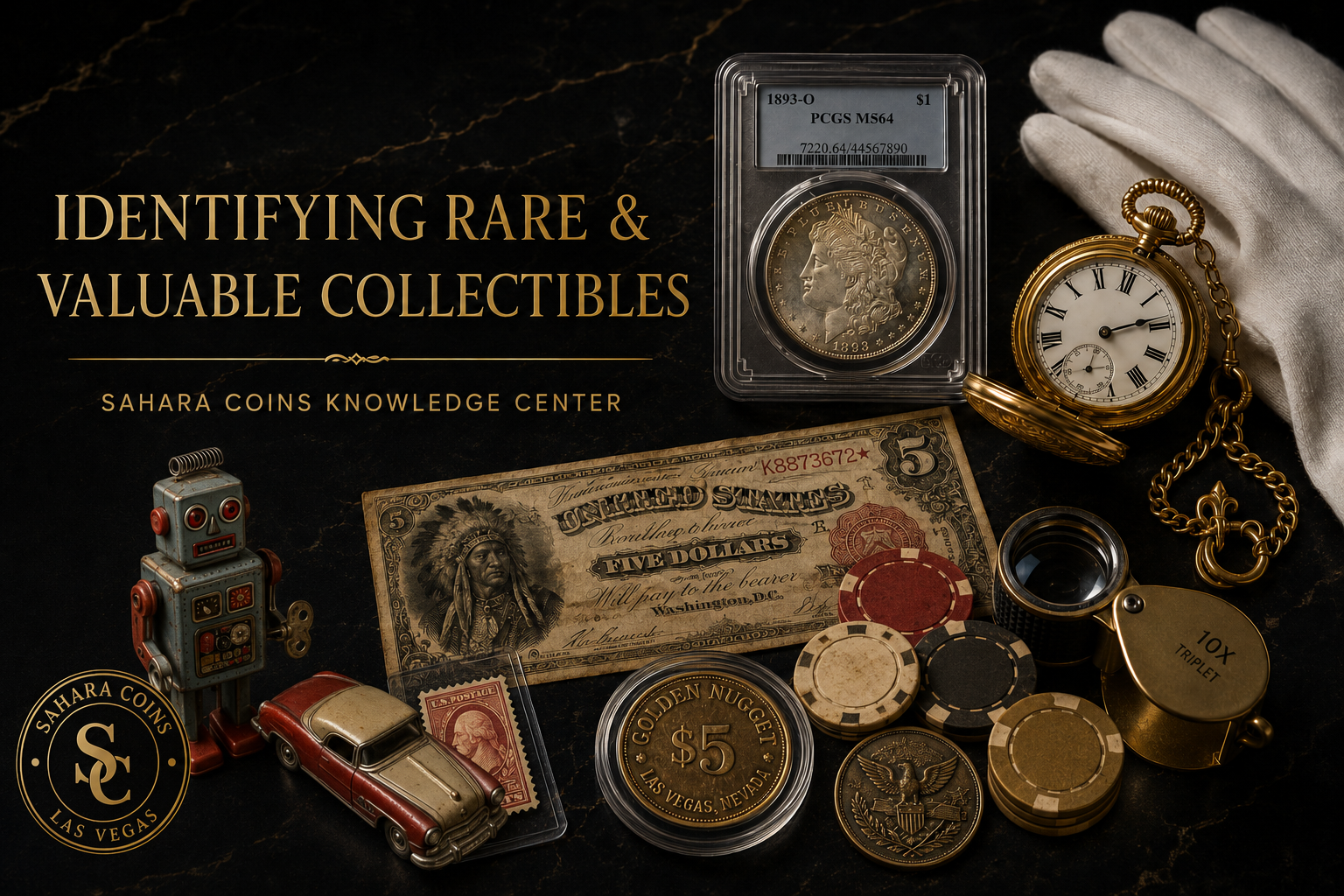
To determine whether a collectible is rare, begin by identifying exactly what it is. Look for the manufacturer, date, model, edition, mintmark, serial number, materials and any unusual markings. Then research how many were produced, how many appear to survive, whether distribution was limited and whether recognized variations or production errors exist.
Rarity alone does not guarantee value. Condition, authenticity, provenance, completeness and current collector demand all affect whether a scarce item is desirable and what buyers may be willing to pay.
Before cleaning, repairing, discarding or selling an unfamiliar collectible, photograph it, preserve its original packaging and documentation, and compare it with verified examples and completed sales. This guide explains how to evaluate each of the factors that may indicate rarity or value.
How to Determine if a Collectible Is Rare or Valuable
Start by evaluating six primary factors: rarity, collector demand, condition, authenticity, provenance and historical significance. An item does not need every quality to be collectible, but the strongest candidates often combine genuine scarcity with good condition, reliable authentication and an active market of interested buyers.
Rarity
Rarity refers to how difficult an item is to find. An object may be rare because:
Few were originally produced
Production ended quickly
Most examples were lost or destroyed
It was made for a limited event
It contains an unusual variety or production error
Few examples survive in high-grade condition
It was distributed only in a particular region
It represents a short-lived design or manufacturer
However, rarity alone does not guarantee value. An item can be scarce without attracting much collector interest.
Collector Demand
A collectible needs interested buyers for its rarity to translate into market value. Strong demand can create significant competition for desirable items, while limited demand can keep the price of a rare but unpopular object relatively low.
Demand may be influenced by:
Historical importance
Popular culture
Nostalgia
Current trends
Famous designers or manufacturers
Connections to prominent individuals
Completion of a recognized collecting set
Media attention
Major anniversaries or events
Collector demand can change, which is why recent sales are generally more useful than old price guides.
Condition
Condition can dramatically affect value. Collectors often pay substantial premiums for items that retain their original appearance and have avoided damage, repair, or alteration.
Condition factors may include:
Wear
Scratches
Chips
Cracks
Tears
Stains
Fading
Corrosion
Missing parts
Repairs
Cleaning
Original packaging
Working condition
Completeness
The definition of excellent condition varies by category. A coin, comic book, toy, piece of jewelry, and historical document must each be evaluated according to different standards.
Authenticity
An item must be genuine to have legitimate collector value. Reproductions, counterfeits, altered pieces, and fantasy items can resemble authentic collectibles.
Authentication may involve examining:
Materials
Manufacturing methods
Tool marks
Printing techniques
Signatures
Hallmarks
Serial numbers
Construction
Patina and aging
Known design characteristics
Provenance
Professional certification
Never assume an item is authentic solely because it looks old or was described that way by a previous owner.
Provenance
Provenance is the documented history of an item’s ownership or origin. It can be especially important for artwork, autographs, historical artifacts, celebrity memorabilia, rare documents, and objects connected to significant events.
Useful documentation may include:
Original receipts
Auction records
Certificates
Photographs
Letters
Estate documents
Exhibition records
Previous appraisals
Manufacturer records
Grading or authentication certificates
A compelling story may add interest, but documentation is normally required before that story adds meaningful value.
Historical or Cultural Significance
Some collectibles are desirable because they represent an important person, place, movement, event, or period.
Examples may include:
Civil War artifacts
Early American coins and currency
Presidential memorabilia
Historic Las Vegas casino items
Documents connected to major events
Early advertising
Military artifacts
Objects from closed businesses or institutions
Items associated with famous entertainers or athletes
The more directly an item can be connected to history, the more important authenticity and provenance become.
Begin With a Careful Inspection
Before researching an item, examine it closely in a clean, well-lit area. Do not clean or repair it first.
Look for identifying information such as:
Manufacturer names
Designer signatures
Mintmarks
Hallmarks
Model numbers
Serial numbers
Patent dates
Copyright dates
Country-of-origin marks
Edition numbers
Artist signatures
Publisher information
Union labels
Tax stamps
Inspection marks
Dates and inscriptions
Check the front, back, bottom, interior, edges, clasps, seams, and removable components. Important markings may be extremely small or located in an unexpected place.
A magnifying glass or jeweler’s loupe can help reveal details that are difficult to see with the naked eye.
Record the Item Before Handling It Further
Create a basic record of the collectible before attempting research.
Include:
Clear photographs from multiple angles
Close-ups of signatures and markings
Measurements
Weight, when appropriate
Materials
Colors and design details
Known history
Where the item was found
Damage or missing parts
Packaging and accessories
Any accompanying documents
Photographs should be taken in neutral lighting without filters. Avoid using only a blurry image or a single photograph when asking for an identification.
Important Categories of Collectibles
Different categories require different research methods. Understanding the type of item you have is the first step toward finding reliable information.
Rare Coins
A coin’s value can depend on its:
Date
Mintmark
Denomination
Mintage
Variety
Condition
Metal content
Surface quality
Authenticity
Collector demand
A common mistake is assuming every old coin is rare. Many older coins were produced in large quantities and remain widely available.
Look carefully for mintmarks, doubled designs, repunched details, overdates, unusual compositions, and recognized varieties. Avoid cleaning coins because even gentle cleaning can leave microscopic damage and reduce their collector value.
Professionally graded coins are evaluated on the Sheldon scale, which generally ranges from 1 to 70. Certification can provide authentication and an independent opinion of condition, but not every coin is valuable enough to justify grading costs.
Collectible Paper Money
Collectible currency may be valued based on:
Series and denomination
Seal color
Signature combination
Issuing bank or district
Condition
Serial number
Star-note status
Printing error
Rarity
Historical importance
Unusual serial numbers—including low numbers, radars, repeaters, ladders, and solid numbers—can attract collector interest. However, the pattern should be clear and recognizable.
Do not iron, laminate, wash, tape, or press old paper money. These actions can cause permanent damage.
Precious Metals and Jewelry
Jewelry and precious-metal objects may have value based on their:
Gold, silver, platinum, or palladium content
Weight
Purity
Gemstones
Manufacturer
Designer
Age
Style
Condition
Craftsmanship
Collectibility
Look for stamps such as:
10K, 14K, 18K, 22K or 24K
417, 585, 750, 916 or 999
Sterling
925
900
950
Platinum or Plat
Designer names or maker’s marks
A hallmark can provide useful information, but stamps can be incorrect or fraudulent. Professional testing may be necessary.
Some jewelry is worth more as a signed, antique, or collectible piece than it would be for its precious-metal content alone.
Postage Stamps
Stamp collectors may evaluate:
Country of origin
Issue date
Denomination
Perforations
Watermarks
Printing method
Color
Gum condition
Cancellation
Centering
Errors and varieties
Rarity
Many old stamps are common, even when they appear impressive. Small differences in perforations, paper, watermark, color, or printing can separate a common stamp from a scarce variety.
Never remove stamps from old envelopes without determining whether the complete cover has postal-history value. The cancellation, destination, date, and envelope may be more important than the stamp by itself.
Historical Documents and Autographs
Letters, signed photographs, contracts, manuscripts, government documents, and other paper artifacts may have collector value.
Factors include:
Identity of the signer
Historical importance
Content
Date
Authenticity
Condition
Provenance
Rarity
Whether the signature is handwritten or mechanically reproduced
A famous signature does not automatically mean an item is authentic. Printed, stamped, secretarial, and autopen signatures are common.
The content of a signed letter can sometimes be more important than the signature itself. A routine letter may be worth less than one discussing a major event or personal decision.
Advertising and Las Vegas Memorabilia
Vintage signs, casino chips, tokens, matchbooks, menus, ashtrays, postcards, photographs, gaming items, and promotional materials can appeal to collectors of Las Vegas history.
Value may depend on:
The casino, hotel, or business
Age
Rarity
Design
Condition
Whether the property still exists
Association with a major event
Connection to an entertainer or public figure
Original packaging or documentation
Items connected to demolished casinos, early Las Vegas businesses, or important periods of gaming history can have strong regional appeal.
Toys, Games, and Pop-Culture Collectibles
Vintage toys, trading cards, action figures, dolls, model cars, video games, and entertainment memorabilia can vary widely in value.
Collectors may look for:
Original packaging
Completeness
Limited production
First editions
Manufacturer variations
Factory errors
Character popularity
Working condition
Original accessories
Unopened or unused status
Packaging can be a major part of the value. Do not discard boxes, inserts, instructions, tags, or accessories until the item has been evaluated.
Military and Political Memorabilia
Medals, uniforms, campaign buttons, posters, photographs, patches, documents, and equipment may have historical and collector value.
Important details include:
Conflict or historical period
Military branch
Unit
Rank
Named ownership
Authenticity
Provenance
Completeness
Condition
Rarity
Keep groups of related items together. A collection of medals, photographs, documents, and personal effects associated with one individual may be more historically important than the pieces would be separately.
Be aware that certain materials may be restricted by law or require special handling.
First Editions, Comics, and Printed Materials
Books, comic books, magazines, maps, posters, and other printed materials may be collectible.
Research may require identifying:
Edition
Printing
Publisher
Publication date
Dust jacket
Issue number
Cover variant
Author or artist
Printing errors
Restoration
Condition
An old publication is not necessarily a first edition. Copyright dates alone may not identify the printing, so publisher-specific details must often be researched.
Original Packaging and Accessories Matter
One of the most common mistakes is separating an item from materials that appear unimportant.
Keep:
Boxes
Cases
Certificates
Tags
Instructions
Receipts
Inserts
Spare parts
Original holders
Promotional materials
Shipping containers for limited-edition pieces
Collectors frequently pay more for complete items. In some categories, the original box or accessory can be difficult to replace and may represent a meaningful portion of the total value.
How to Research a Collectible
Once you have documented the item, begin researching it systematically.
Search Using Specific Details
Avoid broad searches such as “old coin value” or “vintage toy worth.” Use the exact identifying information found on the item.
A stronger search might include:
Manufacturer
Product name
Date
Model number
Material
Dimensions
Color
Hallmark
Edition
Signature
Distinctive wording
Place exact phrases or model numbers inside quotation marks when searching online.
Use Specialized References
General search results can provide a starting point, but specialized references are often more reliable.
Depending on the category, use:
Collector guides
Auction archives
Grading-service databases
Manufacturer archives
Museum collections
Specialty organizations
Historical societies
Dealer references
Population reports
Catalogs devoted to the category
Be aware that printed price guides may become outdated. They are most useful for identification and relative rarity rather than guaranteeing current value.
Compare Actual Sales
A seller’s asking price does not establish value. Look for completed sales of truly comparable items.
The comparison should match as closely as possible in:
Authenticity
Variety
Age
Manufacturer
Condition
Completeness
Size
Materials
Professional grade
Provenance
An unsold online listing priced at $10,000 does not mean another example is worth $10,000.
Account for Fees and Selling Costs
Auction results may include a buyer’s premium, while the seller may receive less after commission, photography, shipping, insurance, and other expenses.
Retail price, auction price, wholesale value, insurance replacement value, and dealer purchase price are different figures. Be sure you understand which type of value you are researching.
Warning Signs That Require Professional Authentication
Consider seeking an expert opinion if an item:
Is frequently counterfeited
Has a famous signature
Appears exceptionally rare
Is associated with a major historical figure
Has an unusually high claimed value
Shows inconsistent materials or construction
Lacks reliable provenance
Has been repaired or altered
Differs from known examples
Was purchased from an unverifiable source
Professional certification may be available for coins, currency, trading cards, comics, autographs, stamps, watches, and other specialty collectibles.
Certification can improve buyer confidence, but it does not automatically make an item valuable.
Signs That an Item Might Be Rare
No single clue proves rarity, but certain details deserve further research:
A very low production number
An unusual manufacturer’s mark
A short production period
A recalled or discontinued design
A documented printing or manufacturing error
A regional issue
A missing or unusual mintmark
A previously unknown variation
An important historical connection
Exceptional original condition
Original packaging and complete accessories
A clear connection to a prominent owner
Approach “too good to be true” discoveries carefully. The more valuable an item appears, the more important authentication becomes.
Common Mistakes That Can Reduce Value
Cleaning the Item
Cleaning is one of the fastest ways to reduce the value of coins, currency, metals, furniture, paper, and other antiques.
Original surfaces, toning, patina, and signs of age can be important. Improper cleaning may leave scratches, discoloration, chemical residue, or permanent damage.
Making Repairs
Glue, tape, polishing, repainting, refinishing, soldering, and replacement parts can affect originality. Consult a qualified professional before restoring a potentially valuable collectible.
Discarding Packaging
Boxes, labels, certificates, instructions, and accessories can contribute significantly to desirability and value.
Separating a Collection
Related items may have greater historical or collector importance when kept together. This is especially true for estates, military groups, correspondence, coin sets, and archival collections.
Trusting an Online Asking Price
Online marketplaces contain optimistic pricing, misidentified items, counterfeits, and listings that may never sell. Compare confirmed sales instead.
Assuming Age Equals Value
Millions of old items survive. An item’s age must be considered alongside rarity, condition, demand, and authenticity.
Selling Before Identifying the Item
Selling an unidentified collectible can result in accepting an offer that does not account for a rare variety, important mark, or historical connection.
Should You Have a Collectible Professionally Graded?
Professional grading or authentication may be worthwhile when:
The item appears valuable
Small condition differences greatly affect price
Counterfeits are common
The item will be sold online or at auction
Buyers expect certification
The variety is difficult to identify
The item is exceptionally well preserved
Certification may not make financial sense when an item is common, heavily damaged, or worth less than the grading and shipping costs.
An experienced dealer can help you decide whether professional certification is appropriate.
How to Store Valuable Collectibles
Proper storage helps preserve both condition and value.
General recommendations include:
Keep items away from direct sunlight
Avoid extreme heat and humidity
Use archival-quality holders
Avoid PVC and acidic materials
Store paper items flat when appropriate
Handle coins by their edges
Wear suitable gloves for sensitive objects
Keep food and liquids away
Use protective cases for fragile items
Maintain photographs and inventory records
Insure significant collections
Store provenance separately and securely
Different materials require different storage methods. Paper, metals, textiles, wood, plastics, photographs, and paintings should not all be treated the same way.
Selling an Inherited Collection
Inherited collections can be challenging because family members may not know what the collector considered important.
Before selling:
Keep the collection together.
Preserve all labels and handwritten notes.
Do not clean anything.
Save receipts and certificates.
Photograph the collection.
Create a simple inventory if practical.
Have unusual items evaluated individually.
Ask whether professional authentication is appropriate.
Understand the difference between retail value and a purchase offer.
Obtain another opinion for potentially significant items if necessary.
The most valuable piece may not be the largest, oldest, or most attractive object in the collection.
Professional Collectible Evaluations in Las Vegas
Identifying collectibles requires experience, research, and knowledge of current markets. Sahara Coins & Precious Metals has served Southern Nevada since 1997, with a team offering more than 80 years of combined industry knowledge.
We evaluate and purchase a wide range of items, including:
Rare coins
Collectible currency
Gold and silver bullion
Gold, silver and platinum jewelry
Postage stamps
Tokens and medals
Casino memorabilia
Historical items
Autographs
Estate collections
Other specialized collectibles
Every collection is different. Our team focuses on transparency and helping customers understand what they have before making a decision.
Visit Sahara Coins & Precious Metals at 7293 West Sahara Avenue, Suite 106, Las Vegas, Nevada 89117. Walk-ins are welcome.
Frequently Asked Questions
Does an item have to be old to be collectible?
No. Modern limited editions, production errors, discontinued items, and objects connected to popular cultural events can become collectible.
How do I know whether my collectible is authentic?
Compare it with verified examples and examine its materials, marks, construction, and provenance. High-value or commonly counterfeited items may require professional authentication.
Should I clean an old collectible before selling it?
Usually not. Cleaning can remove original surfaces, create damage, and reduce collector value. Seek professional advice before attempting any cleaning.
Are online prices accurate?
Online asking prices can be misleading. Completed sales of comparable items provide better evidence of current market value.
Is a rare item always valuable?
No. Rarity must be combined with collector demand. Something can be scarce without having a strong market.
Does professional grading increase value?
Grading can improve buyer confidence and establish an independent opinion of authenticity or condition. It does not guarantee an increase in value.
What should I do with an inherited collection?
Keep it together, preserve its documentation and packaging, avoid cleaning, and have it evaluated before selling or separating individual items.
Where can I sell collectibles in Las Vegas?
Sahara Coins & Precious Metals evaluates and purchases many types of collectible items at 7293 West Sahara Avenue, Suite 106, Las Vegas.
Have Coins or Collectibles to Evaluate?
Sahara Coins & Precious Metals provides knowledgeable, no-pressure evaluations for individual coins, certified pieces, inherited collections, currency, casino memorabilia, and other specialized collectibles. Sell Coins and Collectibles in Las Vegas
Final Thoughts
Identifying rare and valuable collectibles requires careful observation, reliable research, and a realistic understanding of the market. The most important factors usually include rarity, condition, authenticity, provenance, historical significance, and collector demand.
Before cleaning, repairing, discarding, or selling an unfamiliar item, document it and investigate its markings. Preserve original packaging and related records, compare actual sales, and consult a knowledgeable specialist when the item may be rare or valuable.
A little research can protect an important piece of history—and help ensure that a potentially valuable collectible is recognized for what it truly is.