Gold Bullion Coins vs. Gold Bars: Which Is Better for First-Time Buyers?

For a first-time buyer, choosing between gold bullion coins and gold bars can feel more complicated than it needs to be. Both are forms of physical gold, and both are commonly purchased for their metal content rather than for collectible appeal. The better choice depends on your budget, buying goals, preferred sizes, and how important easy resale may be to you.
At Sahara Coins & Precious Metals in Las Vegas, we help buyers understand the practical differences before they purchase. This guide compares gold bullion coins vs gold bars so you can make an informed decision based on your own needs.
What Are Gold Bullion Coins?
Gold bullion coins are government-issued coins that are typically valued primarily for the gold they contain. Popular examples include coins issued by well-known national mints. Their designs, stated weight, purity, and issuing authority can make them familiar to dealers and buyers around the world.
It is important to distinguish bullion coins from rare or numismatic coins. A bullion coin may carry a small premium above its metal value because of minting, distribution, and market demand, while a collectible coin may derive significant value from rarity, condition, historical significance, or collector interest.
What Are Gold Bars?
Gold bars, sometimes called gold ingots, are refined pieces of gold produced by private refiners or government mints. They are available in a range of sizes, from smaller fractional options to larger bars. A bar generally displays identifying information such as its weight, purity, and refiner or mint mark.
Because bars are designed primarily for efficient gold ownership, they often have a simpler appearance than coins. For buyers focused on acquiring a larger amount of gold in a single piece, this can be an appealing format.
Gold Bullion Coins vs. Gold Bars at a Glance
| Consideration | Gold Bullion Coins | Gold Bars |
|---|---|---|
| Recognition | Often highly recognizable, especially widely traded issues | Varies by refiner, size, and market familiarity |
| Purchase sizes | Commonly available in standard and fractional sizes | Available in many sizes, including larger formats |
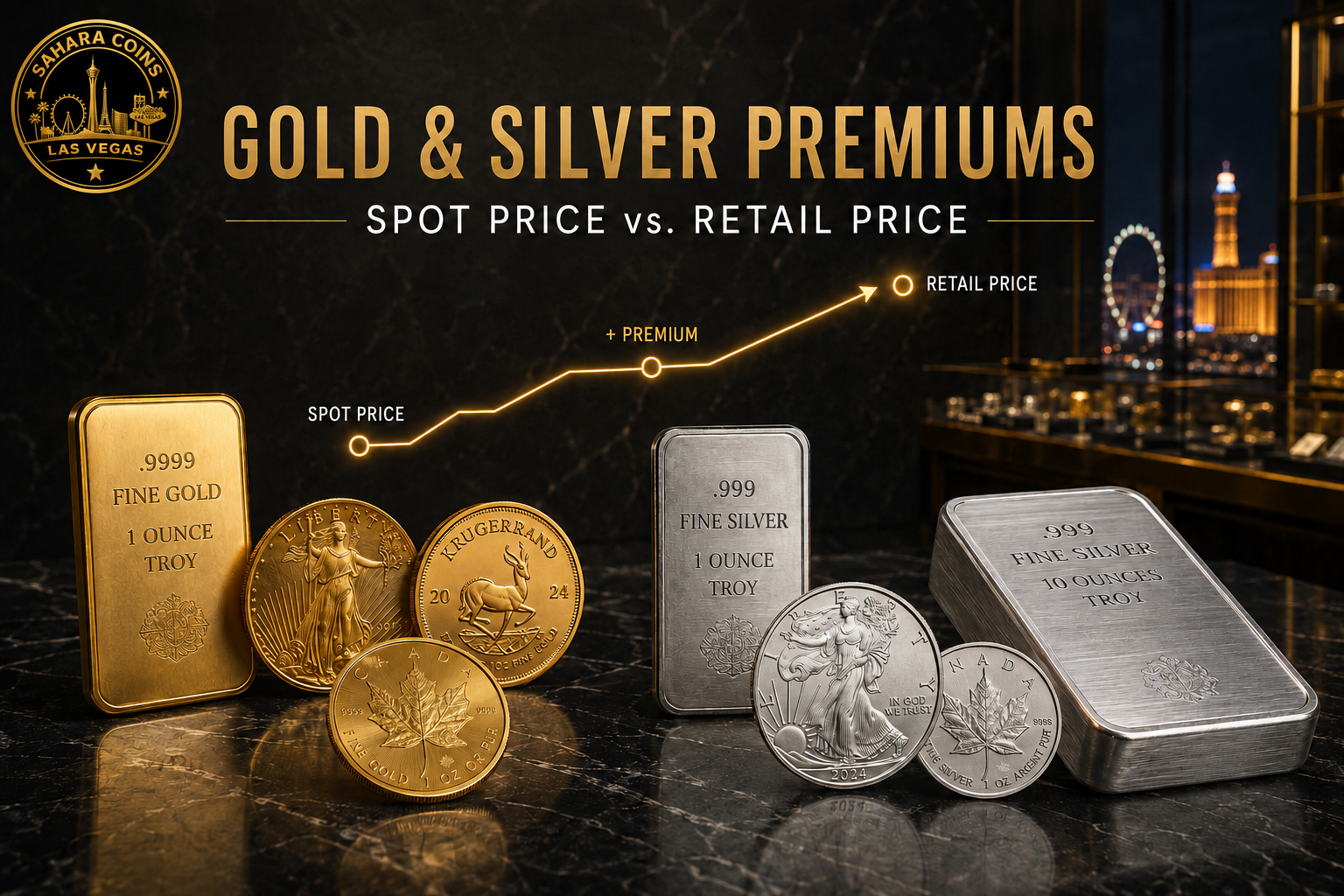
| Premiums | May carry higher premiums per ounce than larger bars | Larger bars may have lower premiums per ounce |
| Flexibility when selling | Smaller individual units can be easier to sell in portions | A large bar generally must be sold as one unit |
| Storage | Compact, but multiple coins may require organized storage | Efficient for storing larger amounts of gold in fewer pieces |
| Appearance | Detailed designs and government-issued format | Simple, functional bullion format |
Premiums and buyback offers change with market conditions, product availability, and the specific item involved. Ask for current pricing and an explanation of the premium before buying.
Why First-Time Buyers Often Start With Gold Coins
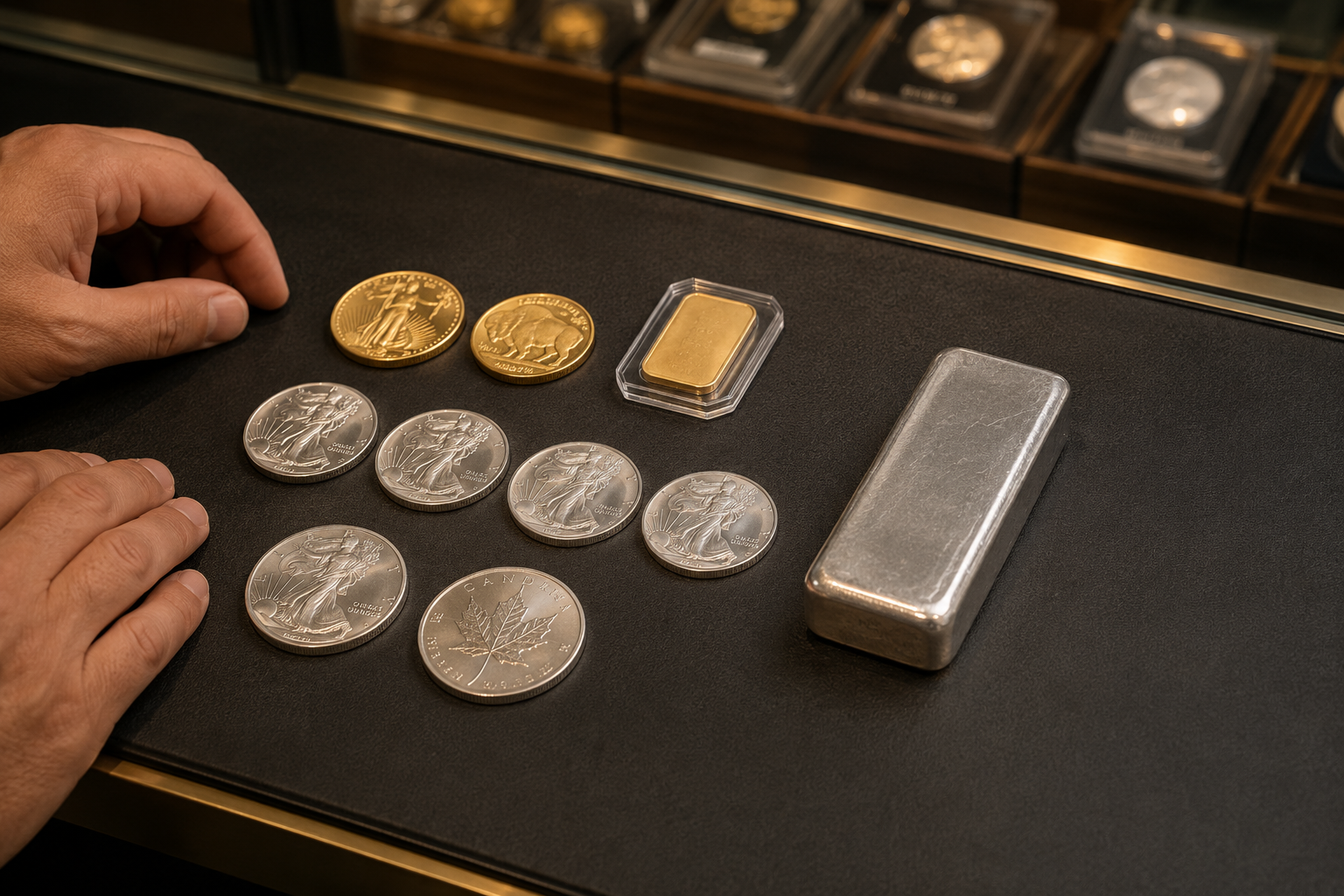
Many first-time buyers prefer bullion coins because they are familiar, divisible, and widely recognized. If you purchase several individual coins rather than one larger bar, you may have more flexibility if you decide to sell only part of your holdings later.
Recognizable coins can also make the resale conversation more straightforward. A reputable precious metals dealer can verify and evaluate both coins and bars, but products with broad market recognition may be easier for a new buyer to understand and compare.
Fractional gold coins may also be useful for buyers who want to begin at a lower price point than a full-ounce item. Keep in mind that smaller products often carry a higher premium per ounce than larger products, so affordability per piece and cost efficiency per ounce are not always the same thing.
Why Some First-Time Buyers Choose Gold Bars
Gold bars can be a practical choice for buyers whose main priority is acquiring gold as efficiently as possible. In many cases, larger bars may have lower premiums per ounce than smaller bullion products. This is not a universal rule, and it is always worth comparing current products side by side.
Bars may also simplify storage when purchasing a larger quantity of gold. Instead of managing many individual coins, a buyer can hold more gold in fewer pieces. For someone who expects to hold long term and does not need to sell in small increments, this simplicity can be attractive.
The trade-off is flexibility. If your gold is concentrated in one larger bar, selling a portion of it is not as simple as selling one coin from a group of coins.
Five Questions to Ask Before You Buy
1. What is my budget?
Start with an amount you are comfortable allocating to physical gold. Do not feel pressured to buy a particular size simply because it is commonly discussed. Your budget may point naturally toward fractional coins, full-ounce coins, smaller bars, or larger bars.
2. Do I value flexibility when selling?
If you want the option to sell in smaller portions, individual coins or smaller bars may fit your plan better. If you are comfortable selling your holding as one piece, a larger bar may be worth considering.
3. How important is product recognition to me?
Widely traded bullion coins can be easy for first-time buyers to research and recognize. Established bars from recognized refiners are also common in the market. Whatever you choose, buy from a reputable dealer that can clearly identify the product, its weight, purity, and current price.
4. Where will I store it?
Physical gold needs secure storage. Consider whether you plan to use a home safe, a bank safe-deposit box, or a professional storage option. Think through privacy, access, insurance considerations, and recordkeeping before you buy.
5. What am I paying above the gold value?
Ask about the product premium and compare like-for-like items. The spot price of gold is only one part of the transaction. The product type, size, availability, and dealer costs can all affect the final price. It is also reasonable to ask how the dealer approaches buybacks for the products you are considering.
What Matters More Than Coins or Bars: Buying From a Reputable Dealer
Whether you select coins or bars, the source matters. A trusted dealer should be willing to answer questions, explain the item you are buying, provide clear pricing, and discuss current availability without making promises about future gold prices or investment performance.
First-time buyers should be cautious about products marketed with urgent claims, guaranteed returns, or unclear descriptions. Before completing a purchase, make sure you understand:
- The product's stated weight and purity
- Whether the item is a bullion product or a collectible coin
- The total purchase price and premium
- Any applicable payment, delivery, or pickup terms
- Your preferred storage approach
- How resale may work when you are ready to sell
So, Which Is Better for a First-Time Gold Buyer?
There is no single answer for every buyer. Gold bullion coins may be the better starting point if you value recognizable products, smaller units, and the potential flexibility to sell piece by piece. Gold bars may be the better fit if you are focused on efficient gold ownership, prefer a simple format, and are comfortable with fewer, larger units.
A balanced approach can also make sense. Some buyers choose a mix of coins and bars to combine flexibility with potential cost efficiency. The right approach is the one that matches your budget, goals, and comfort level—not a one-size-fits-all recommendation.
Still deciding where to begin? Read our first-time buyer’s guide to buying physical gold and silver in Las Vegas for a complete overview of product choices, pricing, premiums, storage, and resale considerations.
Buy Gold Bullion in Las Vegas With Confidence
If you are comparing gold coins vs. bars in Las Vegas, Sahara Coins & Precious Metals can help you review available bullion options and understand the differences before you buy. We are here to provide straightforward information, answer your questions, and help you choose products that fit your goals.
Visit Sahara Coins & Precious Metals or contact our Las Vegas team to discuss current gold bullion coins and gold bars available for purchase.
If you already own gold coins and are considering selling, learn how Sahara Coins evaluates gold coins in Las Vegas based on metal content, authenticity, condition and potential collector value.
Ready to compare gold coins and bars in person? Visit our Buy Gold in Las Vegas page, then call Sahara Coins to ask about today’s available bullion inventory.