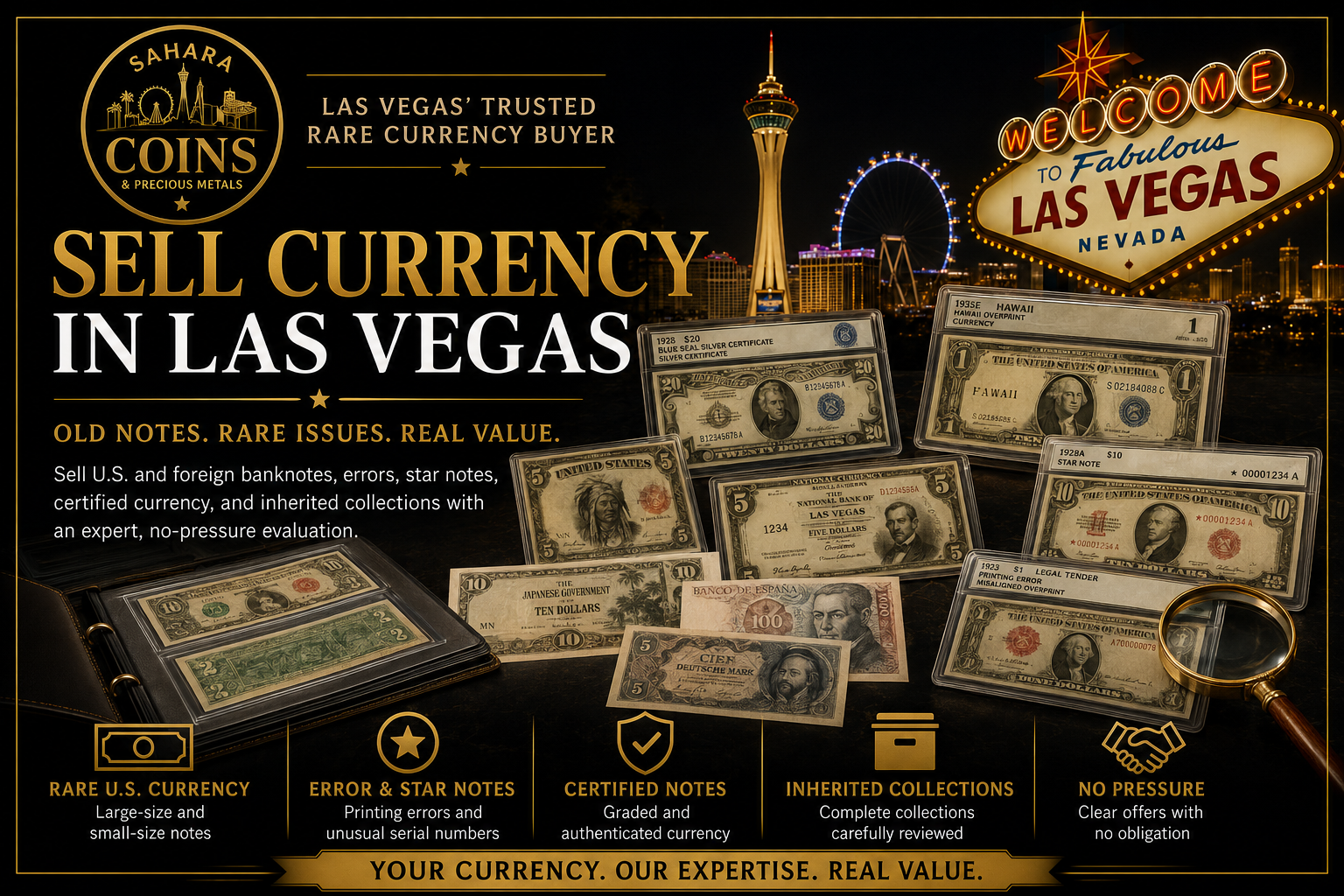
Looking to sell rare currency in Las Vegas? Sahara Coins evaluates old banknotes, errors, star notes, certified currency and inherited collections with knowledgeable, no-pressure service.
Sell Rare & Collectible Currency in Las Vegas
Old paper money can be worth considerably more than its printed denomination. Rarity, condition, serial number, issuing bank, historical importance and collector demand can all influence a note’s value.
Sahara Coins & Precious Metals buys rare United States currency, foreign banknotes, certified notes, error notes and complete paper-money collections. Whether you have one old bill, an inherited collection or an extensive assortment assembled over many years, our experienced Las Vegas team will carefully evaluate your items and explain what makes them collectible.
Visit our showroom for a knowledgeable evaluation and a clear, no-pressure offer.
Call (702) 367-4360
Visit Our Las Vegas Showroom
Sell Collectible Paper Money With Confidence
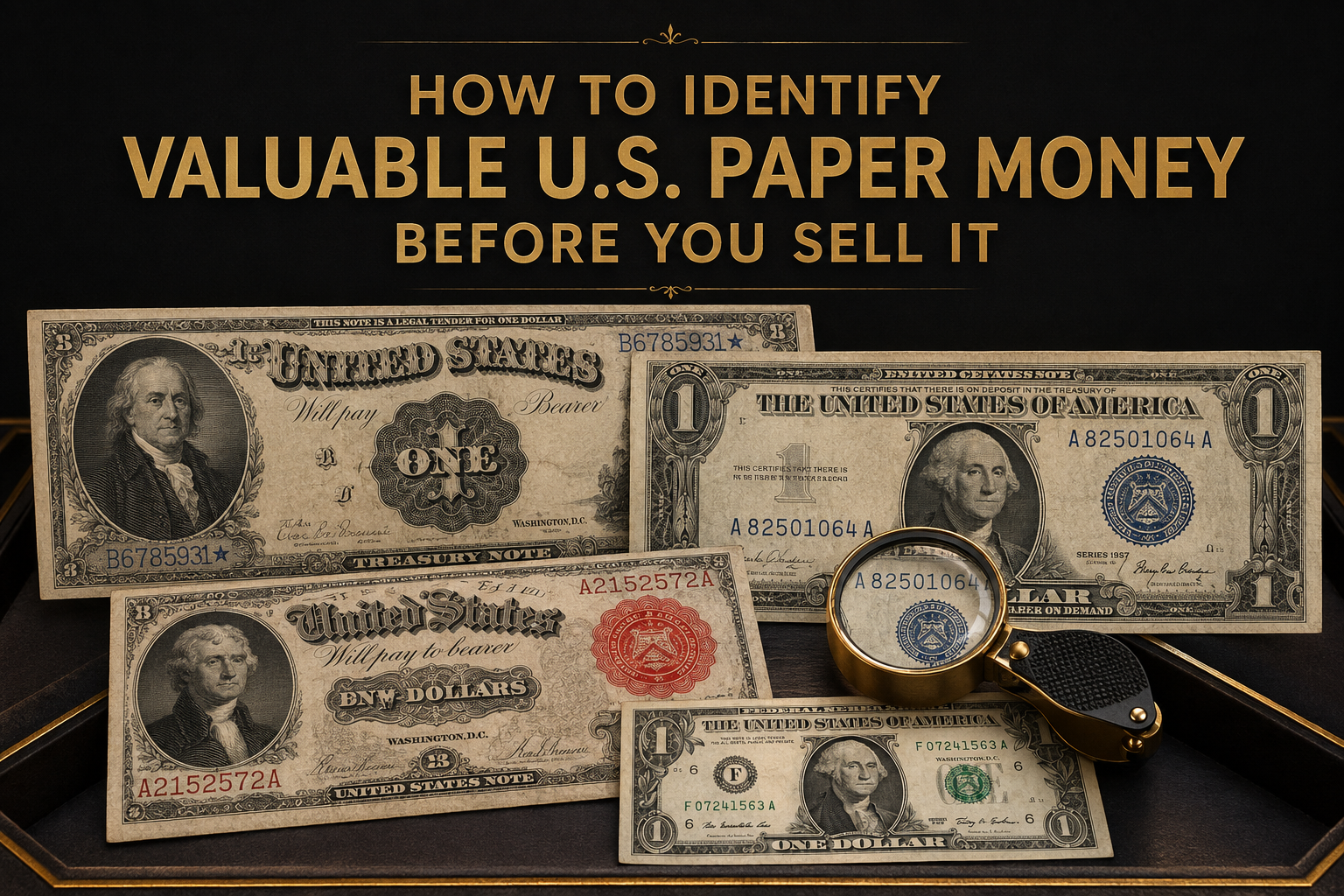
Determining the value of old currency requires more than looking at its age or denomination. Two notes that appear almost identical may have very different values because of their series, signatures, seal, issuing district, serial number or condition.
Our team evaluates each note based on the characteristics that matter to collectors. We explain what you have, identify pieces that may deserve individual attention and provide an offer based on current market demand.
There is no obligation to sell, and no appointment is required for most collections.
Types of Currency We Purchase
Sahara Coins evaluates many categories of collectible United States and foreign paper money, including:
Large-size United States notes
Small-size United States notes
National Bank Notes
Federal Reserve Notes
Federal Reserve Bank Notes
United States Notes and Legal Tender Notes
Silver Certificates
Gold Certificates
Treasury Notes
National Gold Bank Notes
Fractional currency
Educational Series notes
Brown, blue, red, yellow and other seal varieties
Hawaii emergency currency
North Africa emergency currency
Large-denomination notes
$500 and $1,000 bills
Obsolete banknotes
Colonial currency
Confederate and Southern States currency
Military Payment Certificates
Error notes
Star notes and replacement notes
Fancy and unusual serial numbers
Certified and professionally graded currency
Foreign banknotes
Complete and partial currency collections
Not every old bill is rare, but unusual notes should be professionally reviewed before they are spent, exchanged, discarded or sold.
Large-Size United States Currency
Before the introduction of today’s smaller note format, United States paper money was physically larger and featured some of the most detailed artwork ever used on American currency.
Large-size notes may include:
Legal Tender Notes
Silver Certificates
Gold Certificates
Treasury Notes
Federal Reserve Notes
Federal Reserve Bank Notes
National Bank Notes
Educational Series notes
Fractional currency
The value of a large-size note can depend on its type, series, signatures, seal, serial number, issuing bank, rarity and condition. Even damaged examples may remain collectible, particularly when the type or issuing bank is scarce.
National Bank Notes
National Bank Notes were issued by federally chartered banks throughout the United States. Each note identifies the issuing bank and location, making these bills especially interesting to collectors of local and regional history.
Value may be affected by:
Issuing bank
Town and state
Charter number
Denomination
Series
Treasury signatures
Bank officers’ signatures
Number of known surviving notes
Condition
Collector demand for the location
Notes issued by Nevada banks and scarce Western institutions may receive particular interest from regional collectors.
Silver Certificates, Gold Certificates and Legal Tender Notes
Many customers discover older notes with seals and designs that differ from modern currency.
Silver Certificates commonly feature blue seals and were once redeemable for silver under the laws and policies in effect at the time.
Gold Certificates are known for their gold-colored seals and historical connection to the nation’s monetary system.
United States Notes, also called Legal Tender Notes, commonly carry red seals and represent another important chapter in American paper-money history.
Some examples are common, while others can be scarce and highly collectible. Series, denomination, signatures, seal type and condition all matter.
Error Notes
Genuine printing errors can create significant collector interest. However, normal circulation damage, altered notes and post-production changes are not considered official printing errors.
Collectible errors may include:
Misaligned printing
Offset impressions
Inverted overprints
Missing print elements
Cutting errors
Obstructed printing
Mismatched serial numbers
Duplicate serial-number errors
Fold-over errors
Ink-related production errors
Authentication is essential because some apparent errors are caused after a bill leaves the printing facility. Do not cut, unfold, repair or otherwise alter a suspected error note before having it evaluated.
Star Notes and Fancy Serial Numbers
A note does not need to be extremely old to attract collector interest. Some modern bills are collected because of their replacement status or distinctive serial numbers.
Potentially collectible examples may include:
Star notes
Very low serial numbers
Solid serial numbers
Repeater serial numbers
Radar or palindrome serial numbers
Ladder serial numbers
Binary serial numbers
Birthday or date serial numbers
Consecutive groups
Other unusual serial-number patterns
A memorable number does not automatically make a note valuable. Denomination, series, condition, print run and collector demand must also be considered.
Large-Denomination Currency
Genuine United States $500 and $1,000 notes remain legal tender but are generally more desirable as collectibles than for their face value alone.
The value of a large-denomination note can vary based on:
Denomination
Series
Federal Reserve district
Seal and signatures
Serial number
Condition
Certification
Current collector demand
Because these notes represent substantial value and can be targets for counterfeiting or alteration, professional authentication and careful handling are especially important.
Foreign and Historic Banknotes
Sahara Coins also evaluates many foreign banknotes, particularly those with established historical or collector demand.
Foreign currency may be valued based on:
Country of issue
Date and denomination
Issuing authority
Historical importance
Rarity
Condition
Design
Collector demand
Whether the currency remains redeemable
Common modern foreign notes may have limited collectible value. Sahara Coins is not a foreign-currency exchange and does not provide travel-money conversion services. Please call ahead if your collection consists primarily of recent circulating foreign currency.
Certified and Graded Currency
Professional certification can help establish a note’s authenticity, variety and condition. We evaluate notes certified by recognized third-party grading services, along with raw or uncertified currency.
A graded holder may provide useful information, but certification does not automatically make every note rare or valuable. The underlying note, grade, demand and market activity remain the most important factors.
Do not remove certified notes from their holders before bringing them to Sahara Coins.
Selling an Inherited Currency Collection
Inherited paper-money collections may contain loose notes, albums, envelopes, graded holders and handwritten labels. You do not need to understand or organize the collection before visiting us.
Our team can help:
Identify the different types of currency
Separate common notes from potentially scarce pieces
Review large-size and small-size notes
Examine serial numbers and seals
Identify possible errors and star notes
Evaluate certified currency
Review complete or partial sets
Explain which notes may have individual collector value
Keep original envelopes, labels, albums and collector notes with the collection. They may provide useful information about where the items came from or how the collection was assembled.
What Determines the Value of Paper Money?
Several factors influence collectible currency values.
Type and Series
The type of note and its series help determine when, why and under what authority it was issued. Some types are much scarcer than others.
Condition
Condition is one of the most important factors in paper-money collecting. Collectors consider folds, stains, tears, pinholes, missing pieces, fading, writing, repairs, embossing and overall appearance.
Rarity
Rarity may be influenced by the original number printed, surviving population, issuing bank, denomination, variety or limited replacement-note run.
Serial Number
Low numbers, unusual patterns, stars and certain production characteristics can create additional interest.
Signatures and Seals
Treasury signatures, bank officers’ signatures and seal colors can distinguish common varieties from scarcer notes.
Printing Errors
Authentic production errors may be collectible, especially when visually dramatic and properly authenticated.
Historical Importance
Notes connected to specific banks, locations, wars, economic periods or changes in American banking may have special historical appeal.
Collector Demand
Market interest varies among currency types, denominations, locations and collecting specialties. Current demand affects what buyers are willing to pay.
Do Not Clean, Iron or Repair Old Currency
Attempts to improve a note’s appearance can permanently reduce its collectible value.
Before bringing currency to Sahara Coins:
Do not wash or chemically clean notes
Do not iron or press them
Do not erase writing
Do not tape tears
Do not trim damaged edges
Do not laminate notes
Do not remove notes from certified holders
Do not glue detached pieces
Do not attempt to recreate missing areas
Place loose notes in clean, currency-safe holders when practical and handle them carefully by the edges. Leave existing folds and damage as they are.
Our Currency Evaluation Process
Selling collectible currency at Sahara Coins is straightforward.
Step 1: Bring In Your Notes
Visit our Las Vegas showroom during normal business hours. An appointment is not generally required, but calling ahead is helpful for large collections or estates.
Step 2: We Identify the Currency
Our team reviews the note’s type, denomination, series, seal, signatures, issuing bank, serial number and other important characteristics.
Step 3: We Evaluate Condition and Rarity
We examine the note’s physical condition and consider scarcity, certification, collector demand and comparable market activity.
Step 4: We Explain What You Have
We identify noteworthy pieces and explain the primary factors influencing their value.
Step 5: Receive a No-Pressure Offer
We provide a clear offer based on the currency and current market demand. There is no obligation to accept. If you decide to sell, we will complete the transaction and provide prompt payment in accordance with applicable requirements.
Why Sell Currency to Sahara Coins?
Collectible currency requires specialized knowledge. A note’s face value or age tells only part of its story.
Las Vegas customers choose Sahara Coins because we provide:
Knowledgeable paper-money evaluations
Experience with rare and historic United States currency
Careful review of serial numbers, seals and signatures
Evaluation of certified and uncertified notes
Transparent explanations
Competitive offers based on current demand
Respectful handling of inherited collections
No-pressure service
A secure, established Las Vegas showroom
Whether you bring us one note or a complete collection, we will give your items careful and professional attention.
Frequently Asked Questions
Do I need an appointment to sell old currency?
An appointment is generally not required. Please call ahead for extensive collections, estates or a large number of notes that may require additional review time.
Is every old bill worth more than its face value?
No. Age alone does not make a note valuable. Type, series, condition, rarity, serial number and collector demand all influence value.
Do you buy $500 and $1,000 bills?
Yes, Sahara Coins evaluates genuine large-denomination United States currency. These notes should be handled carefully and professionally authenticated.
Do you buy error notes?
We evaluate potential printing errors. Genuine production errors may be collectible, while ordinary damage or alterations made after printing generally do not qualify.
Are star notes valuable?
Some star notes are collectible, particularly those from scarcer print runs or in excellent condition. Many others are relatively common. Each note must be evaluated individually.
Do you purchase foreign currency?
We evaluate many historic and collectible foreign banknotes. We are not a foreign-currency exchange and generally do not convert modern travel money.
Should I remove old notes from an album?
Leave the collection in its existing album or holders unless removal can be done without damaging the notes. Original organization may also provide useful context.
Can damaged currency still be collectible?
Yes. Tears, stains, folds or missing pieces reduce condition, but scarce notes may remain collectible despite damage.
Do you buy graded currency?
Yes. We evaluate professionally certified notes along with raw or uncertified currency.
Can I sell only part of a collection?
Yes. You may sell the entire collection or only the notes you are ready to part with.
Is there any obligation to sell?
No. We will explain what we identify and provide an offer. You decide whether to accept it.
Visit Sahara Coins to Sell Your Currency
If you are looking for a trusted place to sell rare or collectible currency in Las Vegas, visit Sahara Coins & Precious Metals.
Bring us your old United States bills, National Bank Notes, silver certificates, gold certificates, star notes, errors, large-denomination currency, foreign banknotes and inherited collections for a professional evaluation.
Sahara Coins & Precious Metals
7293 West Sahara Avenue, Suite 106
Las Vegas, Nevada 89117
(702) 367-4360
Monday–Friday: 9:30 a.m.–4:30 p.m.
Saturday–Sunday: Closed
learn more before you sell