Comic Books and Grading: A Complete Guide for Collectors
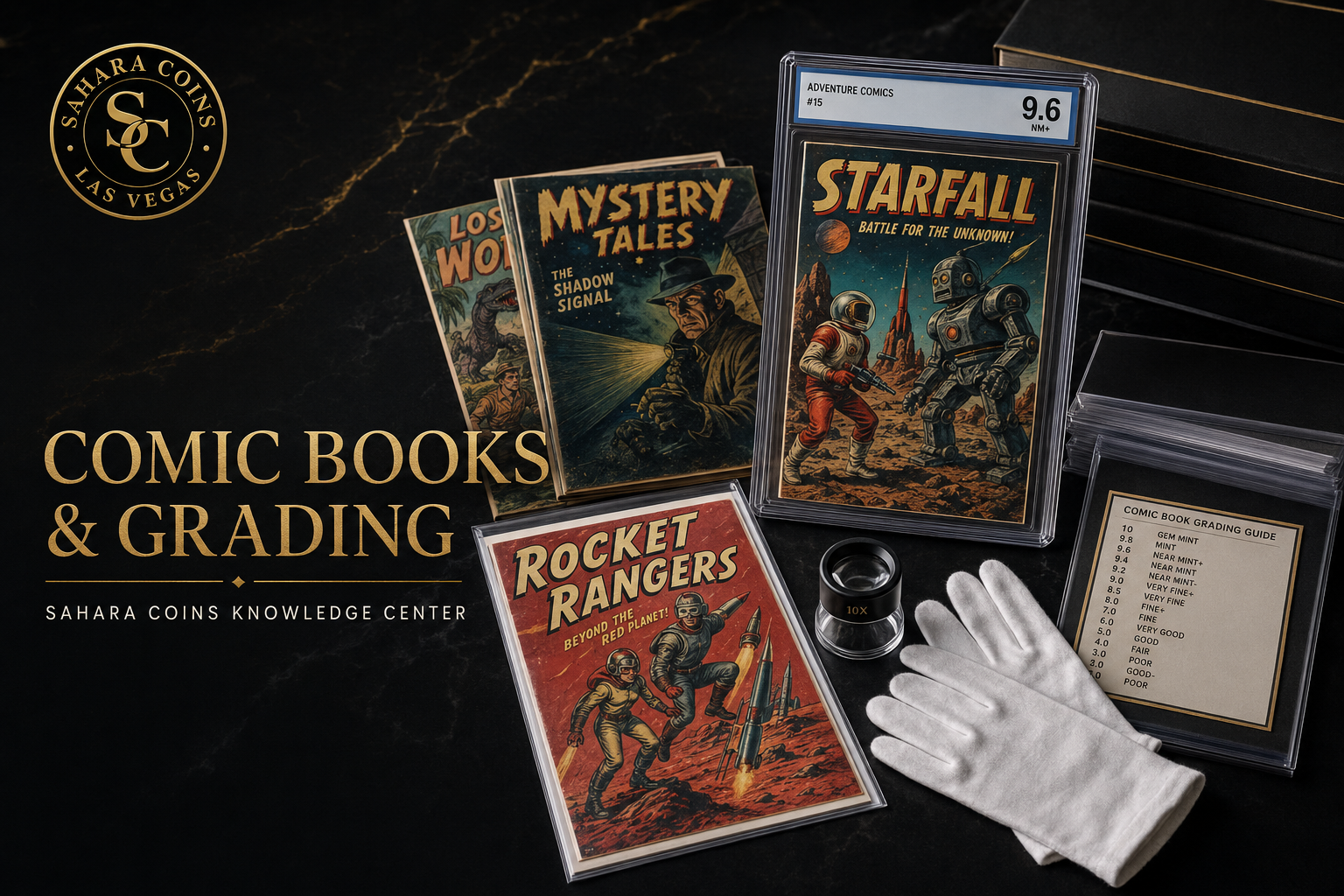
Comic-book collecting brings together storytelling, artwork, history, nostalgia, and the thrill of discovering something special. While certain comics can be highly valuable, determining what a comic is worth requires more than checking its title, issue number, or publication date.
Condition plays a major role in the collectible-comics market. Small differences—such as a color-breaking crease, detached staple, missing page, or restoration—can substantially affect a comic’s grade and value.
Understanding comic-book grading can help you buy more confidently, protect your collection, recognize potential problems, and decide whether professional certification is worthwhile.
What Is Comic-Book Grading?
Comic-book grading is the process of evaluating a comic’s physical condition and assigning it a grade. Collectors, dealers, auction companies, and third-party grading services use established standards to describe how well a comic has survived.
A grade considers factors such as:
Cover condition
Spine wear
Corners and edges
Page quality
Staples
Creases and folds
Tears and missing pieces
Writing or markings
Stains and moisture damage
Interior completeness
Restoration
Manufacturing defects
Grading provides a shared vocabulary for buyers and sellers. Instead of simply describing a comic as “good” or “excellent,” a numerical grade gives collectors a more specific way to compare it with other examples.
However, grading still involves informed judgment. Two experienced graders may occasionally assign slightly different grades to the same raw comic.
The Comic-Book Grading Scale
Comic books are commonly graded on a numerical scale ranging from 0.5 to 10.0. Higher numbers represent better-preserved comics.
General grading categories include:
Numerical grades,
10.0 Gem Mint
9.9 Mint
9.8 Near Mint
Near Mint 9.6
Near Mint+9.4
Near Mint 9.2
Mint/Near Mint−9.0
Very Fine/Near Mint 8.0
Very Fine 7.0
Fine 6.0
Fine5.0
Very Good/Fine 4.0
Very Good 3.0
Good/Very Good 2.0
Good 1.0
Fair 0.5
Poor
Not every grade is represented in this simplified table. Professional grading companies use additional increments throughout the scale.
The difference between two neighboring grades may appear small, but it can significantly affect the market value of an important comic.
What Is a Raw Comic Book?
A raw comic is one that has not been professionally graded and encapsulated. It is usually stored in a protective bag with a backing board.
Raw comics allow collectors to:
Read the issue
Inspect the interior
Examine the staples
Check for missing pages
Identify restoration
Store the comic inexpensively
However, buying raw comics requires experience. Damage, incomplete interiors, detached centerfolds, restoration, or other problems may not be visible in photographs.
A seller’s assigned grade is also an opinion rather than an independent certification.
What Is a Graded or “Slabbed” Comic?
A professionally graded comic is inspected by a third-party grading service and sealed inside a tamper-evident protective holder, commonly called a slab.
The label generally includes:
Comic-book title
Issue number
Publisher
Publication date
Numerical grade
Significant characters or events
Artist or writer information
Variant information
Restoration or qualification details
Certification number
Professional grading can provide greater confidence that a comic has been examined for condition, completeness, and possible restoration.
Encapsulation also protects the comic from ordinary handling, although a slab does not make it immune to sunlight, heat, humidity, impact, or improper storage.
What Do Graders Examine?
Professional comic grading involves examining the complete book—not just its front cover.
Cover Condition
The cover is one of the first areas collectors notice. Graders examine it for:
Creases
Tears
Fading
Stains
Scratches
Scuffing
Missing pieces
Writing
Subscription creases
Detached sections
Color loss
Surface impressions
A crease that breaks the printed color is generally more serious than a light bend that leaves the ink intact.
Spine Condition
The spine frequently shows the greatest evidence of handling and storage.
Graders may look for:
Spine ticks
Color-breaking stress marks
Splits
Rolling
Staple tears
Abrasion
Missing material
Misalignment
Numerous small spine defects can prevent an otherwise attractive comic from receiving a high grade.
Corners and Edges
Sharp corners and clean edges are desirable. Graders consider:
Rounding
Blunting
Fraying
Chipping
Tears
Creases
Missing pieces
Manufacturing roughness
Older comics may exhibit production-related edge problems that must be distinguished from later damage.
Staples
Staples help determine whether the comic remains structurally intact.
Potential problems include:
Rust
Migration stains
Detached covers
Loose centerfolds
Tears around the staples
Replaced staples
Missing staples
Staple repositioning
Replacing or adding staples may be considered restoration or alteration.
Interior Pages
A comic’s interior is checked for completeness and condition.
Graders look for:
Missing pages
Missing coupons
Cut-outs
Tears
Writing
Stains
Tape
Brittle paper
Detached centerfolds
Printing problems
Page quality
A comic with a missing story page or panel may receive a very low grade or an incomplete designation regardless of how attractive its cover appears.
Page Quality
Paper naturally changes color as it ages. Storage conditions, paper composition, humidity, and exposure to heat can accelerate deterioration.
Page-quality descriptions may include:
White
Off-white to white
Off-white
Cream to off-white
Cream
Tan
Brittle
Whiter, more supple pages are generally preferred, but expectations vary according to the comic’s age.
A Golden Age comic with off-white pages may still be exceptionally well preserved for its period.
Common Comic-Book Defects
Understanding common defects can help collectors evaluate raw books more accurately.
Spine Ticks
Spine ticks are small stress lines along the folded edge. If the line breaks the printed color, it will generally have a greater effect on the grade.
Color-Breaking Creases
A color-breaking crease removes or disrupts ink along the fold. Unlike some light bends, it generally cannot be improved through pressing.
Non-Color-Breaking Bends
These bends affect the paper’s shape without visibly breaking the ink. Some may be reduced through professional pressing, but pressing does not guarantee a particular grade.
Subscription Creases
Older comics were sometimes folded for mailing. A full-length crease can significantly affect condition, especially when it breaks color.
Spine Roll
Spine roll occurs when the cover and pages shift or curl along the spine. It is common in comics that were stacked or stored improperly.
Tears and Missing Pieces
The location and size of a tear matter. A small edge tear is different from a large tear affecting artwork or interior content.
Missing pieces have a greater effect, particularly when they affect the story.
Detached Covers or Centerfolds
A cover or centerfold can become loose or completely detached from one or both staples. These structural problems generally lower the grade.
Rusty Staples
Rust can stain surrounding paper and eventually weaken the staple. Rust migration may continue if the comic is stored in a humid environment.
Writing and Date Stamps
Names, prices, arrival dates, or other writing can affect the grade. Some distributor or arrival-date marks are viewed differently from random writing or defacement.
Signatures should be evaluated separately because authenticity and documentation matter.
Stains and Moisture Damage
Water stains, mold, tide lines, odor, and rippling can seriously affect condition. Mold may also present a health risk and spread to nearby items.
Affected comics should be isolated and handled carefully.
What Is Comic-Book Restoration?
Restoration refers to work performed to improve the appearance or structural condition of a comic.
Examples may include:
Color touch
Tear seals
Piece replacement
Reinforcement
Cleaning
Staple replacement
Cover reattachment
Trimming
Chemical treatment
Married pages or covers
A restored comic is not necessarily worthless. Important and extremely rare comics can remain valuable despite restoration. However, restored examples often sell for less than comparable unrestored copies.
Restoration should be disclosed clearly. Attempting to conceal it can damage buyer confidence and create serious disputes.
What Is Comic Pressing?
Pressing is a conservation-related process intended to reduce certain bends, waves, and surface imperfections without adding material to the comic.
Pressing may help with:
Non-color-breaking bends
Light rippling
Minor surface impressions
Certain spine rolls
Improper stacking effects
Pressing generally cannot repair:
Color-breaking creases
Tears
Missing pieces
Stains
Fading
Rust
Brittle pages
Ink loss
Improper pressing can damage a comic. Valuable books should be handled by an experienced professional rather than treated with household equipment.
Never use an iron, hair dryer, heavy stack of books, moisture, or improvised pressing method on a potentially valuable comic.
What Makes a Comic Book Valuable?
Grade is important, but it is only one part of value.
Key Issues
Key issues contain events or appearances that are especially important to collectors.
These may include:
First appearances
First full appearances
Origin stories
First meetings
Major character deaths
New costumes or identities
First solo titles
Important creator work
Significant storyline events
Final issues
Low-print-run issues
The importance of a key issue depends on collector demand and the long-term popularity of the character or story.
Age
Comic-book history is often divided into eras, including:
Golden Age
Silver Age
Bronze Age
Copper Age
Modern Age
Age can contribute to rarity, but an old comic is not automatically valuable. Many later comics can also be valuable because of limited production, important appearances, variants, or exceptional condition.
Scarcity
A comic may be scarce because:
Few copies were printed
Distribution was limited
Many copies were discarded
It was recalled
It was a retailer incentive
It had a low-order variant
High-grade examples are difficult to find
The issue contains a printing variation
Scarcity must be combined with collector demand to create substantial value.
Popular Characters
Comics featuring established superheroes, villains, horror characters, science-fiction properties, and culturally significant figures often attract larger audiences.
However, popularity can fluctuate with movies, television series, games, and changing collector interests.
Variant Covers
Variant covers can be collectible, especially when tied to a limited distribution ratio, convention, retailer, artist, or special event.
Not every variant is rare. Collectors should verify:
Print information
Distribution method
Cover designation
Artist
Edition
Authenticity
Actual recent sales
Signatures and Original Sketches
A signature or original sketch can add desirability when it is authentic and connected to an important creator.
The value depends on:
Identity of the signer
Documentation
Placement
Appearance
Rarity
Comic’s significance
Whether the signature was witnessed or authenticated
Collector demand
An unverified signature may be difficult to sell as authentic.
When Is Professional Grading Worth It?
Not every comic should be submitted for professional grading.
Certification may make sense when:
The comic is a significant key issue
It appears to be in unusually high grade
Counterfeits or reproductions exist
Restoration is a concern
The book has an important signature
The value difference between grades is substantial
You plan to sell through a major marketplace or auction
Buyers commonly expect certification
The comic is difficult to evaluate accurately
Grading may not be worthwhile when:
The comic is common
Its market value is relatively low
It is heavily damaged
Submission costs would exceed the likely benefit
You want to read it regularly
The expected grade would not improve its marketability
Submission costs may include grading, pressing, shipping, insurance, handling, and membership or dealer fees.
Rarity is only one factor that can affect an item’s value. Learn how condition, authenticity, provenance and collector demand help determine whether a collectible is rare or valuable.
Estimating a Comic Before Submission
Before paying for grading, evaluate the comic carefully.
Identify the Exact Issue
Confirm:
Title
Issue number
Publisher
Publication date
Printing
Cover variant
Price variant
Edition
Barcode differences
Regional variation
Inserts or special features
Small differences may substantially affect rarity and value.
Examine Completed Sales
Compare recently sold examples with the same:
Issue
Printing
Variant
Grade
Page quality
Restoration status
Signature status
Label or certification type
An active listing does not establish value. Focus on actual completed transactions.
Estimate Conservatively
Collectors often overestimate the grade of their own comics. Assume visible defects will be considered and compare the book with professionally graded examples.
A comic that appears flawless inside a bag may show spine stress, indentation, or surface wear under angled lighting.
Calculate the Costs
Consider whether the potential increase in marketability justifies:
Grading fees
Pressing fees
Shipping
Insurance
Wait time
Selling fees
Risk of a lower-than-expected grade
Professional grading is a tool—not a guarantee of profit.
Buying Raw Comic Books
When buying an ungraded comic, request clear photographs of:
Front cover
Back cover
Spine
Corners
Staples
Centerfold
Interior pages
Any defects
Copyright or publication information
Ask whether:
The comic is complete
Coupons have been removed
The cover or centerfold is detached
Restoration has been identified
There is writing or tape
The comic has moisture damage
It has been pressed
It contains signatures
Returns are accepted
If the comic is expensive, consider purchasing from a reputable dealer or obtaining an independent evaluation.
Buying Professionally Graded Comics
A slab provides useful information, but buyers should still research the comic.
Check:
Certification number
Grade
Page quality
Label comments
Restoration designation
Variant information
Signature details
Holder condition
Signs of tampering
Recent comparable sales
The grade does not guarantee future appreciation. Market value still depends on demand, scarcity, character popularity, and broader collecting trends.
Selling a Comic-Book Collection
Comic collections can range from a few key issues to thousands of books. Organization can make evaluation more efficient.
Before selling:
Keep complete runs and related issues together.
Separate professionally graded comics.
Identify obvious key issues.
Preserve bags, boards, boxes, and documentation.
Do not clean, tape, press, or repair comics.
Photograph valuable issues.
Make a basic inventory if practical.
Note signatures, variants, and first appearances.
Store the collection in a dry, temperature-stable area.
Seek professional assistance when the collection may contain significant material.
Do not assume every comic must be individually graded. A knowledgeable evaluation can help identify which books deserve closer examination.
Inheriting a Comic-Book Collection
An inherited collection may contain carefully selected key issues mixed with common reading copies. The collector’s labels, notes, receipts, and organization can provide useful clues.
Preserve:
Original storage order
Handwritten notes
Purchase receipts
Grading paperwork
Certificates
Convention records
Signature documentation
Correspondence
Auction records
Avoid separating or discarding duplicate copies before understanding why they were collected. Differences in printing, cover, grade, or content may make one copy more important than another.
How to Store Comic Books Properly
Storage can directly affect condition.
Recommended practices include:
Use archival-quality comic bags
Use acid-free backing boards
Replace aging storage materials when appropriate
Store comics upright in properly sized boxes
Avoid overfilling boxes
Keep boxes off concrete floors
Maintain stable temperature and humidity
Avoid direct sunlight
Protect comics from water and pests
Handle comics with clean, dry hands
Keep food and liquids away
Do not stack heavy objects on boxes
Graded comics should also be stored upright and protected from impact, heat, moisture, and ultraviolet light.
Common Comic-Collecting Mistakes
Assuming Every Old Comic Is Valuable
Age is only one factor. Many older issues are common or have limited demand.
Overestimating the Grade
Small defects can prevent a comic from receiving a Near Mint grade. Evaluate condition under strong, angled lighting.
Cleaning or Repairing the Comic
Tape, glue, markers, cleaning chemicals, and home pressing methods can permanently reduce value.
Ignoring the Back Cover
Collectors sometimes focus only on the front. Tears, stains, writing, subscription labels, and missing pieces on the back also affect grade.
Trusting Asking Prices
An online seller can ask any amount. Completed sales provide a better indication of current demand.
Submitting Everything for Grading
Mass grading common comics can become expensive. Research value and expected grade before submitting.
Discarding Documentation
Signature records, receipts, certificates, and original packaging may be important to authenticity and provenance.
Comic Books as Collectibles
Comic books should primarily be collected because they are enjoyable. Certain issues may increase in value, but markets can change and no grade guarantees future profit.
Prices may be affected by:
Movie or television announcements
Character popularity
Major auctions
New discoveries
Population reports
Economic conditions
Generational nostalgia
Changes in collecting trends
Collectors should establish a budget, research carefully, and avoid making decisions based solely on short-term speculation.
Evaluating Collectibles in Las Vegas
Sahara Coins & Precious Metals believes informed collectors make better decisions. Our Knowledge Center provides educational resources covering coins, currency, bullion, jewelry, stamps, and other collectible categories.
If you have an inherited collection or an assortment containing comic books and other collectibles, preserve everything together and contact us before cleaning, repairing, or discarding unfamiliar items. Our team can help you better understand your collection and determine the appropriate next steps for specialized material.
Visit Sahara Coins & Precious Metals at 7293 West Sahara Avenue, Suite 106, Las Vegas, Nevada 89117.
Frequently Asked Questions
What is the highest comic-book grade?
The highest commonly assigned numerical grade is 10.0, described as Gem Mint. This grade is exceptionally difficult to obtain.
Is a 9.8 comic considered high grade?
Yes. A 9.8 is generally considered Near Mint/Mint and is highly desirable for many modern and collectible issues.
Is a professionally graded comic automatically valuable?
No. Grading verifies an opinion of condition and other characteristics, but market value still depends on the comic’s importance, scarcity, and demand.
Can pressing increase a comic’s grade?
Pressing may reduce certain non-color-breaking bends and surface defects. It cannot repair color-breaking creases, tears, stains, missing pieces, or many other problems. No grade increase is guaranteed.
Are restored comics worth collecting?
Yes. Restored copies can provide a more affordable way to own important issues. Restoration should be properly identified and disclosed.
Should I remove a comic from its original bag?
Old bags and boards can deteriorate, but potentially valuable comics should be handled carefully. If you are unfamiliar with proper handling, seek guidance before removing the book.
How do I know whether a comic is a first printing?
Examine the publication information, barcode, cover details, price, advertisements, and other issue-specific identifiers. The correct method varies by publisher and period.
Should every key comic be professionally graded?
Not necessarily. Consider its condition, value, grading costs, restoration concerns, and your reason for owning it.
Final Thoughts
Comic-book grading provides collectors with a structured way to evaluate condition, compare examples, and communicate value. A comic’s grade is determined by its entire physical state—not just the appearance of its front cover.
Before buying, selling, pressing, repairing, or submitting a comic for professional grading, identify the exact issue and examine it carefully. Compare completed sales, estimate the grade conservatively, calculate submission costs, and preserve all documentation.
The most successful collectors combine enthusiasm with patience, careful research, and respect for the history contained within every issue.