Buying and Selling Collectible Currency: A Complete Guide for Collectors
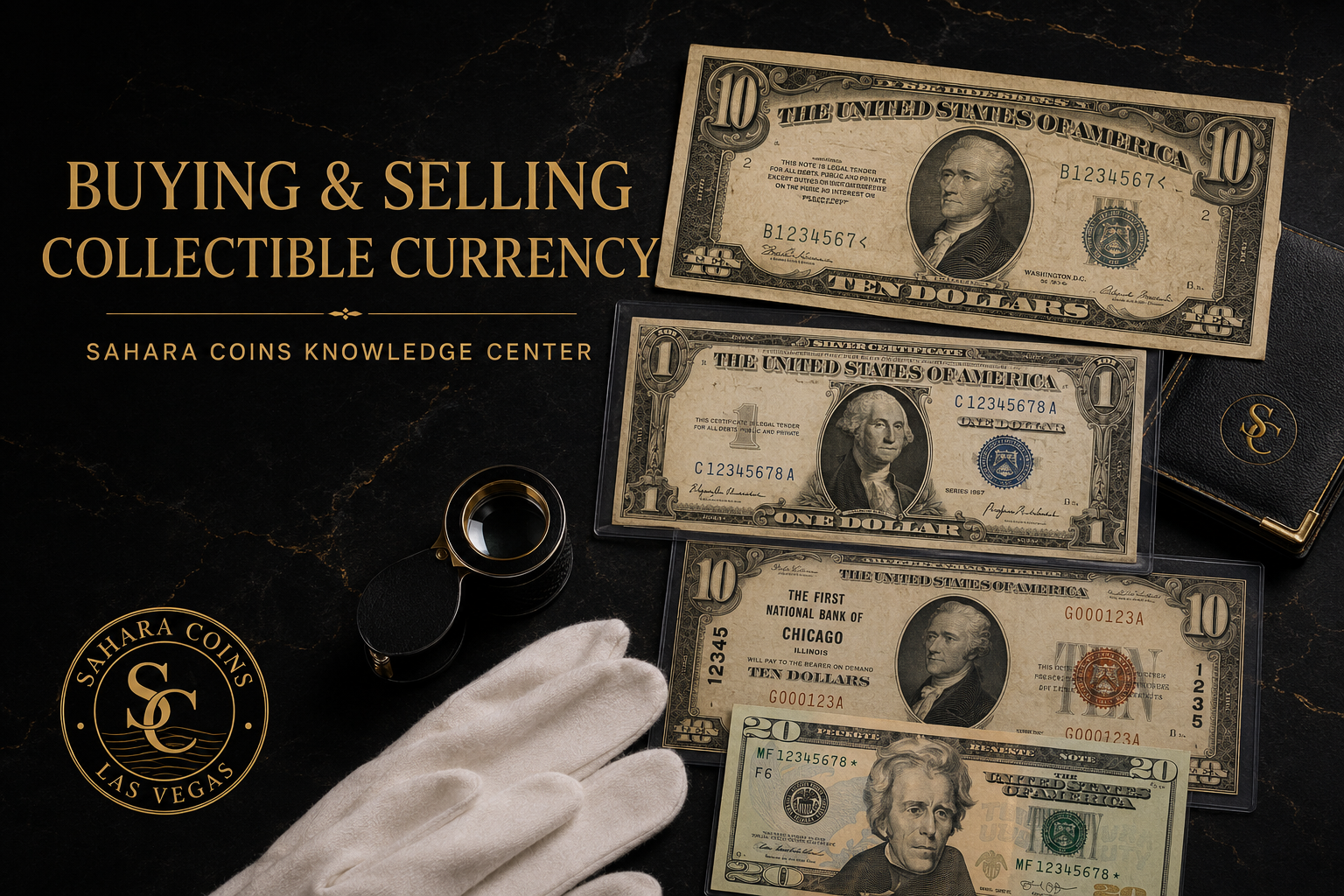
Collectible currency offers a fascinating combination of history, artistry, rarity, and financial value. From large-size U.S. notes and obsolete banknotes to modern star notes and unusual serial numbers, paper money can tell stories about America’s banks, economy, government, and culture.
Whether you are starting a collection, adding a rare note to an established set, or deciding whether to sell inherited currency, knowledge is essential. A bill’s denomination and age are only part of its story. Condition, rarity, serial number, issuing bank, printing variety, demand, and authenticity can all affect its value.
This guide explains what to consider when buying and selling collectible currency and how to make more informed decisions.
What Is Collectible Currency?
Collectible currency generally refers to paper money valued for more than its face value. While some notes are collected because they are old or scarce, others attract buyers because of their designs, historical importance, printing errors, serial numbers, or exceptional condition.
Popular categories of collectible U.S. currency include:
Large-size United States notes
Small-size United States notes
Silver certificates
Gold certificates
National banknotes
Federal Reserve notes
Federal Reserve Bank notes
Legal tender notes
Treasury notes
Fractional currency
Military payment certificates
Confederate currency
Obsolete banknotes
Colonial currency
Hawaiian and North African emergency notes
Star notes
Printing errors
Fancy serial numbers
Uncut currency sheets
World paper money
Some collectors specialize in one category, while others build collections around denominations, designs, historical periods, issuing banks, or hometown connections.
Why Do People Collect Paper Money?
Every piece of collectible currency represents a moment in financial and political history. Notes may feature prominent historical figures, detailed engravings, patriotic imagery, local bank names, unusual seals, or designs that are no longer used.
Collectors may be attracted to currency because of its:
Historical significance
Artistic design
Connection to a city or state
Rarity
Condition
Unusual serial number
Printing error
Investment or resale potential
Personal or family significance
Currency is also relatively easy to store and display when it is protected correctly. A collection can range from affordable modern notes to exceptional rarities worth thousands of dollars or more.
What Determines the Value of Collectible Currency?
The value of a collectible note depends on several factors working together. There is no single rule stating that every old bill is valuable.
Rarity
Rarity is one of the most important factors in collectible currency. A note may be scarce because relatively few were printed or because very few examples survived.
Collectors may examine:
Total number printed
Number of known surviving examples
Series and year
Denomination
Seal color
Signature combination
Issuing district or bank
Block letters
Printing variety
Replacement-note status
A genuinely rare note can remain valuable even when it shows considerable circulation. However, rarity alone does not guarantee strong demand.
Condition
Condition can have a dramatic effect on value. Currency collectors generally prefer notes with strong paper quality, bright color, sharp corners, and minimal evidence of handling.
Condition problems may include:
Folds and creases
Tears
Missing pieces
Pinholes
Stains
Writing
Tape repairs
Fading
Rust marks
Uneven or trimmed margins
Excessive wear
Chemical cleaning
Pressing or other alterations
Two notes with the same year, denomination, and design can have significantly different values if one is heavily circulated and the other is exceptionally well preserved.
Collector Demand
A note must have interested buyers for its rarity to translate into market value. Some currency categories have much larger collector followings than others.
Demand can be especially strong for:
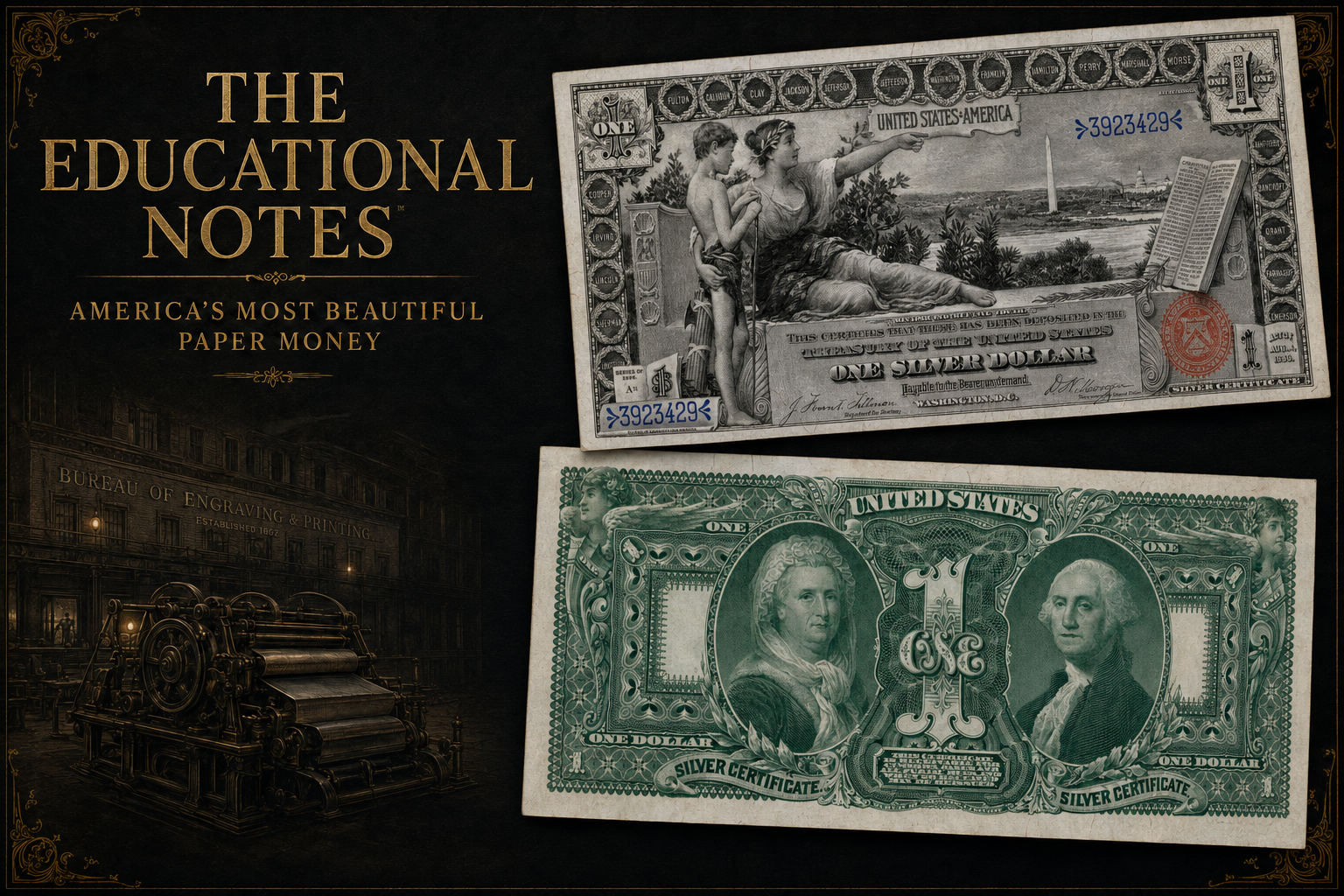
Educational Series notes
Gold certificates
Large-size silver certificates
National banknotes from desirable locations
High-denomination notes
Well-centered star notes
Dramatic printing errors
Recognizable fancy serial numbers
Notes with popular historical designs
Collector preferences and market conditions can change, so recent sales are usually more meaningful than outdated price guides.
Serial Numbers
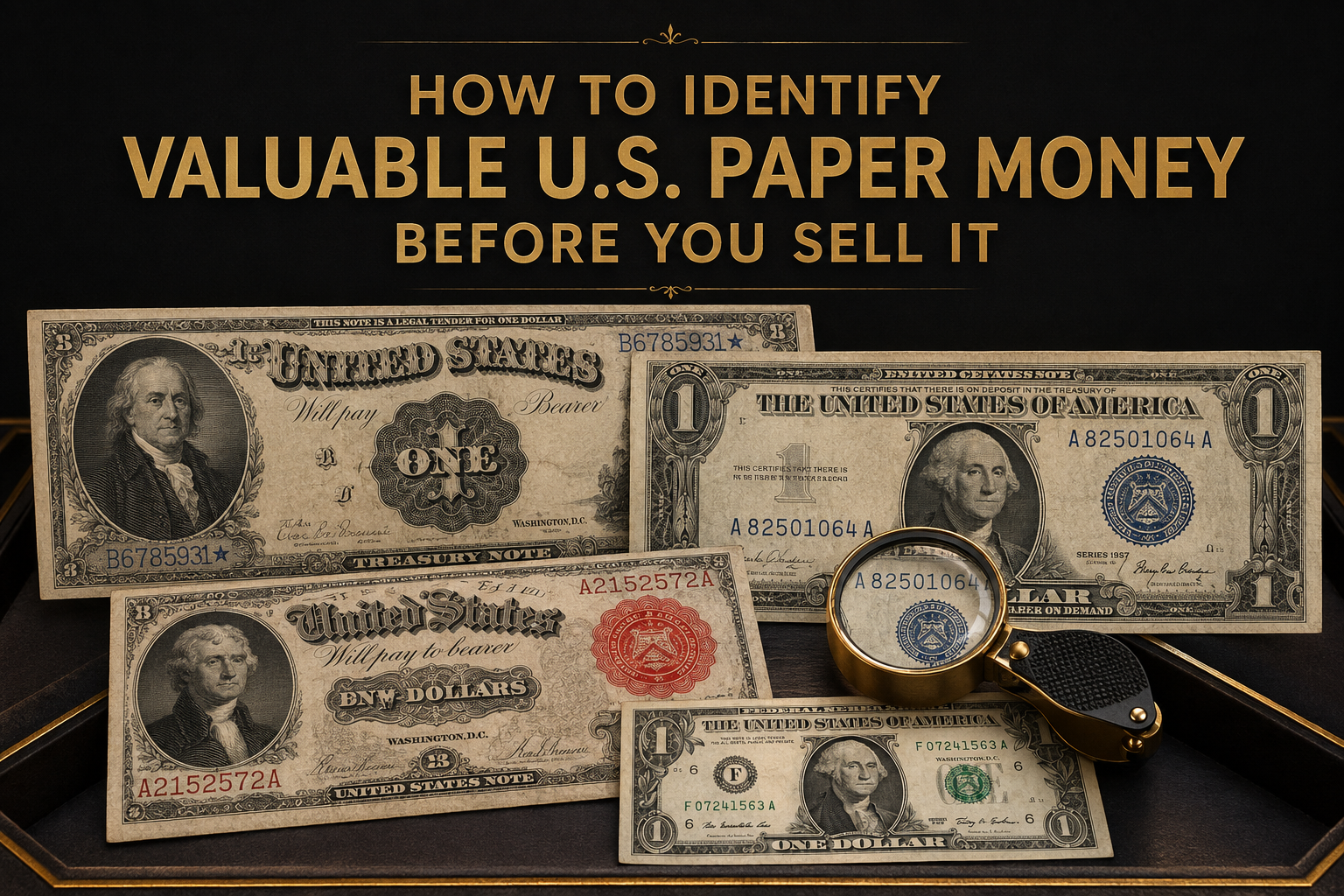
Certain serial-number patterns can add collector value to otherwise common notes. These are often called fancy serial numbers.
Examples include:
Very low numbers, such as 00000008
Solid numbers, such as 77777777
Ladder numbers, such as 12345678
Radar numbers, such as 12344321
Repeater numbers, such as 12121212
Binary-style numbers using only two digits
Birthday or historically meaningful dates
Consecutive serial-number runs
Not every unusual-looking number carries a premium. The pattern generally needs to be clear, recognizable, and desirable to collectors.
Star Notes
A star note has a star symbol in or near its serial number. These notes were printed as replacements for notes damaged or removed during production.
Some star notes are common, while others can be scarce because of short print runs or limited surviving populations. The series, denomination, issuing district, condition, and production quantity must all be considered.
A star symbol by itself does not automatically make a bill highly valuable.
Printing Errors
Authentic currency errors can be highly collectible. Examples may include:
Misaligned printing
Offset printing
Inverted overprints
Missing printing stages
Obstructed printing
Mismatched serial numbers
Fold-over errors
Cutting errors
Insufficient ink
True production errors must be distinguished from damage or alterations that occurred after a note entered circulation. A crooked margin or ordinary wear is not necessarily a genuine printing error.
Historical Importance
Some notes are valuable because they are associated with important periods, events, or locations.
Examples include:
Civil War-era currency
Colonial notes
Depression-era banknotes
National banknotes from Nevada
World War II emergency currency
Military payment certificates
Notes from historic banks or territories
A strong historical connection can make a note particularly desirable, especially when its story is well documented.
Understanding Currency Grading
Currency grading provides a standardized way to describe a note’s condition. Professional grading companies examine characteristics such as paper quality, centering, color, folds, handling, and damage.
The commonly used numerical grading scale ranges from 1 to 70. Lower grades indicate heavily worn or damaged notes, while higher grades represent increasingly well-preserved examples.
General grading categories include:
Poor or Fair
Good
Very Good
Fine
Very Fine
Extremely Fine
About Uncirculated
Choice Uncirculated
Gem Uncirculated
A professionally graded note is typically sealed in a protective holder with a label identifying its type and assigned grade.
Grading can improve buyer confidence, but not every note is valuable enough to justify the cost. Common, low-value notes may not benefit financially from professional certification.
What Does “Original Paper Quality” Mean?
Original paper quality refers to a note that has not been cleaned, pressed, chemically treated, repaired, or otherwise altered to improve its appearance.
Collectors often prefer naturally circulated notes over altered notes that appear cleaner but no longer retain their original surfaces. Professional grading services may identify problems such as:
Pressing
Repairs
Restoration
Stains
Ink
Tears
Pinholes
Missing pieces
Never iron, wash, laminate, tape, or attempt to clean collectible currency. Even well-intentioned efforts can permanently reduce its value.
How to Buy Collectible Currency
Buying collectible currency can be enjoyable, but careful research is important. The following steps can help reduce mistakes.
Choose an Area of Interest
Currency collecting becomes more manageable when you begin with a defined focus.
Possible collecting themes include:
Silver certificates
Large-size notes
National banknotes
Nevada banknotes
One-dollar notes
Star notes
Fancy serial numbers
Printing errors
World currency
Notes from a particular period
A complete series or denomination set
Starting with a focused category makes it easier to learn the appropriate terminology, pricing, varieties, and warning signs.
Buy From Reputable Sources
Collectible currency should be purchased from sellers who accurately describe their merchandise and stand behind what they sell.
Before buying, consider:
The dealer’s experience and reputation
Whether authenticity is guaranteed
The clarity of photographs
Return policies
Professional grading information
Disclosure of repairs or damage
Recent customer feedback
Whether pricing reflects current market conditions
Be especially cautious when an expensive note is offered far below its typical market value.
Learn Before Buying Raw Currency
“Raw” currency refers to notes that have not been professionally graded and encapsulated. Raw notes can offer good opportunities, but they require careful examination.
Look closely for:
Hidden folds
Small tears
Edge splits
Pinholes
Writing
Repairs
Pressing
Trimmed edges
Uneven margins
Signs of chemical treatment
Possible counterfeiting
Clear photographs of both sides are essential when buying online.
Compare Recent Sales
Asking prices do not necessarily represent actual value. Sellers can ask any amount, but completed transactions show what buyers have recently been willing to pay.
When comparing sales, make sure the notes match in:
Type
Series
Denomination
Seal
Signatures
Issuing bank or district
Serial-number characteristics
Grade
Problem-free or details status
Small differences can have a significant effect on value.
Understand Grading Differences
Do not assume that every note described as “uncirculated” would receive the same numerical grade. Centering, handling, paper quality, embossing, margins, and minor imperfections may separate an ordinary uncirculated note from a gem-quality example.
When buying graded currency, examine both the numerical grade and any comments on the holder.
Set a Budget
A collecting budget can prevent impulse purchases and help you focus on quality. In many cases, buying one strong, desirable note may be better than buying several pieces with problems simply because they appear inexpensive.
Collect what you enjoy, but understand the difference between purchasing for personal enjoyment and purchasing with resale expectations.
How to Sell Collectible Currency
Selling collectible currency successfully begins with knowing exactly what you have.
Do Not Clean or Repair the Notes
Avoid ironing, pressing, washing, taping, gluing, or erasing marks from a note. Improper cleaning or repairs can permanently damage the paper and reduce collector interest.
Store the note safely until it can be examined.
Organize the Collection
If you have multiple notes, organize them by category before seeking an evaluation.
You may separate them by:
Country
Denomination
Series or year
Large-size versus small-size
Graded versus ungraded
National banknotes
Star notes
Fancy serial numbers
Possible errors
Do not write directly on the notes. Any identifying information should be written on removable labels placed on the outside of appropriate holders.
Gather Documentation
Original receipts, previous appraisals, auction records, grading submissions, and family history can help establish provenance and identify important pieces.
Documentation is especially helpful for:
Rare notes
Large collections
Historic currency
Previously auctioned material
Notes tied to prominent collectors
Items purchased from well-known dealers
Get a Professional Evaluation
An experienced currency dealer can help identify notes that may have collector value and separate them from common material worth approximately face value.
A proper evaluation may consider:
Authenticity
Type and denomination
Series and signatures
Rarity
Condition
Serial number
Printing variety
Market demand
Recent comparable sales
Whether professional grading is appropriate
At Sahara Coins & Precious Metals, our goal is to explain what you have and how the evaluation process works.
Understand the Type of Offer
The amount a dealer offers will generally be below the expected retail price. A buyer must account for market risk, authentication, grading, storage, business expenses, and the time required to find the next purchaser.
A fair offer should be based on the note’s actual marketability—not simply the highest asking price found online.
Consider Whether Grading Is Worthwhile
Professional grading can make sense for rare, high-grade, frequently counterfeited, or difficult-to-evaluate currency. However, grading is not free, and the process takes time.
For a common note with limited collector value, grading fees may exceed any increase in its selling price. An experienced dealer can help you determine whether certification is likely to be worthwhile.
Selling an Inherited Currency Collection
Inherited collections can contain everything from common circulated notes to significant rarities. Unfortunately, family members may have little information about how or why the collection was assembled.
Before selling an inherited collection:
Keep the collection together.
Preserve all labels, envelopes, receipts, and notes.
Do not clean or reorganize items aggressively.
Make a basic inventory if practical.
Have the entire collection reviewed before removing individual pieces.
Ask questions about any unusual or valuable notes.
Avoid accepting conclusions based only on quick online searches.
Older envelopes and handwritten labels may contain important information about where a note came from or why it was included.
Common Mistakes When Buying Collectible Currency
Assuming Every Old Bill Is Rare
Age alone does not determine value. Some older notes were printed in large quantities and remain widely available.
Paying Based on an Asking Price
An unsold online listing does not establish market value. Completed sales of comparable notes are more useful.
Ignoring Condition Problems
A rare note with major damage may be worth much less than an attractive example in a stronger grade.
Buying a “Printing Error” Without Verification
Many supposed errors are ordinary circulation damage or deliberate alterations. Significant error notes should be evaluated carefully.
Assuming Every Star Note Is Valuable
Star notes are collectible, but many are common. Print-run information, condition, denomination, and demand all matter.
Confusing Face Value With Collector Value
Some notes are worth only their denomination. Others may be worth substantially more. Each note must be evaluated individually.
Believing a Grade Guarantees Future Profit
Professional grading can establish an independent opinion of condition, but it does not guarantee that a note will rise in value or sell for a particular amount.
How to Store Collectible Currency
Proper storage can help preserve a collection.
Recommended practices include:
Use archival-quality, currency-sized holders
Choose holders made without harmful plasticizers
Keep notes flat
Store them in a cool, dry, stable environment
Avoid direct sunlight
Minimize unnecessary handling
Hold raw notes carefully by their edges
Keep food and liquids away
Protect collections from excessive humidity
Maintain insurance and inventory records for valuable collections
Do not laminate collectible currency. Lamination can permanently damage a note and make professional evaluation more difficult.
Buying and Selling Collectible Currency in Las Vegas
Las Vegas has a strong connection to money, banking, gaming history, and collectibles. Collectors throughout Southern Nevada buy and sell everything from silver certificates and national banknotes to modern star notes and fancy serial numbers.
Sahara Coins & Precious Metals has served Southern Nevada for nearly 40 years. Our experienced team evaluates collectible currency, coins, precious metals, jewelry, bullion, and other collectibles with an emphasis on honesty, transparency, and education.
Whether you are:
Starting a paper-money collection
Searching for a particular note
Selling an inherited collection
Evaluating an old bill
Researching a star note
Curious about an unusual serial number
Considering professional grading
We invite you to visit our Las Vegas store.
Sahara Coins & Precious Metals is located at 7293 West Sahara Avenue, Suite 106, Las Vegas, Nevada 89117. Walk-ins are welcome.
Frequently Asked Questions
Is old paper money always worth more than face value?
No. Some old notes are common and may be worth only a modest premium or approximately face value. Rarity, condition, series, denomination, and collector demand determine whether a note has additional value.
Are two-dollar bills collectible?
Some $2 bills are collectible, particularly older large-size notes, scarce series, star notes, errors, and notes with desirable serial numbers. Many modern $2 bills remain worth approximately face value.
Are silver certificates still redeemable for silver?
No. Silver certificates can no longer be redeemed for silver. They remain legal tender at face value, while certain examples may have additional collector value.
What makes a serial number valuable?
Collectors may pay premiums for low numbers, solid numbers, ladders, radars, repeaters, and other recognizable patterns. Condition and the strength of the pattern are important.
Should I have my currency professionally graded?
Grading may be worthwhile for rare, valuable, high-grade, or frequently counterfeited notes. It may not make financial sense for common or low-value currency.
Can damaged currency still be collectible?
Yes. A rare or historically important note may retain substantial value despite damage. However, tears, stains, repairs, missing pieces, and alterations normally reduce its value.
Where can I sell collectible currency in Las Vegas?
Sahara Coins & Precious Metals buys and evaluates collectible currency at 7293 West Sahara Avenue, Suite 106. Our team can help identify what you have and explain the factors affecting its value.
Final Thoughts
Buying and selling collectible currency requires more than checking a date or searching for a similar bill online. The strongest decisions are based on proper identification, accurate grading, rarity, demand, authenticity, and recent comparable sales.
Collectors should focus on quality, education, and reputable sellers. People considering a sale should preserve their notes carefully, keep collections and documentation together, and seek an experienced evaluation before making a decision.
If you have collectible paper money, an inherited currency collection, star notes, national banknotes, fancy serial numbers, or unusual bills, visit Sahara Coins & Precious Metals in Las Vegas for a professional and transparent evaluation.