How to Identify Valuable U.S. Paper Money Before You Sell It
Finding an old bill in a drawer, inherited collection, or family safe can raise an important question: is it worth more than its face value? Some U.S. paper money is sought by collectors because of its age, rarity, unusual printing characteristics, serial number, or condition. Other notes may be historically interesting but still trade close to face value.
If you are learning how to identify valuable paper money, the best approach is to examine the note carefully, avoid cleaning or altering it, and have potentially collectible pieces reviewed by an experienced currency buyer. At Sahara Coins & Precious Metals, we help Las Vegas sellers understand what they have before making a decision.
Start by Identifying the Type of U.S. Note
The first step is to look beyond the denomination. A $1 bill and a $100 bill can each be collectible, depending on the type of note and its details.
Review the information printed on the face of the bill, including:
- Denomination: The face value of the note.
- Series year: Usually shown near the portrait, often with a letter after the year.
- Federal Reserve district: Modern Federal Reserve Notes display identifying district information.
- Treasury and Federal Reserve signatures: Signature combinations can help distinguish issues.
- Note title: Older notes may be labeled as Silver Certificates, United States Notes, Gold Certificates, Federal Reserve Bank Notes, or other historical types.
Older types of U.S. currency may attract interest because they are no longer produced for circulation. However, age alone does not guarantee a premium. Collectibility depends on the exact issue, its survival rate, and its condition.
Check the Series and Design Carefully
A note's series date is not necessarily the year it was printed. It identifies a design series, which may have been produced over multiple years. Still, the series can provide a useful starting point for researching a bill.
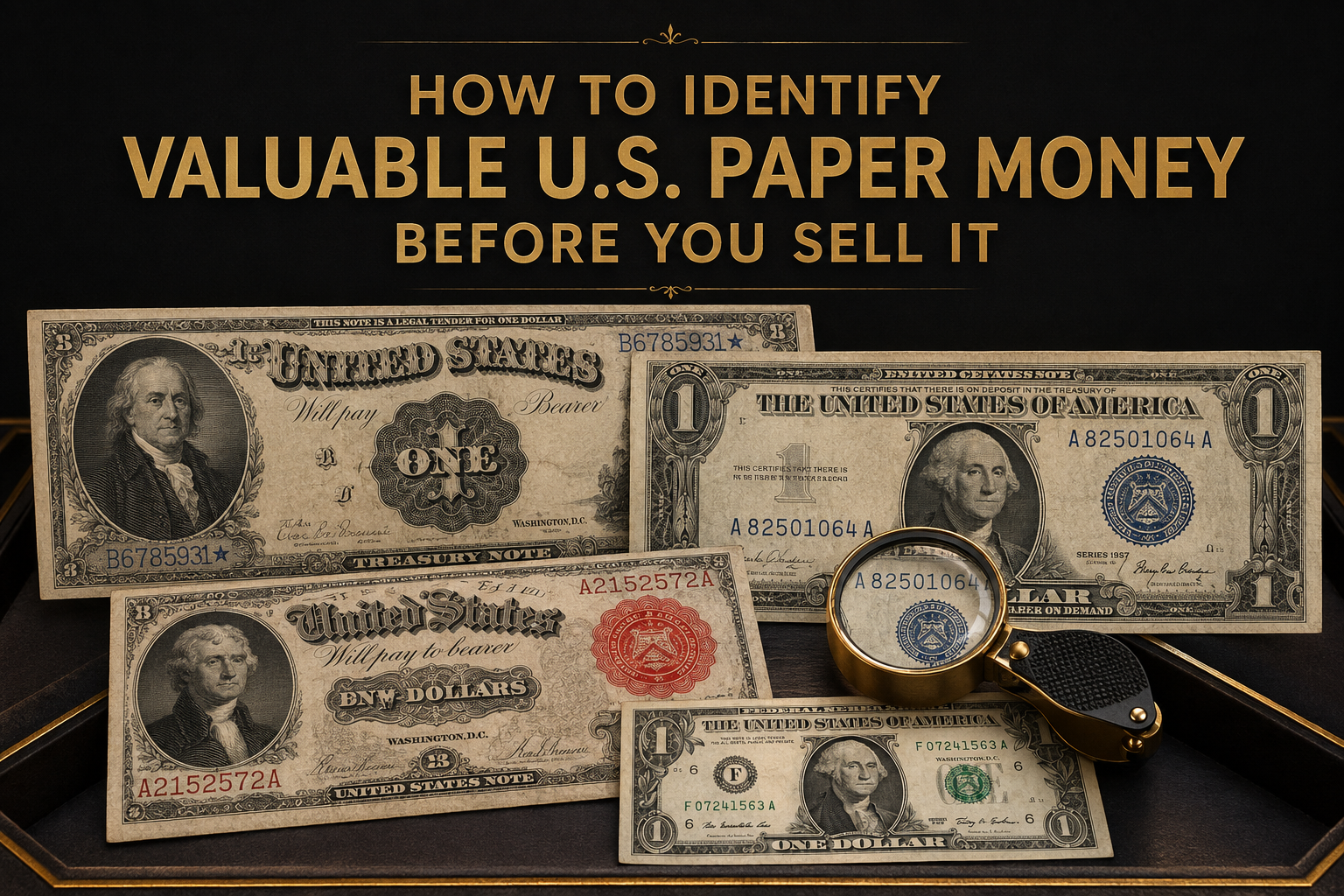
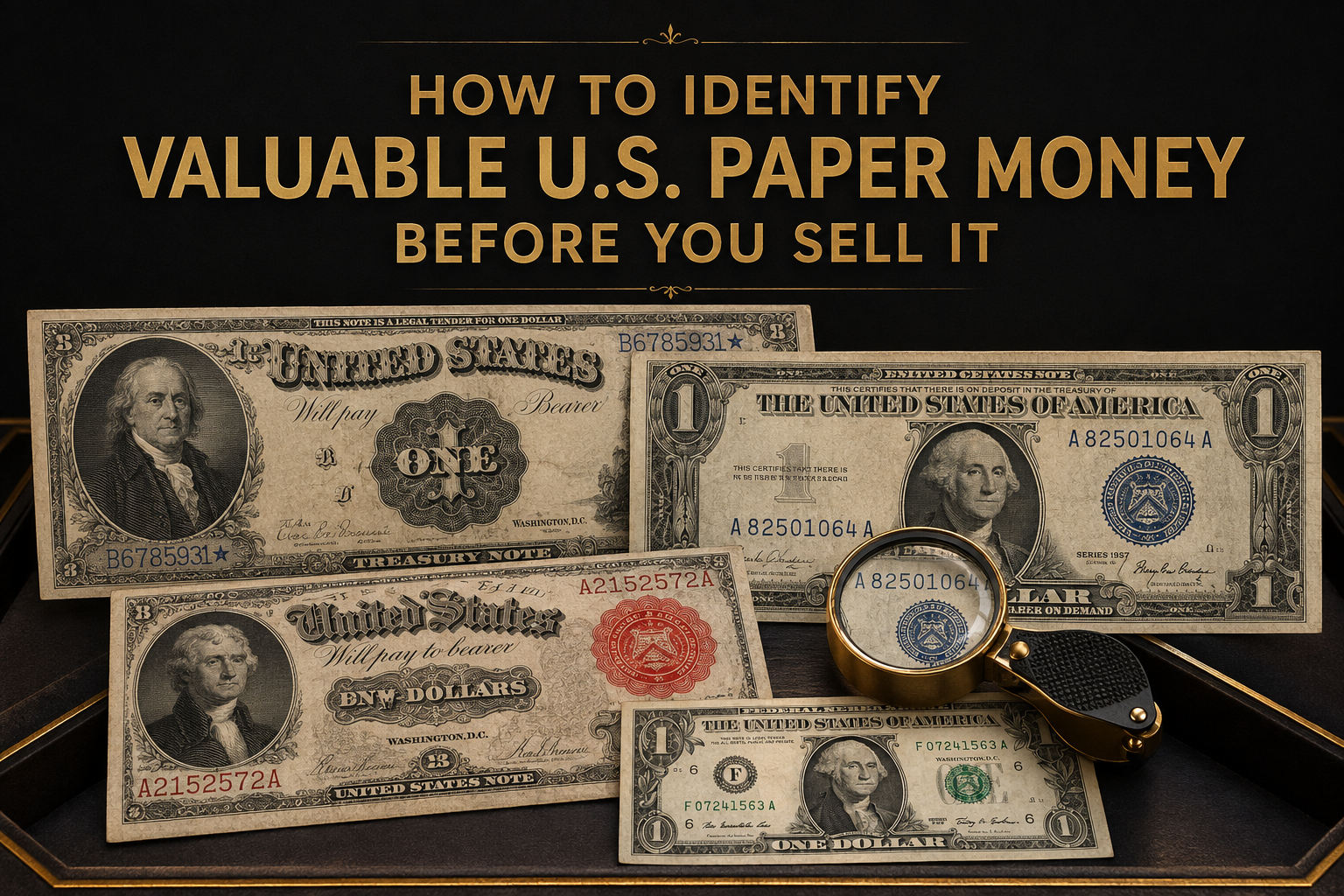
Pay attention to design features such as seal color, serial-number color, portrait style, and the wording on the note. For example, some older U.S. notes use blue, red, or brown seals rather than the green seal commonly seen on many Federal Reserve Notes. These differences can help identify whether a note belongs to a collectible category.
If you are unsure what you have, do not rely on color alone. Compare the entire note and its printed details, or bring it to a knowledgeable currency professional for review.
Look at the Serial Number
Serial numbers are among the most visible features collectors consider. Most serial numbers are ordinary, but some patterns can create additional demand when the note is genuine and in appealing condition.
Examples of serial-number patterns collectors may notice include:
- Low serial numbers: Notes with very low numbers can be desirable, especially when the number contains few digits.
- Repeating patterns: Numbers with repeated digits or recognizable sequences may be collected.
- Radar serial numbers: A serial number that reads the same forward and backward.
- Binary serial numbers: A number made using only two different digits.
- Ladder serial numbers: A sequence that progresses upward or downward in order.
- Solid serial numbers: A serial number made of the same digit repeated.
A pattern alone does not establish value. The exact note, its condition, collector demand, and whether the serial number is truly unusual all matter. Avoid writing on the bill, adding notes to it, or attempting to “improve” its appearance.
Understand What a Star Note Is
A star note is a replacement note produced when a regular note is removed during the manufacturing process. On many U.S. notes, the star appears at the end of the serial number. Star notes are commonly saved by collectors, but not every star note is rare.
Potential value can depend on the series, denomination, production details, surviving population, and grade. A star note in crisp, uncirculated condition may draw more collector attention than a heavily circulated example of the same issue. If you find one, set it aside and have it evaluated with the rest of your currency.
Inspect for Possible Printing Errors
Authentic printing errors can be collectible because they are not intentionally released as normal notes. Examples can include alignment issues, missing design elements, cutting errors, or other production-related anomalies.
However, damage is not the same as an error. Tears, stains, ink marks, folds, trimmed edges, water damage, and discoloration that happened after the note entered circulation generally reduce value. A note that looks unusual should be examined carefully before it is treated as an error.
Do not attempt to create, repair, or alter an apparent error. Altered notes can be difficult to evaluate and may lose collector appeal. Preserve the note exactly as you found it.
Condition Can Make a Major Difference
Condition is one of the most important factors in old paper money value. Collectors often prefer notes with strong color, original paper quality, clean surfaces, and minimal handling. A scarce note may still be valuable in circulated condition, but a cleaner example can be more desirable.
When reviewing a bill, look for:
- Folds, creases, or worn corners
- Tears, pinholes, tape, or repairs
- Stains, moisture damage, or mold concerns
- Writing, stamps, or ink marks
- Missing pieces or trimmed margins
- Unusually bright paper, which can sometimes indicate cleaning or processing
Never wash, iron, press, laminate, tape, or chemically clean paper money. These actions can permanently affect the note and make professional evaluation more difficult. Handle potentially collectible notes by the edges and store them flat in an appropriate archival-quality currency holder when possible.
Do Not Assume Every Old Bill Is Rare
Many people understandably save older-looking bills, especially notes with small portraits, different colors, or earlier series dates. Some are collectible, but others are widely available. The most reliable way to determine whether a note has a meaningful premium is to consider several factors together: type, series, serial number, condition, rarity, and current collector interest.
Likewise, a high-denomination note is not automatically worth a large premium, and a low-denomination note is not automatically common. The details matter more than the face value alone.
Separate Your Currency Before You Sell
Before selling, sort your paper money without removing it from original holders, straps, or envelopes if those items provide useful context. Group notes by denomination and set aside anything that appears older, unusually crisp, has a star in the serial number, displays an unusual serial pattern, or appears to have a possible printing error.
If the notes came from an estate or collection, keep any accompanying labels, receipts, or written history. Provenance does not automatically establish value, but it can provide helpful context during an evaluation.
Get a Professional Currency Evaluation in Las Vegas
Online images and general price references can be useful for learning, but they cannot replace an in-person examination of a note's authenticity, condition, and specific issue. A reputable buyer can explain the characteristics that affect value and help you distinguish collectible paper money from ordinary circulated currency.
If you are considering selling currency in Las Vegas, bring your U.S. paper money to Sahara Coins & Precious Metals for a professional review. We can examine your notes, answer your questions, and help you make an informed decision about selling. Learn more about selling currency or visit us with your paper money collection.
Ready to sell Currency to Sahara Coins? Learn More