Gold IRA Eligible Coins and Bars: What the IRS Allows
A Precious Metals IRA can hold certain physical gold, but it cannot simply hold any coin, bar, or gold item. Federal tax rules address collectibles, permitted coin exceptions, bullion fineness, and how IRA-owned bullion must be held. In addition, an IRA custodian and its storage arrangements may have operational standards that are narrower than the tax code.
Understanding these distinctions before selecting products can help you ask better questions and avoid purchasing a product your custodian cannot process. This guide explains the basics of gold IRA eligible coins and bars, the difference between statutory eligibility and custodian acceptance, and the practical steps to confirm an item before a transaction.
Important: This is general educational information, not tax, legal, or investment advice. IRA rules and custodian policies can change, and eligibility should be confirmed for the exact item and transaction structure.
What Makes Gold IRA Eligible?
Internal Revenue Code Section 408(m) generally treats collectibles as investments an IRA may not acquire. The statute provides exceptions for certain coins and for qualifying bullion. For gold bullion, the commonly cited minimum fineness standard is .995, or 99.5% pure gold. Qualifying bullion also must be in the physical possession of the IRA trustee; account owners should not assume personal possession or self-storage is permitted.
Eligibility is therefore not determined by a product name, gold content, or advertising description alone. A product may fit within a statutory coin exception, meet the bullion fineness standard, or both. Even then, the exact product must be accepted by the IRA custodian and by the storage provider used through that custodian.
For the governing rule, see Internal Revenue Code Section 408, particularly Section 408(m). The IRS also discusses IRA investments in collectibles in Publication 590-A. These resources should be read with current custodian documentation and professional guidance for your circumstances.
The Basic IRS Gold Purity Standard
For bullion, gold generally must meet a .995 fineness standard. That standard may apply to qualifying bars and certain bullion coins, but meeting the fineness threshold does not automatically mean every item can be placed in every Precious Metals IRA.
Custodians, dealers, and storage providers may consider additional practical factors, such as the exact product, manufacturer or refiner, chain of custody, packaging, condition, authentication requirements, and whether the item can be received and stored through the custodian's established process. A custodian may have a more limited acceptance list than the broad categories described in the tax code.
Common Examples of Gold IRA Eligible Coins and Bars
The examples below are often discussed when investors explore IRA gold. They are not a complete list and are not a guarantee that a particular year, size, condition, or product will be accepted. Confirm the exact item with your intended custodian before committing funds.
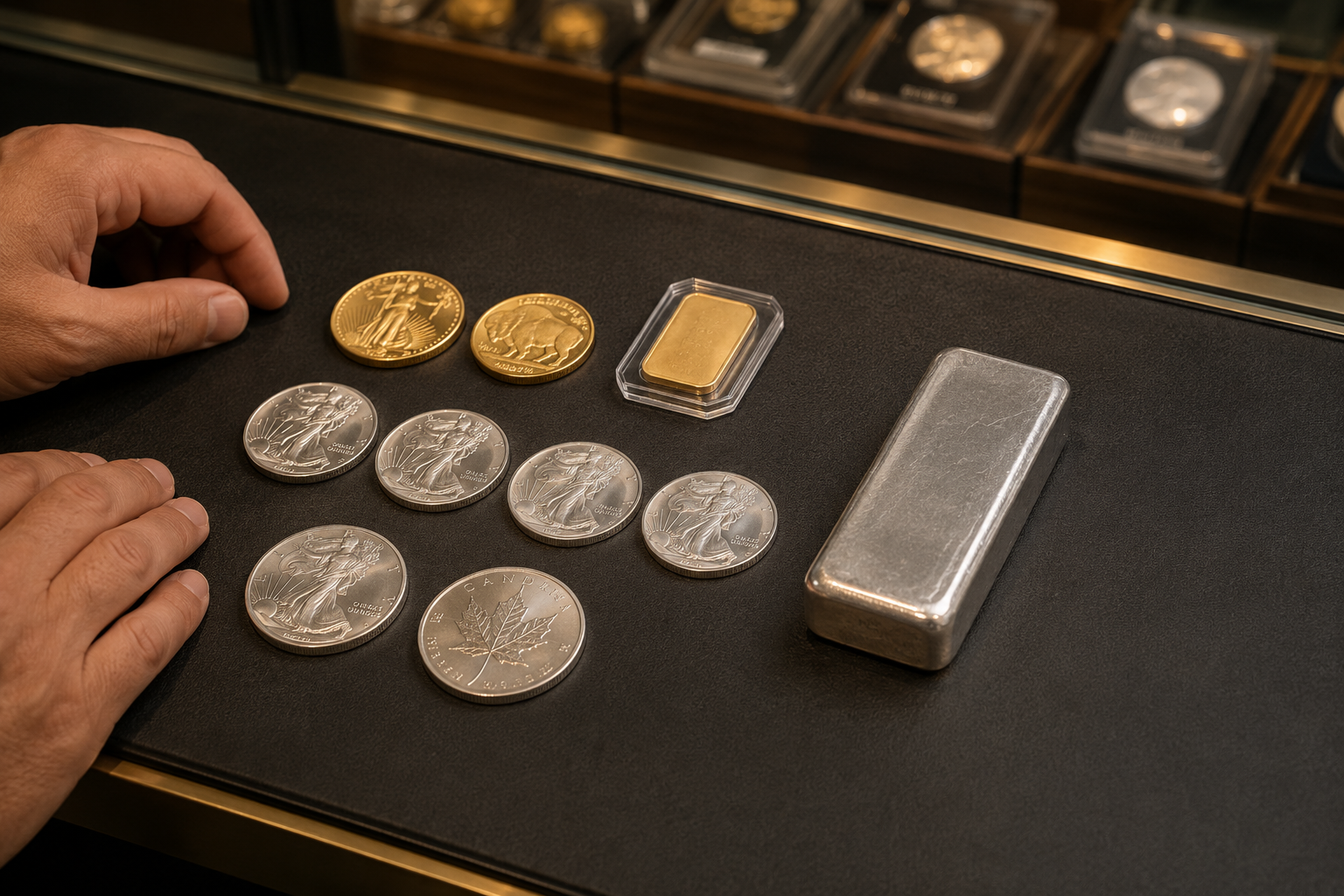
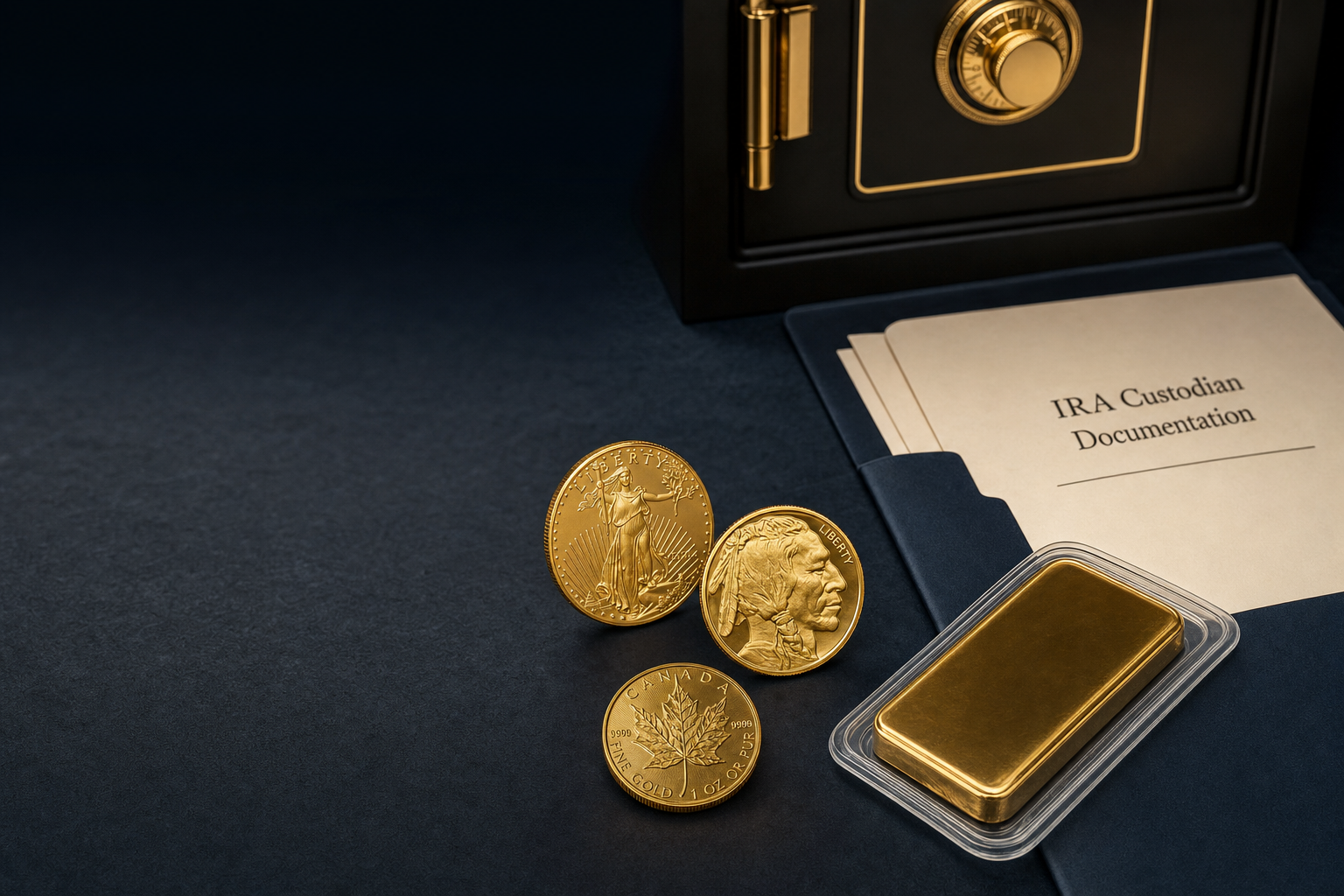
- American Gold Eagle coins: Gold Eagles are commonly identified as a statutory exception to the general bullion fineness standard. Their alloyed composition should not be confused with their gold content or with the separate bullion-fineness analysis that may apply to other products.
- American Gold Buffalo coins: These bullion coins are commonly struck in .9999 fine gold. The exact product should still be verified with the custodian.
- Canadian Gold Maple Leaf coins: Many modern bullion issues are .9999 fine gold. Verify the specific coin and its acceptance through the custodian's process.
- Gold bars: Bars that meet the applicable fineness standard may be suitable when they are accepted by the custodian and the storage provider used for the IRA.
Product examples are useful starting points, not an eligibility list. Do not assume that every coin in a named series, every bar from a recognized refiner, or every item sold as “IRA eligible” will be accepted in your account.
Why Some Gold Coins Are Not IRA Eligible
Gold content alone does not make an item suitable for an IRA. Section 408(m) generally restricts IRA investments in collectibles unless a specific exception applies. This is why products valued primarily for rarity, historical significance, artistry, or collectibility require careful review.
Items that may raise eligibility or acceptance concerns include:
- Rare or numismatic coins purchased primarily for collectible value
- Older U.S. gold coins, including many pre-1933 issues
- Foreign coins that do not meet the applicable fineness standard or are not accepted by the custodian
- Gold jewelry, watches, medals, and decorative items
- Gold items without clear weight, fineness, provenance, or authentication
- Damaged, altered, loose, or improperly packaged bullion that a custodian or storage provider cannot accept
Some products in these categories may involve facts or exceptions that require specialized review. Rather than making assumptions based on a product's age or appearance, provide the exact product details to the custodian for confirmation.
Gold Bars for a Precious Metals IRA
Gold bars may offer a different format from government-minted bullion coins, and premiums, available sizes, and resale considerations can vary. The right format depends on your objectives, budget, the products available through your IRA process, and the policies of the parties involved. Bullion is not inherently the right choice for every investor.
When reviewing gold bars, consider:
- Fineness: Confirm that the bar meets the applicable .995 gold standard.
- Exact refiner and bar format: Ask whether the custodian and its storage provider will accept that particular bar, not merely the brand name.
- Weight: Bar size can affect purchase amounts, future sale flexibility, and how a future distribution may be handled.
- Condition and packaging: Authentication, assay cards, sealed packaging, and condition can affect whether an item can be received.
- Total costs and liquidity: Compare premiums, custodian charges, storage charges, and possible selling costs rather than focusing only on the spot price of gold.
IRA Custody and Storage: A Critical Distinction
Selecting eligible bullion is only one part of the process. For qualifying bullion, Section 408(m) requires physical possession by the IRA trustee. In a self-directed Precious Metals IRA, the custodian commonly coordinates storage through a depository or storage provider it uses or approves for its accounts.
“Approved depository” is industry shorthand and should not be understood as a universal IRS designation. The relevant operational question is whether your IRA custodian will arrange for, or permit, the specific storage provider to receive and hold IRA-owned metals under its procedures.
Taking personal possession of IRA-owned gold, moving it to a personal location, or using a self-storage arrangement without qualified guidance can raise significant tax and compliance questions. Before taking a distribution, changing storage, or considering a home-storage arrangement, consult the IRA custodian and a qualified tax or legal professional.
To learn about account setup and the typical roles of the parties involved, explore Sahara Coins & Precious Metals' Precious Metals IRA options.
Can You Put Gold You Already Own Into an IRA?
Do not assume that gold you already own can simply be moved into an IRA. The treatment of a contribution, purchase, rollover, transfer, sale, or distribution can depend on the source account, the property involved, valuation, timing, and the overall transaction structure. A product that might otherwise meet a bullion or coin standard does not automatically become acceptable IRA property because an individual already possesses it.
In many cases, a Precious Metals IRA is funded with cash, a transfer from an existing IRA, or a rollover from an eligible retirement plan, and the IRA then acquires metals through the custodian's process. That description is general, not a recommendation for any specific situation. Ask the custodian what funding and purchase methods it permits, and obtain tax guidance before attempting to move personally held metals or retirement assets.
Questions to Ask Before Buying Gold for an IRA
- Does this exact coin or bar fit within the applicable statutory coin exception or bullion standard?
- Will my chosen IRA custodian accept this specific product, year, size, condition, and source?
- Will the storage provider used through my custodian receive and store it?
- What documentation, packaging, or authentication is required?
- What are the purchase premium, custodian fees, storage fees, and potential selling costs?
- How could the item be sold within the IRA or distributed from the IRA in the future?
- Have I discussed tax, legal, and retirement-planning implications with professionals qualified to advise me?
Work With a Knowledgeable Precious Metals IRA Team in Las Vegas
A Precious Metals IRA involves account setup, funding, product selection, custody, and storage arrangements that need to work together. Sahara Coins & Precious Metals helps clients understand bullion options commonly used in self-directed IRAs and supports an informed product-selection conversation. We do not determine IRS eligibility or provide individualized tax, legal, or investment advice.
Contact Sahara Coins & Precious Metals to discuss Precious Metals IRA options, review commonly available bullion products, and identify questions to bring to your IRA custodian. For tax, legal, custodial, rollover, transfer, or distribution questions, consult qualified professionals and confirm the current requirements with your custodian.
Important Note
This article is for educational purposes only and is not tax, legal, custodial, or investment advice. It summarizes general concepts drawn from Internal Revenue Code Section 408(m) and IRS educational materials. Rules, interpretations, product availability, and custodian or storage-provider policies may change. Before completing a transaction, confirm the exact product and process with your IRA custodian and seek qualified tax or legal advice as appropriate.