Understanding the silver spot price and dealer premiums
Whether you're purchasing your first Silver Eagle or adding hundreds of ounces to your investment portfolio, you've probably asked the same question:
"If silver is $38 per ounce, why am I paying $42?"
The answer lies in understanding the difference between the silver spot price and the dealer premium.
While they're closely related, they represent two very different parts of the precious metals market. Learning how they work will help you become a more informed buyer and better understand the true value of physical silver.
What Is the Silver Spot Price?
The silver spot price is the current market value of one troy ounce of pure silver traded on global financial markets.
Think of it as the wholesale benchmark price for silver.
The spot price changes throughout the trading day as buyers and sellers around the world react to:
Supply and demand
Inflation expectations
Interest rates
U.S. Dollar strength
Economic news
Industrial demand
Geopolitical events
Investor sentiment
Unlike physical silver products, the spot price reflects the value of raw silver—not a finished coin or bar.
Where Does the Spot Price Come From?
Silver is traded around the world nearly 24 hours a day.
The spot price is influenced by activity on major exchanges including:
COMEX futures markets
London bullion markets
International institutional trading
Investment demand worldwide
No single company or dealer sets the spot price. Instead, it represents the consensus market value determined by millions of transactions taking place globally.
Why Physical Silver Costs More Than Spot
One of the biggest misconceptions among new buyers is believing they should be able to purchase silver exactly at the spot price.
In reality, every physical silver product carries a dealer premium.
That premium covers the real costs of bringing a finished silver product from a refinery into your hands.
What Is a Dealer Premium?
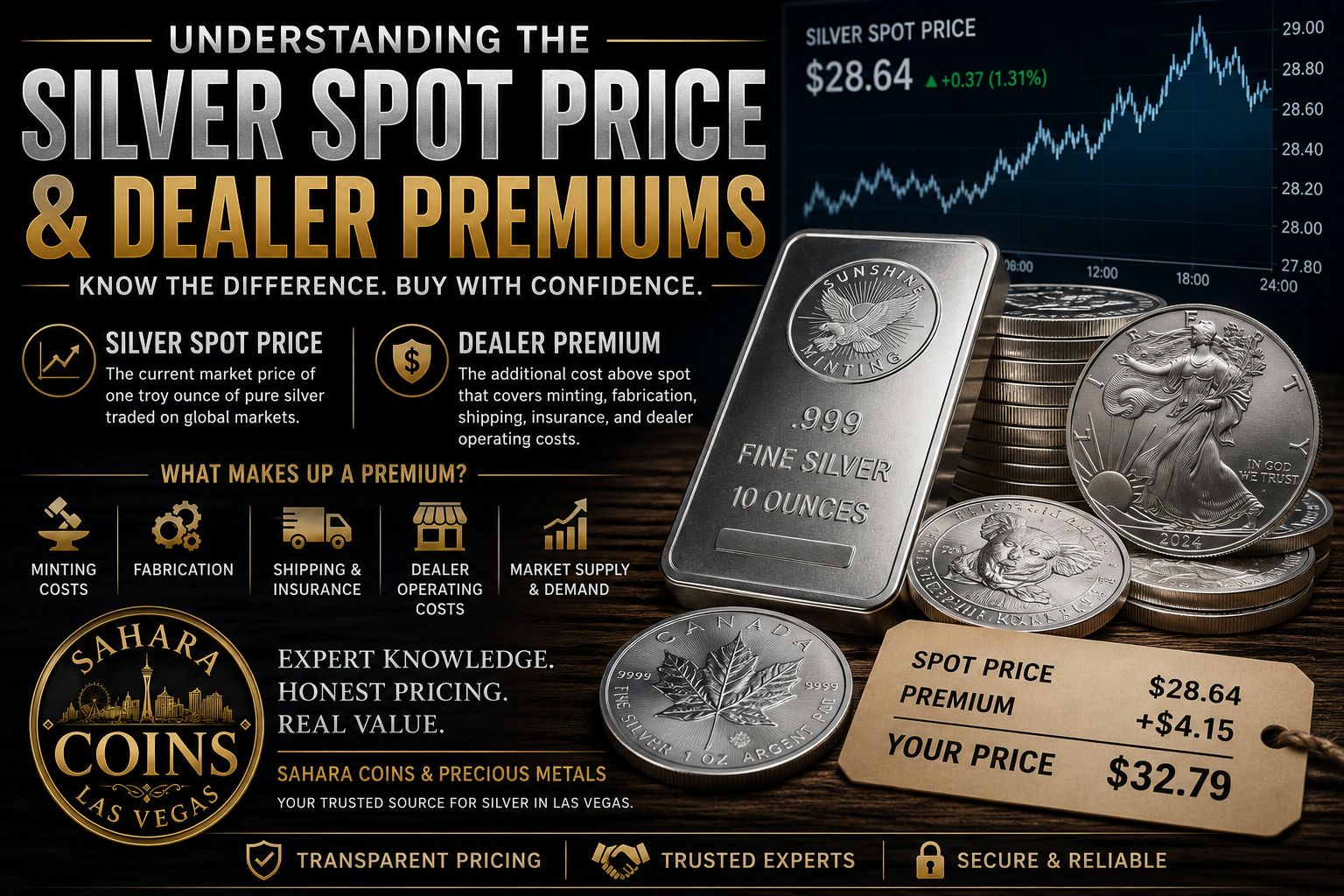
A dealer premium is the amount added above the silver spot price for a physical product.
For example:
Spot Price: $38.00
Premium: +$4.00
Selling Price: $42.00 per ounce
Every bullion product has a premium, although the amount varies depending on the item.
What Makes Up a Premium?
Several costs contribute to the premium you pay:
Minting Costs
Government and private mints transform raw silver into finished products using sophisticated equipment and quality control processes.
Fabrication
Silver rounds, bars, and coins must be refined, struck, packaged, inspected, and prepared for sale.
Shipping and Insurance
Moving precious metals safely requires specialized shipping methods and insurance coverage.
Dealer Operating Costs
Reputable dealers maintain inventory, employ experienced staff, provide secure storage, and invest in authentication equipment to protect customers.
Market Supply and Demand
Premiums often rise during periods of exceptionally strong demand.
If silver products become difficult to obtain, premiums typically increase—even if the spot price remains unchanged.
Why Some Silver Products Have Higher Premiums
Not all silver products are priced equally.
Generally speaking:
Lower Premium Products
Generic silver rounds
Generic silver bars
Larger silver bars (10 oz, 100 oz)
These products are ideal for investors focused on acquiring the greatest amount of silver for their money.
Moderate Premium Products
Government-issued bullion coins
Popular one-ounce bars
Examples include:
American Silver Eagles
Canadian Maple Leafs
Austrian Philharmonics
British Britannias
These often command higher premiums because of their worldwide recognition, security features, and liquidity.
Highest Premium Products
Some silver products carry premiums well above their metal value because they also have collectible demand.
Examples include:
Limited editions
Proof coins
Low-mintage releases
Vintage bullion
Numismatic silver coins
These items derive value from both their silver content and collector interest.
Why Premiums Change
Dealer premiums are not fixed.
They can change daily—or even hourly—based on market conditions.
Factors that affect premiums include:
Mint production
Inventory availability
Shipping costs
Wholesale supply
Retail demand
Economic uncertainty
For example, during periods of intense demand, the spot price might remain stable while premiums increase significantly because physical inventory becomes scarce.
Can You Buy Silver at Spot?
Occasionally, dealers offer promotional "silver at spot" specials to attract new customers.
Outside of limited promotions, buying physical silver exactly at spot is uncommon because every ounce involves production, transportation, and business costs.
If someone consistently advertises large quantities of silver below spot, it's worth asking questions and carefully verifying the authenticity of the product.
Should You Focus on Spot Price or Premium?
Successful silver investors consider both.
A low premium is important because it allows you to acquire more silver for your investment.
However, trusted products from reputable mints often command slightly higher premiums because they are easier to recognize, authenticate, and sell in the future.
Rather than looking only at today's premium, many experienced investors consider:
Product recognition
Liquidity
Quality
Market demand
Overall value
Buy Silver with Confidence at Sahara Coins
At Sahara Coins & Precious Metals, we believe every customer deserves transparent pricing and honest explanations.
Whether you're purchasing a single ounce or building a substantial precious metals portfolio, our experienced team will explain exactly how silver pricing works and help you choose products that fit your goals and budget.
If you're looking to buy silver in Las Vegas, stop by Sahara Coins & Precious Metals to browse our extensive selection of silver bullion, government-issued coins, collectible silver, and investment-grade products.
Our goal is simple: help you make informed decisions with confidence.