Silver Bullion vs. collectible silver coins: What’s the difference?
If you're interested in buying silver, one of the first decisions you'll face is whether to purchase silver bullion or collectible silver coins. While both contain silver and can play an important role in a portfolio or collection, they serve very different purposes.
Some buyers are focused on owning as much silver as possible for their investment dollars. Others enjoy collecting historically significant or limited-edition coins that may appreciate in value because of their rarity and demand.
Understanding the differences between bullion and collectible silver coins will help you choose the option that best fits your goals.
What Is Silver Bullion?
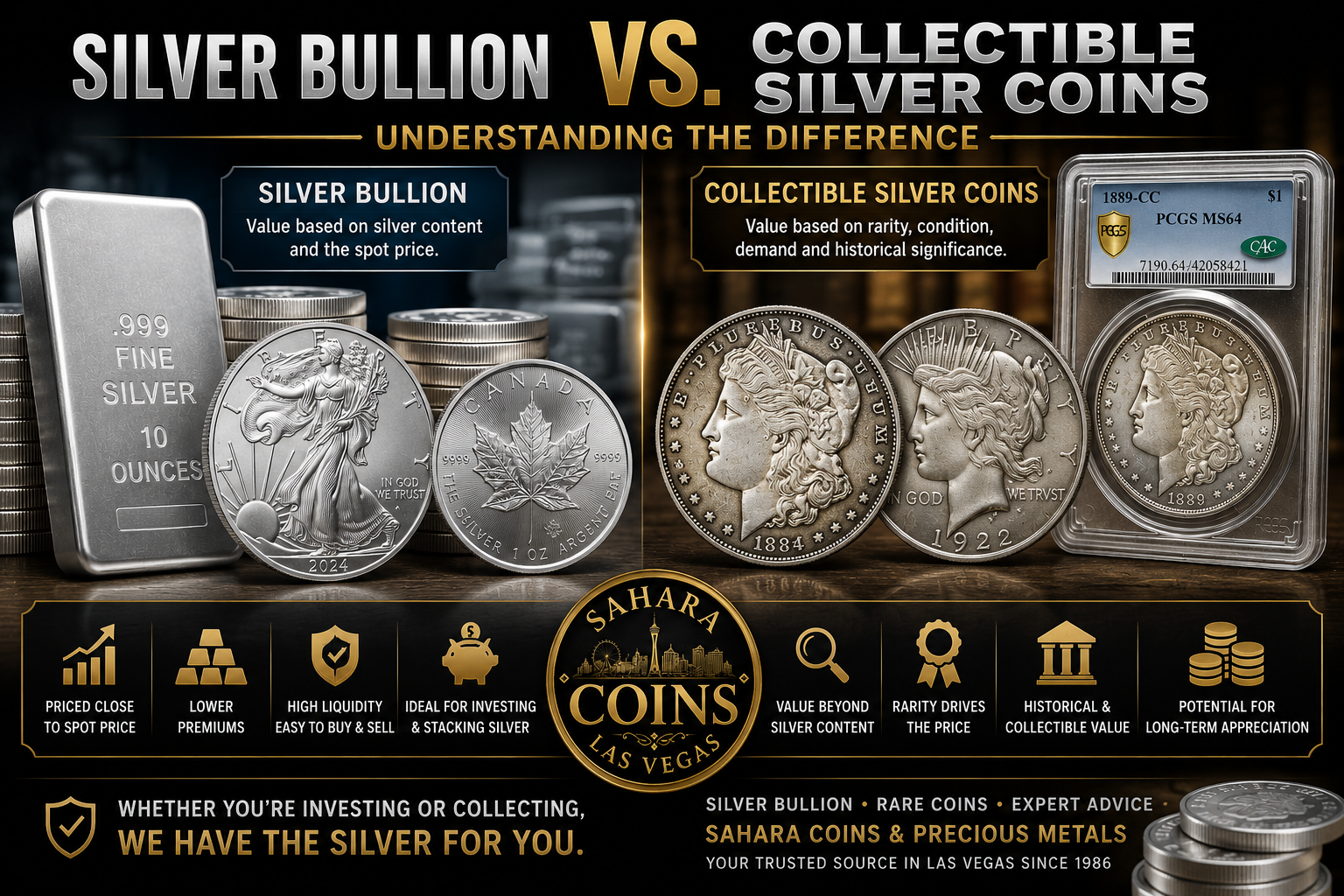
Silver bullion refers to silver products whose value is based primarily on the current market price of silver, also known as the spot price.
Bullion is produced specifically for investors who want to own physical precious metals.
Common forms include:
One-ounce silver rounds
Silver bars
Government-issued bullion coins
Fractional silver products
Larger bars such as 10-ounce, kilo, and 100-ounce bars
Although some bullion products are produced by government mints, they are generally purchased because of their silver content rather than their rarity or for where or who they were minted by.
Popular Silver Bullion Products
Some of the world's most recognized bullion coins include:
American Silver Eagles
Canadian Silver Maple Leafs
British Britannias
Austrian Philharmonics
Australian Kangaroos
Generic .999 Fine Silver Rounds
Generic .999 Silver Bars
These products are trusted worldwide and are easy to buy and sell.
What Are Collectible Silver Coins?
Collectible silver coins—also called numismatic coins—derive their value from much more than the silver they contain.
Their worth is determined by factors such as:
Rarity
Condition
Collector demand
Historical significance
Mintage numbers
Professional grading
Eye appeal
Some collectible silver coins may contain less than one ounce of silver, while others may contain much more. Their silver content is often only a small part of their overall value.
Examples of Collectible Silver Coins
Examples include:
Morgan Silver Dollars
Peace Dollars
Seated Liberty Dollars
Trade Dollars
Carson City Morgan Dollars
Rare commemorative silver coins
Low-mintage proof issues
Certified and CAC-approved coins
Some rare silver coins sell for hundreds, thousands, or even tens of thousands of dollars despite containing less than an ounce of silver.
The Biggest Difference
The easiest way to think about it is this:
Bullion Buyers Ask:
"How much silver am I getting?"
Collectors Ask:
"How rare is this coin?"
Bullion investors focus on ounces.
Collectors focus on rarity, history, and condition.
How Bullion Is Priced
Bullion prices are relatively straightforward.
The price generally consists of:
Silver Spot Price + Dealer Premium = Purchase Price
For example:
Spot Price: $60.00
Premium: $6.00
Purchase Price: $66.00
As silver prices rise or fall, bullion prices usually move with them.
How Collectible Coins Are Priced
Collectible coins follow an entirely different pricing model.
Factors influencing value include:
Date
Mintmark
Grade
Population reports
CAC approval
Historical demand
Auction records
Overall eye appeal
A Morgan Dollar worth $5,000 today might still be worth approximately the same amount even if silver prices fall significantly because collectors are paying for rarity—not simply silver content.
Which Is Better for Investing?
The answer depends on your goals.
Silver Bullion May Be Best If You Want To:
Own physical silver
Hedge against inflation
Build long-term wealth
Track silver market prices
Purchase larger quantities
Maximize ounces per dollar
Bullion tends to have lower premiums and is often the preferred choice for investors focused on precious metals.
Collectible Coins May Be Best If You Want To:
Build a valuable collection
Own historically significant coins
Invest in rarity
Enjoy the hobby of coin collecting
Potentially benefit from collector demand
Collectible coins can appreciate independently of silver prices when demand increases or particularly scarce examples become available.
Can You Own Both?
Absolutely.
Many experienced collectors own both bullion and collectible coins.
A balanced collection might include:
Silver bars for wealth preservation
American Silver Eagles for liquidity
Morgan Dollars for history
Rare certified coins for long-term appreciation
Owning both provides diversification within your precious metals holdings.
Buying the Right Silver
Whether you're purchasing bullion or collectible coins, it's important to buy from an experienced dealer who understands both markets.
At Sahara Coins & Precious Metals, we help customers determine which products best fit their investment goals, collecting interests, and budgets.
Our inventory includes:
Silver bullion
Government-issued bullion coins
Certified Morgan Dollars
Peace Dollars
Rare Carson City coins
Numismatic rarities
Investment-grade silver
Whether you're buying your first ounce of silver or adding a museum-quality rarity to your collection, our knowledgeable team is here to help.
Visit Sahara Coins for Silver Bullion and Rare Coins
Sahara Coins & Precious Metals has been helping collectors and investors throughout Las Vegas for decades.
Whether you're interested in maximizing your silver investment with bullion or discovering the history and beauty of collectible silver coins, we offer honest guidance, transparent pricing, and one of Southern Nevada's largest selections of silver products.
Stop by our showroom to explore the difference between bullion and numismatics—and let us help you build a collection you'll enjoy for years to come.