How Gold, Silver, and Platinum Jewelry Is Valued: A Complete Guide
If you've ever wondered why two pieces of jewelry that look similar can have very different values, you're not alone. Whether you're selling inherited jewelry, cleaning out a jewelry box, or simply curious about what your pieces are worth, understanding how gold, silver, and platinum jewelry is valued can help you make informed decisions.
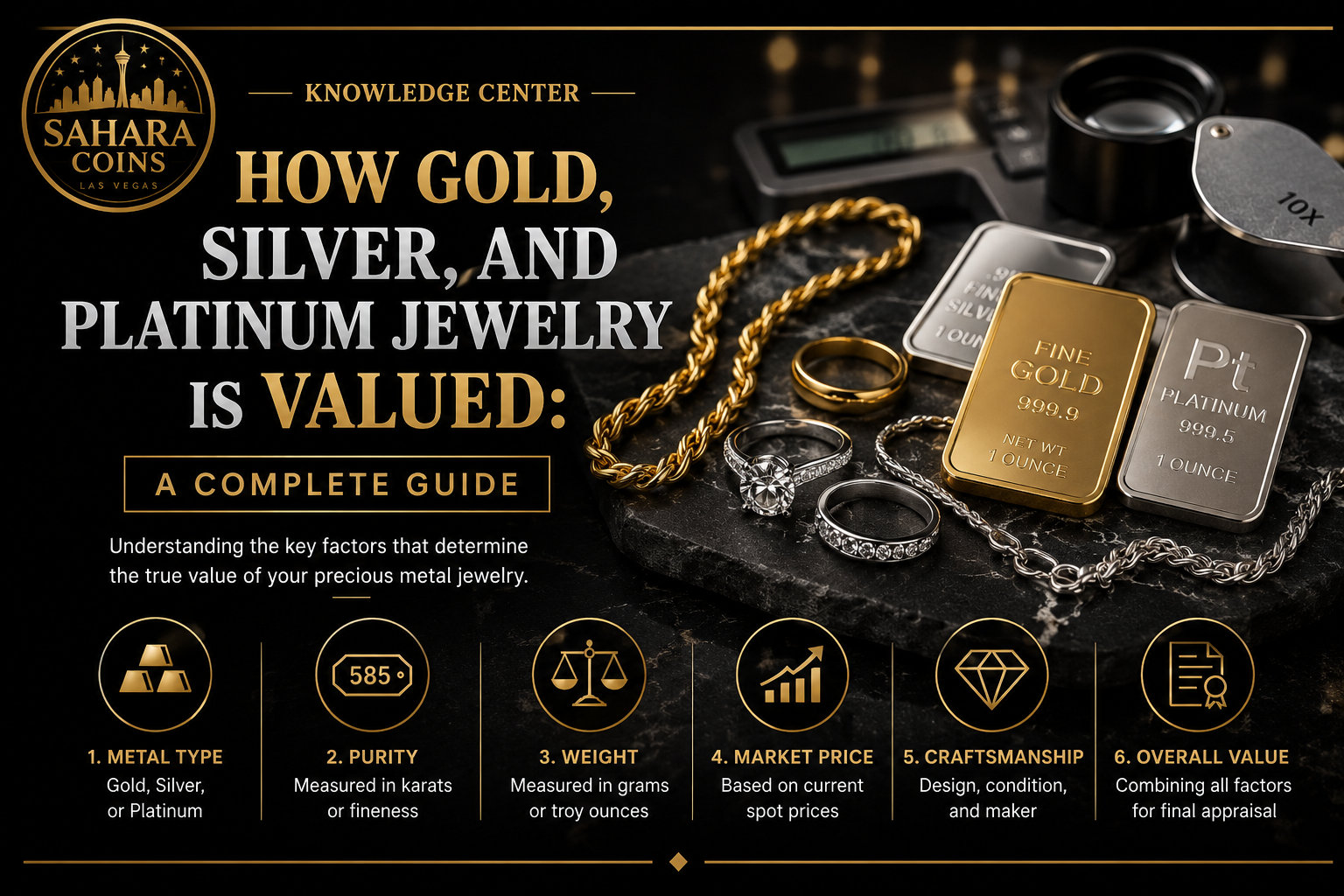
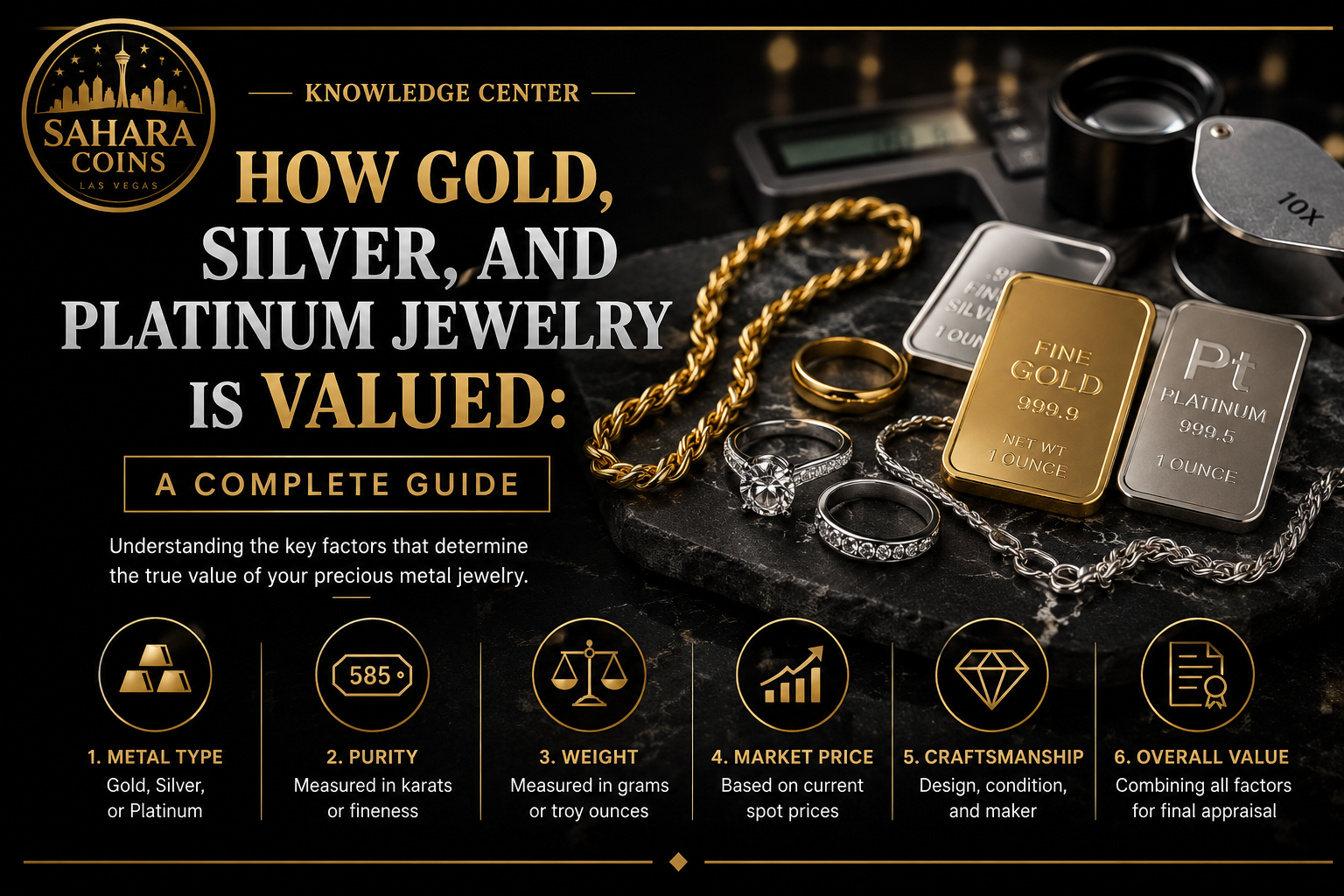
Many people assume gemstones or the appearance of a piece determine its value, but in reality, several factors influence what jewelry is worth. The type of precious metal, its purity, current market prices, weight, craftsmanship, brand, and condition all play a role.
In this guide, we'll explain how jewelers and precious metals professionals evaluate jewelry and what you should know before buying or selling.
The First Step: Identifying the Metal
Before a piece of jewelry can be valued, the metal itself must be identified.
The three most common precious metals are:
Gold
Silver
Platinum
Each has different characteristics, values, and purity standards.
Most jewelry contains small hallmarks or stamps that indicate the type and purity of the metal.
Examples include:
Gold
10K
14K
18K
22K
24K
Silver
.925
Sterling
.999 Fine Silver
Platinum
PT950
PLAT
Platinum
While these markings are helpful, reputable buyers will still verify the metal using professional testing methods.
Understanding Gold Purity
Gold jewelry is rarely made from pure 24-karat gold because pure gold is relatively soft.
Instead, it is alloyed with other metals to improve strength and durability.
Here's how common gold purities compare:
KaratGold Content10K41.7%14K58.5%18K75.0%22K91.7%24K99.9%
Generally, the higher the gold content, the greater the intrinsic precious metal value.
Understanding Sterling Silver
Most silver jewelry is made from sterling silver, which contains:
92.5% silver
7.5% other metals (usually copper)
This is why sterling silver is often marked:
925
Fine silver (.999) is much softer and is less commonly used for everyday jewelry.
Understanding Platinum Jewelry
Platinum is one of the world's rarest precious metals.
Most platinum jewelry contains between 90% and 95% platinum.
Common markings include:
PT900
PT950
Platinum
Platinum is naturally white, extremely durable, and denser than gold, meaning two rings of identical size can have very different weights.
Weight Plays a Major Role
Once the metal has been identified, weight becomes one of the biggest factors in determining value.
Precious metals are typically weighed using grams or troy ounces.
More precious metal generally means greater intrinsic value, assuming purity remains the same.
For example:
A heavy 18K bracelet usually contains considerably more gold than a lightweight 14K ring.
Current Market Prices Matter
The value of precious metals changes every trading day.
Gold, silver, and platinum are bought and sold on global commodity markets, and jewelry values are influenced by these current market prices, often referred to as the spot price.
When precious metal prices rise, the intrinsic value of jewelry generally rises as well.
When prices decline, intrinsic value typically decreases.
Melt Value vs. Retail Value
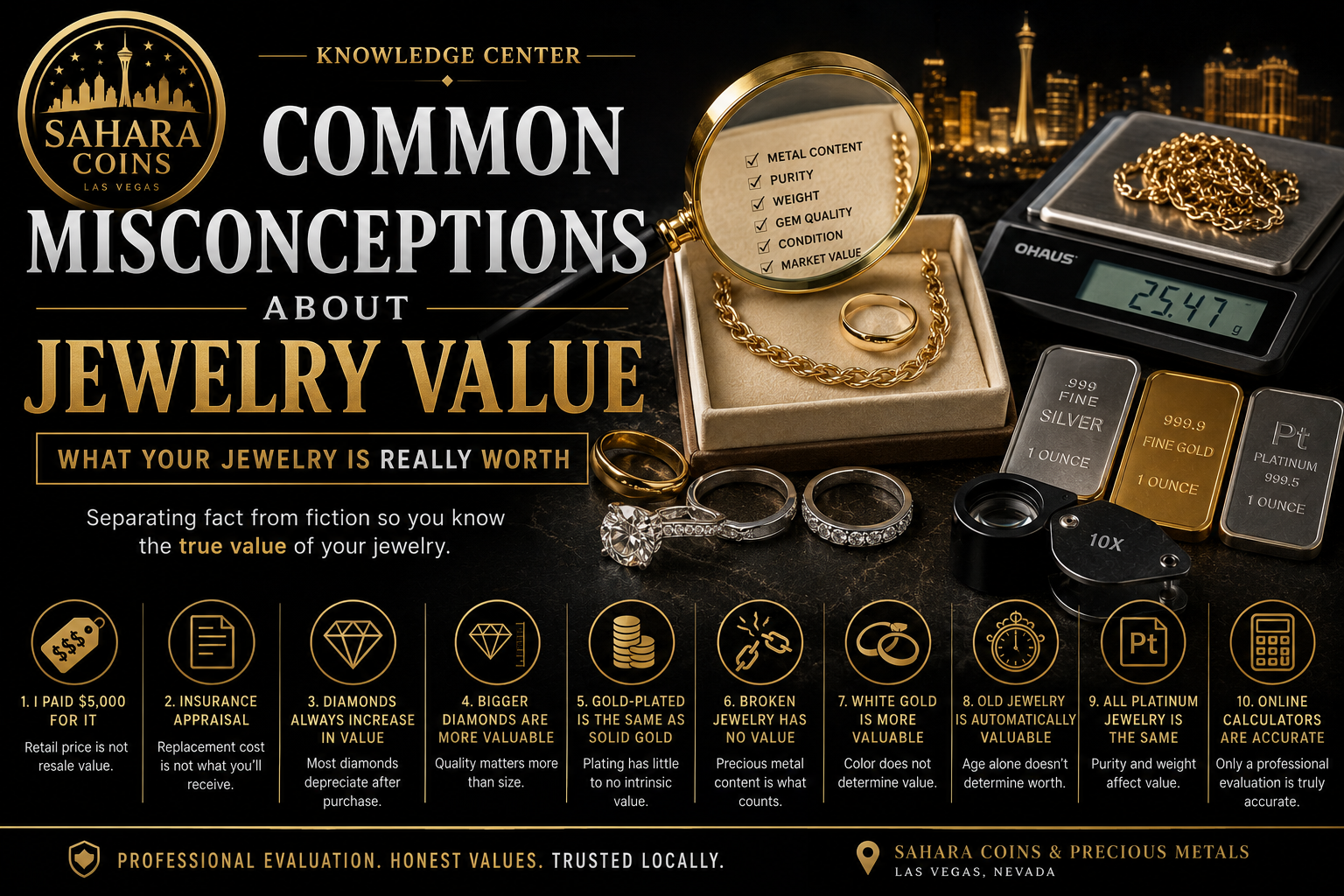
One of the biggest misconceptions is that jewelry should be worth what it originally cost at a retail store.
In reality, there is an important distinction between:
Melt Value
This refers to the value of the precious metal contained in the jewelry.
A buyer calculates:
Metal type
Purity
Weight
Current market price
to determine the intrinsic metal value.
Retail Replacement Value
Retail jewelry prices include many additional costs:
Manufacturing
Design
Marketing
Brand markup
Packaging
Retail overhead
Insurance appraisals often reflect replacement cost rather than what the piece would sell for in the secondary market.
Do Diamonds and Gemstones Add Value?
Sometimes.
High-quality diamonds and natural gemstones can significantly increase the value of jewelry.
Factors include:
Size
Color
Clarity
Cut
Natural vs. laboratory-grown
Overall quality
However, not every gemstone adds substantial resale value.
Many small accent diamonds found in commercial jewelry contribute relatively little compared to the value of the precious metal itself.
Each piece should be evaluated individually.
Designer Jewelry Can Be Worth More
Certain luxury brands may command values well above their metal content.
Examples include:
Tiffany & Co.
Cartier
Van Cleef & Arpels
David Yurman
Rolex (precious metal watches)
Collectors often pay premiums for authentic designer pieces in excellent condition.
How Professionals Test Jewelry
Experienced precious metals buyers use several methods to verify metal content.
These may include:
Visual inspection
Hallmark identification
Precision scales
Electronic precious metal analyzers
X-ray fluorescence (XRF) testing
Acid testing (when appropriate)
Using multiple testing methods helps ensure an accurate evaluation.
Condition Matters—Sometimes
Condition affects value differently depending on the type of jewelry.
For scrap jewelry being purchased for its metal content:
Small scratches or broken clasps usually have little impact on intrinsic value.
For estate jewelry or collectible designer pieces:
Condition can significantly affect resale value.
Original boxes, documentation, and receipts may also increase desirability.
Inherited Jewelry
Many families inherit jewelry that has sentimental and financial value.
Professional evaluation can help determine:
Metal purity
Current market value
Designer significance
Gemstone quality
Collectible interest
Knowing these details can make it easier to decide whether to keep, insure, sell, or pass the jewelry on to future generations.
Avoid Common Selling Mistakes
Before selling jewelry, avoid these common pitfalls:
Assuming the appraisal equals resale value
Insurance appraisals are designed to estimate replacement cost—not what buyers typically pay.
Selling without professional testing
Different buyers may evaluate jewelry differently. Working with experienced professionals helps ensure you understand what you have.
Cleaning antique jewelry
Aggressive cleaning can sometimes reduce the value of collectible or estate pieces.
Why Choose a Reputable Precious Metals Buyer?
Trust matters when selling valuable jewelry.
An experienced buyer should:
Clearly explain the evaluation process
Verify purity using professional equipment
Weigh items accurately
Answer your questions openly
Provide transparent pricing
Understanding how your jewelry is valued helps you make informed decisions and feel confident throughout the process.
Have Your Jewelry Professionally Evaluated at Sahara Coins
Whether you're selling scrap gold, inherited jewelry, platinum rings, sterling silver, or designer pieces, Sahara Coins & Precious Metals offers honest evaluations backed by years of experience in the precious metals industry.
Our knowledgeable team uses professional testing equipment to verify purity and explain exactly how your jewelry is evaluated. We'll walk you through the process, answer your questions, and provide transparent offers based on current market conditions.
Visit our Las Vegas showroom for a no-obligation evaluation and discover why so many customers throughout Southern Nevada trust Sahara Coins for fair pricing, integrity, and exceptional service.
Frequently Asked Questions
Is 14K gold worth more than 10K gold?
Yes. Fourteen-karat gold contains 58.5% pure gold, compared to 41.7% in 10-karat gold, so pieces of similar weight generally have a higher intrinsic value.
Does broken jewelry still have value?
Yes. Even broken gold, silver, or platinum jewelry often retains value because of the precious metal it contains.
Are jewelry appraisals the same as resale value?
No. Insurance appraisals estimate replacement cost, while resale value depends on the current market, precious metal content, gemstones, brand, and demand.
How do you know if my jewelry is really gold?
Professional buyers use several testing methods, including hallmark inspection, electronic analyzers, XRF technology, and other verification techniques to confirm metal content.
Can designer jewelry be worth more than its gold value?
Yes. Authentic pieces from well-known luxury brands may command prices significantly above their melt value because of craftsmanship, collectibility, and brand recognition.