The Benefits of Investing in Physical Precious Metals
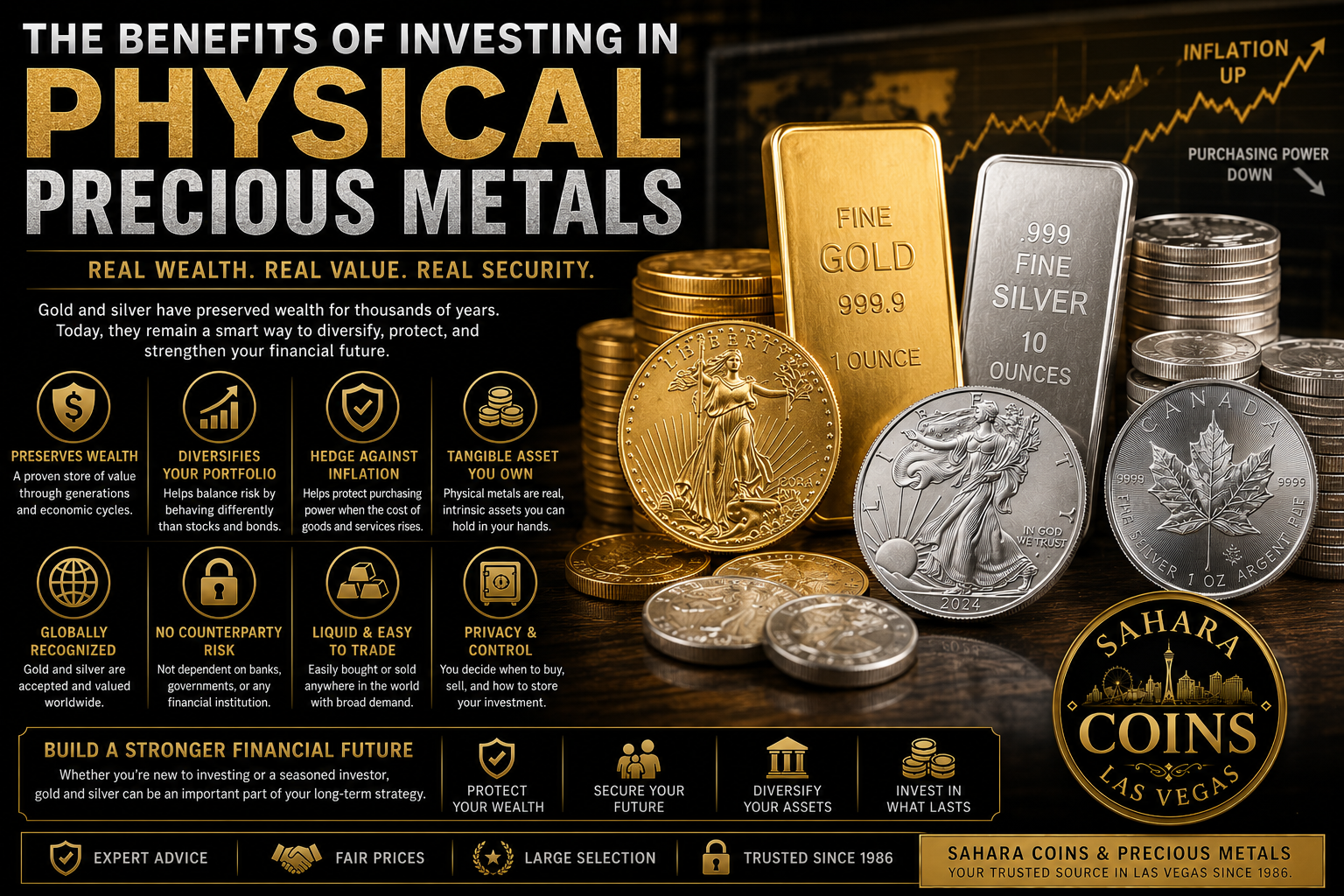
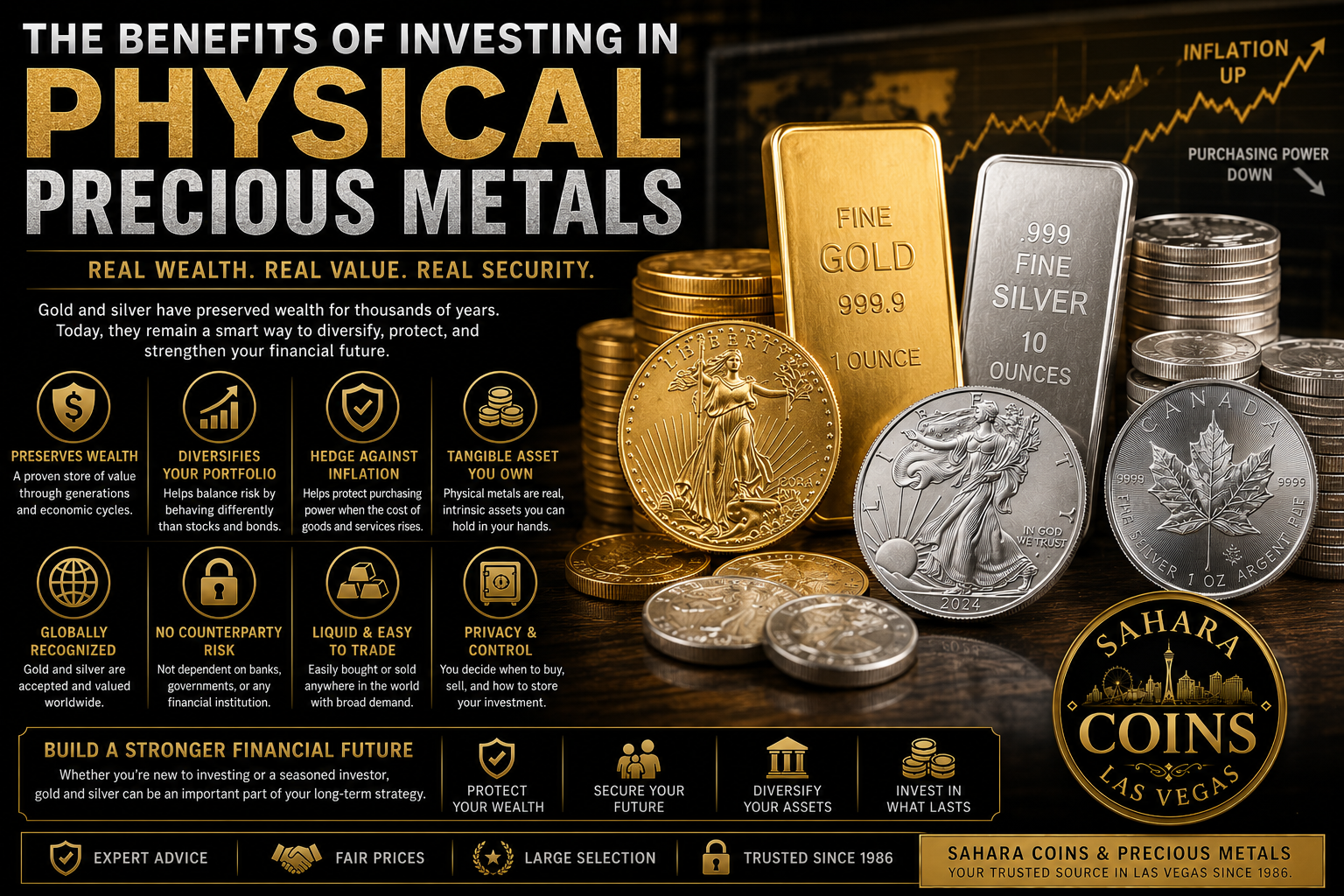
For thousands of years, gold and silver have been trusted as stores of wealth, mediums of exchange, and symbols of financial security. While today's financial markets offer countless investment options, physical precious metals continue to play an important role in diversified portfolios around the world.
Unlike stocks, bonds, or digital assets, physical gold and silver are tangible investments that you can hold in your hand. They have no counterparty risk, have maintained purchasing power throughout history, and often perform differently than traditional financial assets during times of economic uncertainty.
Whether you're new to investing or looking to strengthen your long-term financial strategy, understanding the benefits of owning physical precious metals can help you make informed decisions.
Why Invest in Physical Precious Metals?
Investors purchase precious metals for many different reasons.
Some are looking to preserve wealth.
Others want to diversify their portfolios, hedge against inflation, or simply own assets that exist outside the traditional financial system.
Physical precious metals can complement many investment strategies by providing diversification and long-term stability.
A History of Preserving Wealth
Gold has served as a store of value for thousands of years.
Ancient civilizations, kingdoms, and modern governments have all recognized gold and silver as valuable assets.
While currencies have changed over time, precious metals have continued to maintain purchasing power across generations.
Although no investment is guaranteed to increase in value, many investors view physical gold and silver as long-term stores of wealth.
Diversification Can Reduce Risk
One of the most common investing principles is diversification.
Rather than placing all your money into one type of investment, diversification spreads risk across multiple asset classes.
A diversified portfolio may include:
Stocks
Bonds
Real estate
Cash
Precious metals
Because precious metals often behave differently than stocks and bonds, they can provide additional balance during changing market conditions.
A Potential Hedge Against Inflation
Inflation reduces the purchasing power of money over time.
When prices for goods and services increase, each dollar buys less than it did before.
Many investors purchase physical gold and silver because they believe precious metals may help preserve purchasing power over long periods.
While prices can fluctuate, gold has historically been viewed as one of the world's premier stores of value during periods of persistent inflation.
Physical Ownership Means Tangible Assets
One of the biggest differences between physical precious metals and many other investments is ownership.
When you purchase physical bullion, you own a tangible asset.
Unlike digital investments or paper securities, physical gold and silver are not dependent on a company's performance or another party's financial obligations.
Many investors appreciate the confidence that comes with directly owning their assets.
No Counterparty Risk
Many financial investments rely on another institution or company to fulfill an obligation.
Stocks depend on corporate performance.
Bonds depend on issuers making payments.
Bank deposits rely on financial institutions.
Physical bullion does not carry the same type of counterparty risk because the value is tied to the metal itself rather than another organization's promise.
Global Recognition
Gold and silver are recognized and traded throughout the world.
Major bullion products such as:
American Gold Eagles
American Silver Eagles
Canadian Maple Leafs
South African Krugerrands
Gold and Silver Bars
are widely recognized by investors and dealers internationally.
Their broad acceptance contributes to a liquid global marketplace.
Portfolio Flexibility
Precious metals are available in many sizes and price points.
Investors can purchase:
Gold
1 gram bars
5 gram bars
1/10 oz coins
1/4 oz coins
1/2 oz coins
1 oz coins
Larger bars
Silver
1 oz rounds
1 oz coins
5 oz bars
10 oz bars
Kilobars
100 oz bars
This flexibility allows investors to build positions gradually over time.
Privacy and Control
Many investors appreciate that physical precious metals offer a level of direct control that differs from many financial accounts.
You decide:
When to buy
When to sell
How to store your metals
How much to own
Storage options may include home safes, bank safe deposit boxes, or professional vault storage, depending on your preferences.
Precious Metals Can Complement Retirement Planning
Many investors include physical precious metals as part of their long-term retirement strategy.
While allocations vary based on individual goals and risk tolerance, precious metals can serve as one component of a diversified retirement portfolio.
Some investors also explore self-directed retirement accounts that permit certain IRS-approved precious metals. Because these accounts involve specific rules and tax considerations, it's wise to consult qualified financial and tax professionals before making decisions.
Gold vs. Silver
Both metals offer unique characteristics.
Gold
Gold is often chosen for:
Wealth preservation
Lower storage requirements
Higher value per ounce
Long-term stability
Silver
Silver appeals to many investors because of:
Lower cost of entry
Industrial demand
Ability to purchase more ounces for the same investment
Flexibility for gradual accumulation
Many investors choose to own a combination of both.
Dollar-Cost Averaging
Rather than trying to predict short-term market movements, many investors purchase precious metals on a consistent schedule.
This strategy, commonly called dollar-cost averaging, involves investing a fixed amount at regular intervals.
Over time, it can reduce the impact of short-term price fluctuations.
Common Misconceptions About Precious Metals
"Gold only goes up during a crisis."
Gold prices can rise and fall for many reasons, including interest rates, currency movements, investor sentiment, and global economic conditions.
"Silver is only for collectors."
Silver remains one of the world's most actively traded investment metals and is used extensively in manufacturing, electronics, and renewable energy technologies.
"You have to be wealthy to invest."
Physical bullion is available at many price points, making it accessible to investors with a wide range of budgets.
Is Physical Bullion Right for You?
Every investor's financial situation is different.
Before investing, consider:
Your financial goals
Investment timeline
Risk tolerance
Existing portfolio
Liquidity needs
Precious metals are often used as one part of a diversified investment strategy rather than as a complete portfolio.
Build Your Precious Metals Portfolio with Sahara Coins
Whether you're purchasing your first ounce of silver or expanding a long-term investment portfolio, Sahara Coins & Precious Metals is committed to helping you make informed decisions.
Our knowledgeable team can explain the differences between bullion products, discuss current market conditions, and help you choose gold and silver that align with your goals and budget. We carry a wide selection of gold and silver coins, bars, and rounds from trusted mints around the world.
Visit our Las Vegas showroom to explore our inventory, ask questions, and discover why collectors and investors throughout Southern Nevada trust Sahara Coins for honest advice, competitive pricing, and exceptional customer service.
Frequently Asked Questions
Is physical gold a good long-term investment?
Many investors use physical gold as a long-term store of value and a diversification tool, though prices can fluctuate and past performance does not guarantee future results.
How much of my portfolio should be in precious metals?
There is no universal allocation. The appropriate amount depends on your financial goals, risk tolerance, and overall investment strategy. A financial advisor can help determine what's appropriate for your situation.
Should I buy gold or silver first?
That depends on your objectives and budget. Gold generally offers higher value per ounce, while silver provides a lower-cost entry point and may appeal to investors building a position gradually.
Is physical bullion better than ETFs?
Physical bullion offers direct ownership, while exchange-traded funds provide exposure without holding the metal itself. Each option has different benefits and trade-offs depending on an investor's goals.
Where should I store my precious metals?
Common storage options include home safes, bank safe deposit boxes, and professional vault storage. The best choice depends on your security needs and personal preferences.