Coin Collecting for Beginners: Everything You Need to Know to Start Your Collection
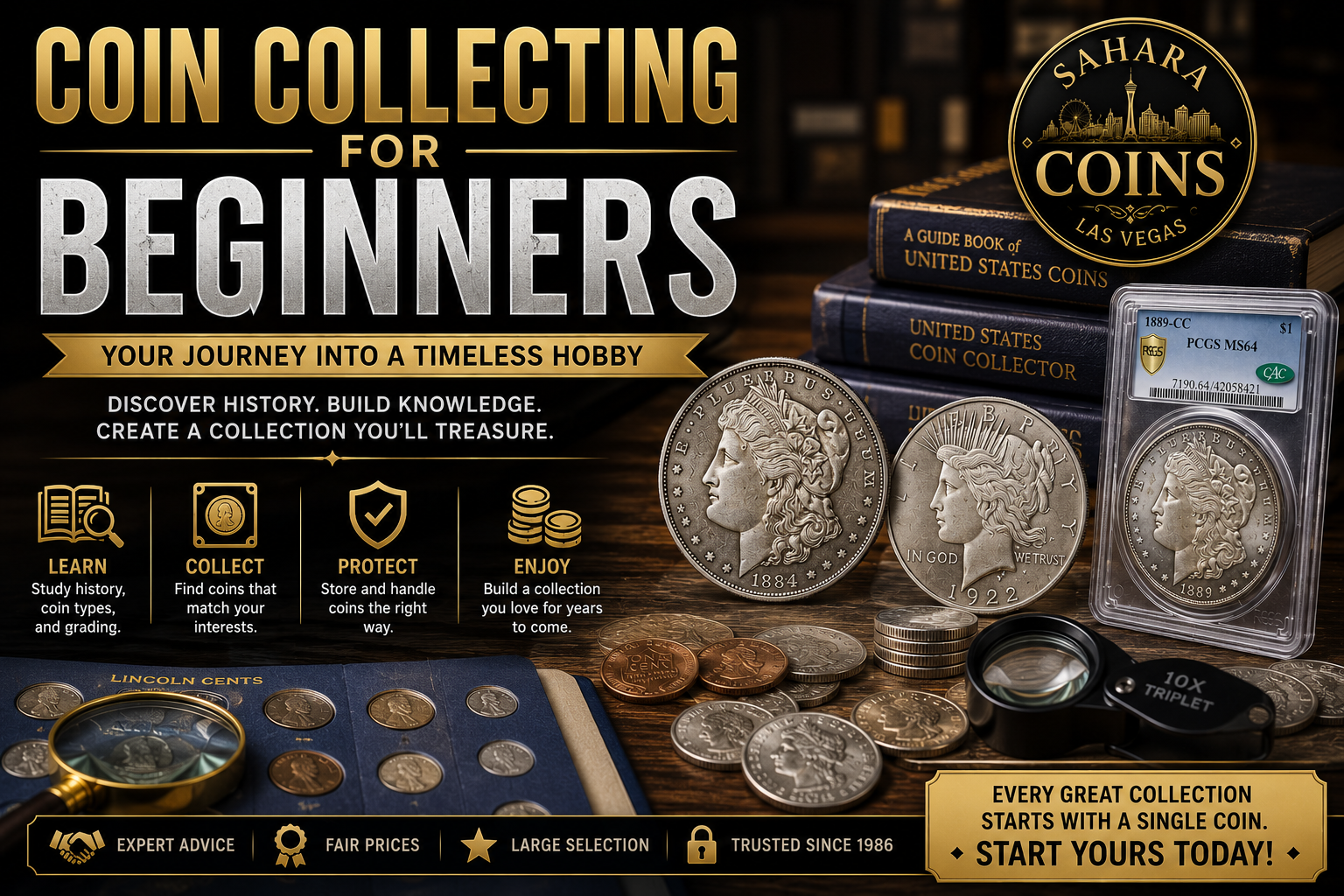
Coin collecting is one of the world's oldest and most rewarding hobbies. Whether you're interested in history, investing, precious metals, or simply the excitement of discovering something unique, coin collecting offers something for everyone.
The best part? You don't need to spend thousands of dollars to get started.
Many of today's experienced collectors began with a handful of coins found in pocket change or inherited from a family member. As your knowledge grows, so can your collection.
If you're new to the hobby, this guide will teach you everything you need to know to start collecting coins with confidence.
Why People Collect Coins
No two collectors are exactly alike.
Some people collect because they love history.
Others enjoy completing coin sets, investing in precious metals, or passing collections down to future generations.
Some of the most common reasons people collect coins include:
Learning American history
Building a valuable collection
Investing in precious metals
Enjoying the thrill of the hunt
Preserving family heirlooms
Creating a hobby to share with children or grandchildren
Whatever your reason, coin collecting is a hobby that can last a lifetime.
Do You Need a Lot of Money?
Absolutely not.
One of the biggest misconceptions about coin collecting is that it's an expensive hobby.
In reality, many collections begin with coins worth only a few dollars—or even coins found in everyday change.
As your knowledge and interests grow, you can gradually add more valuable pieces.
Collecting is about enjoying the hobby—not spending the most money.
Decide What You Want to Collect
One of the first steps is choosing a collecting focus.
Some popular options include:
United States Coins
Many beginners start with familiar coins such as:
Lincoln Cents
Jefferson Nickels
Roosevelt Dimes
Washington Quarters
Kennedy Half Dollars
These series are widely available and offer many affordable collecting opportunities.
Silver Coins
Some collectors enjoy coins that contain precious metals.
Popular examples include:
Morgan Silver Dollars
Peace Dollars
American Silver Eagles
Pre-1965 U.S. silver coins
These combine collectible appeal with intrinsic silver value.
World Coins
If you enjoy history and geography, world coins offer nearly endless possibilities.
Many countries produce beautiful designs with fascinating historical backgrounds.
Ancient Coins
Some collectors enjoy owning pieces of history dating back thousands of years.
Ancient Greek and Roman coins allow collectors to hold artifacts from civilizations that shaped the modern world.
Error Coins
Mistakes made during the minting process sometimes create highly collectible coins.
Examples include:
Double dies
Off-center strikes
Missing mintmarks
Broadstrikes
These unusual coins can be both fun and valuable.
Learn About Coin Grading
Condition plays a major role in determining a coin's value.
Collectors use a grading scale ranging from:
Poor (P-1)
Good (G)
Fine (F)
Extremely Fine (XF)
About Uncirculated (AU)
Mint State (MS-60 through MS-70)
Even small differences in condition can dramatically affect value.
For more valuable coins, professional grading services like PCGS and NGC authenticate and assign official grades.
Basic Supplies Every Collector Needs
You don't need expensive equipment to begin collecting.
Some useful supplies include:
Coin albums
2x2 holders
Protective capsules
Cotton gloves (for high-value coins)
A magnifying glass or loupe
A good reference book
Proper storage helps preserve your collection for years to come.
Learn to Handle Coins Properly
Always handle coins by the edges. - Coins have three sides, obverse, reverse and edge.
Avoid touching the faces whenever possible.
Never clean your coins.
Cleaning can permanently damage a coin's surface and significantly reduce its value.
Many coins that appear dirty are actually worth more with their original surfaces intact.
Where to Find Coins
Collectors acquire coins from many different places.
Some of the most common include:
Local coin shops
Coin shows
Estate sales
Family collections
Bank rolls
Coin clubs
Online marketplaces
Working with a trusted local coin dealer helps ensure you're buying authentic coins at fair market prices.
Should You Buy Certified Coins?
For higher-value purchases, certified coins offer several advantages.
Professional grading services verify:
Authenticity
Condition
Marketability
Certified coins are especially popular among collectors purchasing key dates or investment-grade coins.
Join the Coin Collecting Community
One of the best parts of the hobby is meeting other collectors.
Consider joining:
Local coin clubs
Online collector forums
Educational seminars
Coin shows
Talking with experienced collectors is one of the fastest ways to build your knowledge.
Avoid Common Beginner Mistakes
Every collector learns along the way, but avoiding these common mistakes can save both money and frustration.
Try to avoid:
Cleaning coins
Buying without researching
Chasing "too good to be true" deals
Ignoring condition
Storing coins improperly
Purchasing from unknown sources
Education is one of the best investments you can make as a new collector.
Build a Collection You Enjoy
Some collectors chase complete sets.
Others focus on historic coins.
Some collect silver, while others enjoy commemoratives or world coins.
There is no right or wrong way to collect.
The best collection is one that reflects your interests and brings you enjoyment.
Start Your Coin Collecting Journey at Sahara Coins
Whether you're purchasing your very first coin or searching for a rare addition to your growing collection, Sahara Coins & Precious Metals is here to help.
Our experienced team enjoys working with new collectors and is always happy to answer questions, explain grading, recommend collecting strategies, and help you build a collection that fits your interests and budget.
Visit our Las Vegas showroom to explore one of Southern Nevada's largest selections of collectible coins, bullion, certified rarities, and collecting supplies.
Every great collection starts with a single coin—and we'd love to help you find yours.