Silver Rounds vs. Silver Coins: What Is the Difference for Physical Silver Buyers?
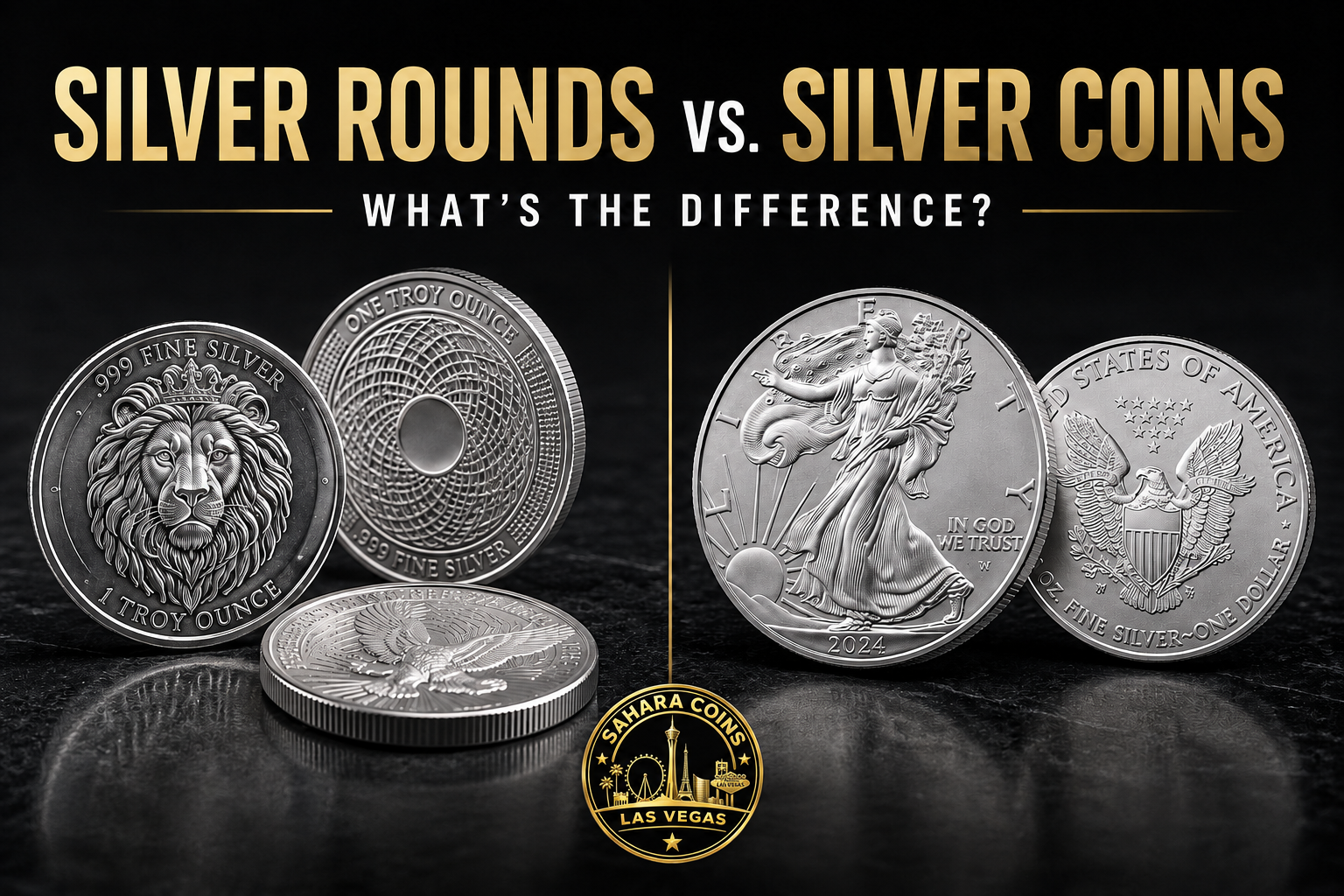
When comparing silver rounds vs silver coins, the metal content may look similar at first glance. Both can be made in common bullion sizes, often display a stated weight and purity, and are purchased by people who want to own physical silver. The important differences are found in the issuer, legal-tender status, design, premium, and resale market.
For physical silver buyers in Las Vegas, the right choice depends on what matters most: obtaining as many ounces as possible for a budget, buying recognizable government-issued bullion, building a collection, or balancing several goals at once.
Quick Answer: What Is the Difference?
A silver round is a privately minted bullion piece that resembles a coin but is not issued as currency. A silver coin, in the bullion context, is generally issued by a government mint and has a stated face value in its country of issue.
Neither label alone tells you everything about a piece. Before buying, verify the weight, fineness, mint or manufacturer, condition, and total price. These details affect what you own and what a dealer may offer when you decide to sell.
What Are Silver Rounds?
Silver rounds are typically produced by private mints, refiners, or bullion manufacturers. They are often struck in a circular shape and may feature patriotic, historical, seasonal, commemorative, or custom designs. Because they are not government-issued currency, rounds do not have a legal-tender face value.
Many buyers choose rounds for straightforward bullion ownership. Their pricing is commonly based on the current silver market price plus a dealer premium that reflects manufacturing, distribution, supply, demand, and the specific product. Generic rounds can sometimes carry a lower premium than highly recognized government bullion coins, though this is not guaranteed and market conditions change.
Why Buyers Consider Silver Rounds
- They can be an efficient way to add physical silver by weight.
- They are available in many designs and product lines.
- Private mints may offer pieces that appeal to gift buyers or collectors.
- They are commonly easy to identify when they clearly state weight and fineness from a known manufacturer.
What Are Silver Coins?
Silver coins are issued by sovereign governments through their official mints. Bullion coins are made primarily for precious-metals buyers, although they also carry a face value. That denomination is generally far below the market value of the silver contained in a bullion coin, so buyers usually evaluate these pieces according to their silver content, recognition, condition, and market premium rather than their face value.
Government-issued bullion coins are often familiar to dealers and buyers in many markets. Their established designs, government backing as legal tender, and widespread recognition can influence demand and premiums. Some silver coins also have numismatic or collectible value, which is separate from their metal value and requires more specialized evaluation.
Why Buyers Consider Silver Coins
- They are issued by government mints and carry a face value.
- Recognizable bullion coin programs may be easier for some buyers to compare and resell.
- They can offer a combination of bullion ownership and collectible appeal.
- They provide distinct designs, dates, and issuing countries for those who enjoy collecting.
Silver Rounds vs. Silver Coins at a Glance
| Feature | Silver Rounds | Silver Coins |
|---|---|---|
| Issuer | Usually a private mint or refiner | Usually a government mint |
| Legal-tender face value | No | Yes, for government-issued coins |
| Primary appeal | Physical silver weight and design selection | Recognition, government issuance, and bullion or collecting appeal |
| Premium behavior | Often competitive for generic products, but varies by maker and demand | May be higher for popular government bullion programs, but varies by market |
| Potential collectible component | Possible for limited or specialty issues | Possible, especially for certain dates, conditions, and series |
Premiums Matter More Than the Label Alone
A product's premium is the amount above the underlying silver market price. It is a practical part of any physical silver purchase because it affects your total acquisition cost. Premiums can differ among rounds, coins, bars, and even two products with the same stated silver content.
It is tempting to assume that rounds always cost less or that coins always resell for more. Those broad statements are not reliable. Availability, product popularity, order size, condition, local demand, and market volatility can all change the spread between buy and sell prices. Comparing current, like-for-like quotes is more useful than relying on a rule of thumb.
Liquidity and Resale Considerations
Liquidity refers to how readily a product can be sold at a market-based price. Well-known government bullion coins and recognizable private-mint rounds both have active resale markets. In practice, recognizable products with clearly marked weight and fineness are often simpler for dealers to evaluate than obscure pieces with uncertain content or condition.
If resale flexibility is a priority, consider asking a dealer these questions before you buy:
- Is this product commonly recognized in the local market?
- What factors would affect a future purchase offer?
- Is the product sealed, loose, toned, damaged, or otherwise condition-sensitive?
- Does this item have a collectible premium that may not always be present?
At Sahara Coins & Precious Metals, buyers can discuss the differences among common silver bullion products in person before making a decision.
How to Choose Between Rounds and Coins
Choose silver rounds when your priority is bullion weight
Rounds may be a sensible starting point for buyers who are focused on building physical silver holdings and comparing total cost per ounce. They can also be appealing when you want a particular private-mint design or a practical gift with intrinsic metal content.
Choose silver coins when recognition or government issuance matters to you
Government-issued bullion coins may fit buyers who value legal-tender status, established coin programs, or the familiarity of sovereign-mint products. They can also suit people who want to explore the crossover between bullion and collecting.
Consider a mix when you have multiple goals
Some physical silver buyers choose both rounds and coins. A mix can provide lower-premium opportunities in one portion of a purchase while including recognizable government-issued coins in another. The appropriate balance is personal and should reflect your budget, product preferences, storage plan, and expected holding period.
What to Check Before Buying Physical Silver
- Weight and fineness: Read the markings and confirm what amount of silver the piece represents.
- Manufacturer or mint: Learn whether the product comes from a sovereign mint, established private mint, or lesser-known source.
- Total price: Compare the final price, not only the silver market price.
- Condition: Scratches, spots, packaging, and handling can matter more for some products than others.
- Resale market: Ask how the product is commonly traded and what documentation or packaging may be useful to retain.
- Storage: Plan for secure, organized storage and keep purchase records.
Frequently Asked Questions
Are silver rounds real silver?
Many silver rounds are made for bullion buyers and state their weight and fineness on the piece. However, buyers should verify the product, manufacturer, and markings rather than relying on appearance alone. Purchasing from an established precious-metals dealer can help you evaluate what you are buying.
Are silver rounds legal tender?
No. Silver rounds are privately minted and do not carry a government-issued legal-tender face value. Government-issued silver bullion coins generally do carry a face value in their issuing country.
Do silver coins always cost more than silver rounds?
Not always, but government-issued bullion coins often have different premium structures than generic rounds. Current availability and demand can change pricing. Compare specific products and current quotes at the time of purchase.
Which is better for buying silver in Las Vegas?
Neither is automatically better. Silver rounds may suit buyers seeking straightforward bullion exposure, while silver coins may suit those who value government issuance and broad recognition. A knowledgeable local dealer can help you compare available options based on your goals.
If you are new to physical precious metals, read our complete guide to buying physical gold and silver in Las Vegas to learn how to compare products, understand premiums, plan for storage, and prepare for your first purchase.
Talk With a Las Vegas Precious Metals Professional
Understanding silver rounds vs. silver coins makes it easier to shop based on facts rather than labels. Whether you are considering your first physical silver purchase or adding to an existing collection, Sahara Coins & Precious Metals can help you review available bullion options, product characteristics, and current market considerations.
Visit our Buy Gold and Silver page to learn more, or stop by Sahara Coins & Precious Metals in Las Vegas to discuss silver rounds, silver coins, and other physical precious-metals products with our team.
Ready to compare silver coins and rounds in person? Visit our Buy Silver in Las Vegas page, then call Sahara Coins to ask about today’s available silver inventory.