Sterling Silver or Silver Plate? What to Know Before You Sell Silver in Las Vegas
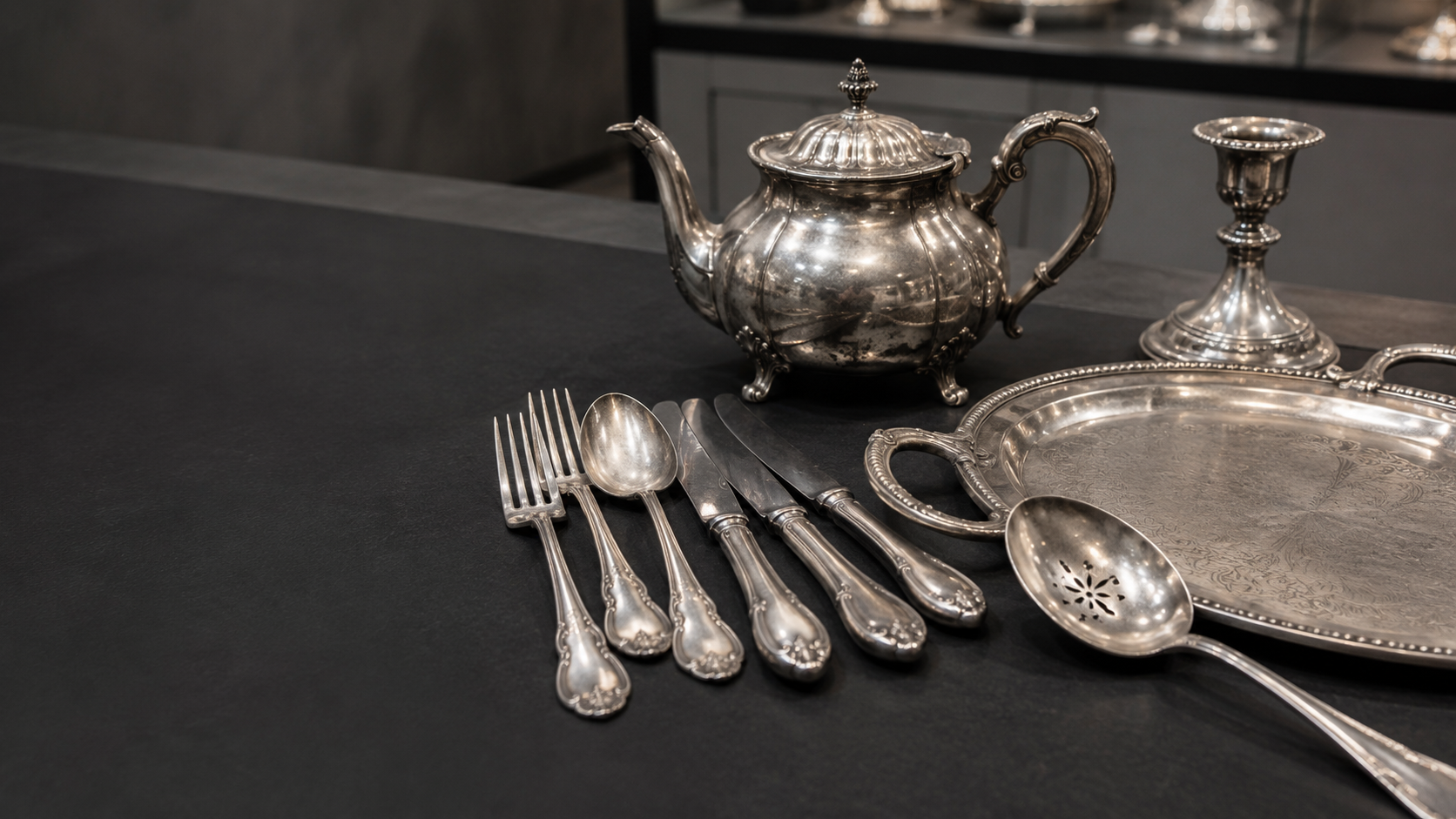
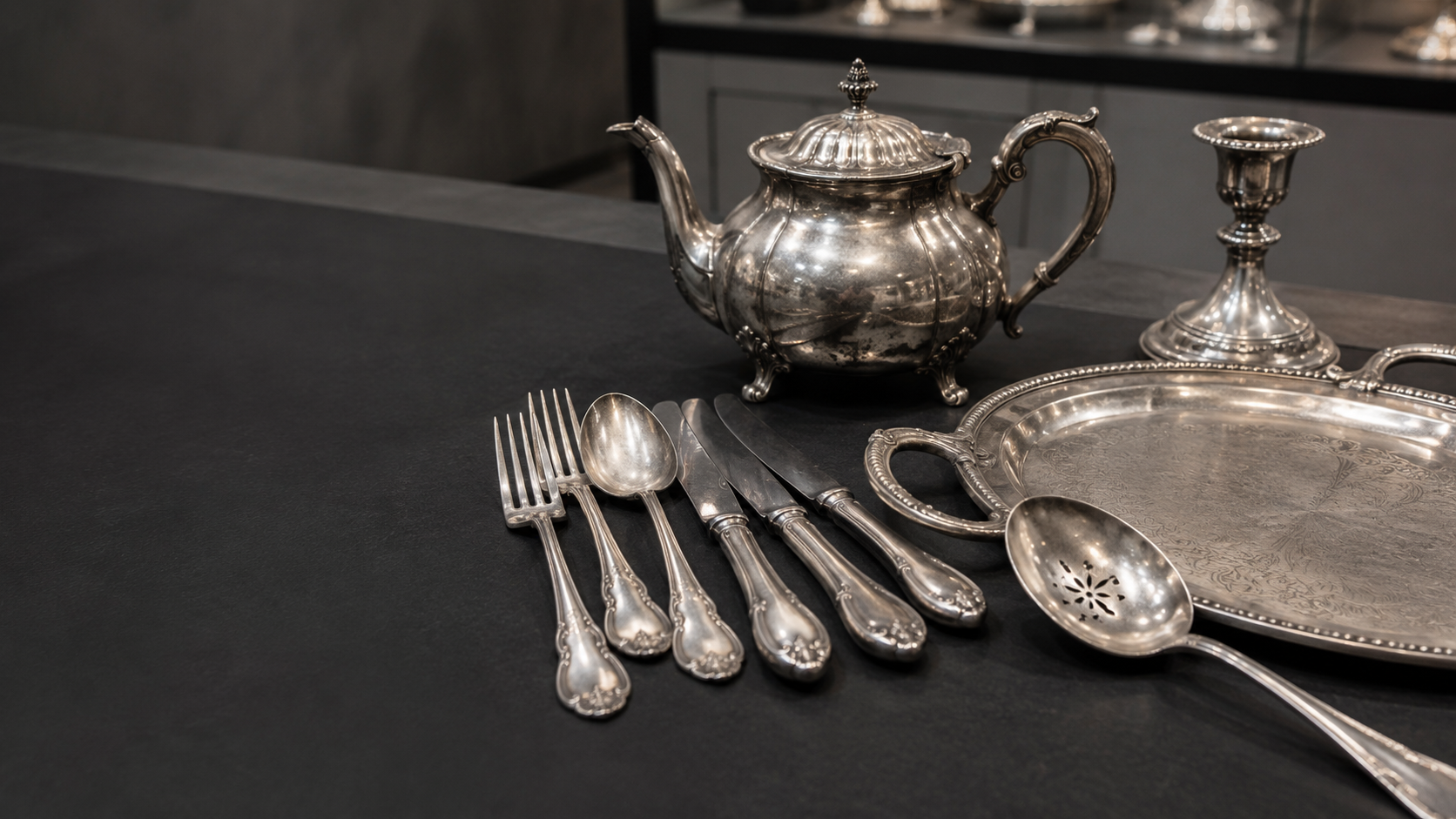
Inherited flatware, tea sets, serving trays, candlesticks, and decorative household items are frequently described as “silver.” However, that word can refer to several very different materials.
Some objects are made from sterling silver. Others consist of a base metal covered with a thin layer of silver. Certain pieces contain sterling silver only on the exterior, with cement, resin, steel, or another supporting material inside.
These distinctions can significantly affect how an item is identified and valued.
If you are preparing to sell silver in Las Vegas, begin by examining the marks and construction of each item. You do not need to determine everything yourself, but a few basic observations can help you organize your collection and ask better questions during an evaluation.
Why Sterling Silver and Silver Plate Are Valued Differently
Sterling silver is an alloy containing 92.5% silver and 7.5% other metals, commonly copper. Pure silver is relatively soft, so alloying it produces a material better suited to flatware, jewelry, serving pieces, and decorative objects.
Silver plate is different. A silver-plated object normally has a base made from copper, brass, nickel silver, or another metal. A thin layer of silver is applied to its surface.
Both types of objects may be attractive, useful, old, or collectible. However, their precious-metal content is substantially different.
Sterling silver generally has intrinsic value connected to its recoverable silver content. Silver-plated objects contain much less silver, so their potential value is more likely to depend on the maker, pattern, age, condition, completeness, and collector demand.
That does not mean every sterling object is valuable or every silver-plated object is worthless. It means they must be evaluated differently.
Common Marks Found on Sterling Silver
The fastest place to begin is with the marks stamped or engraved on the item.
Look underneath trays, along the backs of utensils, inside bowls, near the base of candlesticks, and around handles or rims. A magnifying glass or phone camera can make small marks easier to read.
Common sterling silver marks include:
STERLING
925
925/1000
.925
A recognized foreign silver hallmark
A maker’s mark accompanied by an established purity mark
The number 925 indicates that the object is intended to contain 925 parts silver out of 1,000, equivalent to 92.5% silver.
Older British and European silver may use symbols rather than the word “sterling.” Depending on the country and period, these symbols can identify the purity, maker, assay office, or production year.
Foreign marks are not always immediately recognizable. If a piece appears old or well-made but has unfamiliar symbols, do not assume it is plated. Photograph the marks and have them examined by someone familiar with silver and collectible objects.
Marks Commonly Associated With Silver Plate
Silver-plated pieces may carry marks that sound valuable but do not indicate solid sterling silver.
Common examples include:
EPNS
EP
Electroplate
Silver Plate
Silver on Copper
A1
Triple Plate
Quadruple Plate
Community Plate
Hotel Silver
Silver Soldered
EPNS means “electroplated nickel silver.” Despite its name, nickel silver is normally a base-metal alloy rather than solid silver.
Terms such as “triple plate” and “quadruple plate” historically described the manufacturer’s plating process or relative plating quality. They do not mean an item is three or four layers of solid sterling silver.
A company name containing the word “silver” is also not proof of silver content. Names such as International Silver Company may appear on both sterling and plated products. The complete set of marks must be considered.
What Does “Coin Silver” Mean?
Some older American objects are marked COIN, PURE COIN, or COIN SILVER.
Historically, the term referred to silver made to a standard associated with circulating silver coinage. Coin silver is generally lower in purity than sterling, although the actual composition of an individual object should not be assumed from the term alone.
Coin-silver objects may also have historical, regional, or maker-related significance. If an older piece is marked “coin,” preserve it in its current condition until it has been properly identified.
Why Flatware Can Be Complicated
Flatware is one of the most common types of inherited household silver, but it is not always constructed from one uniform material.
A sterling spoon or fork may be made primarily from sterling silver. A knife, however, may have a stainless-steel blade attached to a hollow sterling handle. The handle may contain filling or reinforcement that gives it shape and balance.
This means the total weight of a knife is not necessarily its silver weight.
The same issue can apply to carving utensils, serving tools, pie servers, cheese knives, and other pieces that combine different materials.
When organizing flatware:
Keep matching patterns together.
Do not separate handles from blades.
Include unusual serving pieces.
Look for marks on every type of utensil.
Note whether any pieces appear to have stainless-steel blades.
Bring the storage chest if it identifies the maker or pattern.
Complete or nearly complete sets may deserve consideration as tableware, particularly when the pattern, maker, and condition are desirable. Other sets may be valued primarily for their silver content.
Understanding Weighted Sterling Silver
Some objects marked WEIGHTED STERLING or STERLING WEIGHTED contain sterling silver on the exterior but are not solid sterling throughout.
This construction is common in:
Candlesticks
Candelabras
Bud vases
Compotes
Salt and pepper shakers
Knife handles
Decorative bases
Certain trophies and presentation pieces
The sterling exterior may surround cement, resin, plaster, steel, or another supporting material. The filling provides stability and allows the object to hold its shape.
Consequently, the object’s gross weight cannot be treated as sterling silver weight. A professional evaluation must account for its construction.
Do not cut open or dismantle a weighted object at home. Doing so can create sharp edges, damage potentially collectible pieces, and make the item harder to examine accurately.
Silver Tea Sets, Trays, and Hollowware
Large tea services and serving trays can appear especially valuable because of their size and weight. Many are silver plated, but some are sterling.
Examine the underside of each component individually. A matching-looking tea set can contain pieces from different manufacturers or materials.
Look for marks on the:
Teapot
Coffee pot
Creamer
Sugar bowl
Waste bowl
Serving tray
Lids and removable components
The tray included with a sterling tea service is not automatically sterling. Likewise, decorative handles, knobs, hinges, and insulating components may be made from other materials.
Maker, pattern, craftsmanship, condition, and completeness can influence whether a set has decorative or collectible demand beyond its metal content.
Can a Magnet Identify Real Silver?
A magnet can provide limited information, but it cannot prove that an item is sterling silver.
Silver is not strongly magnetic. If an object is strongly attracted to a magnet, it probably contains a magnetic base metal or internal component. However, many non-silver metals are also nonmagnetic.
A weak or nonexistent magnetic response therefore does not confirm that an object is sterling.
Weighted objects and knives may also react differently because of internal steel components, even when part of the exterior is sterling silver.
Use a magnet only as an initial observation—not as a final test.
Tarnish and Color Are Not Conclusive
Sterling silver often develops dark tarnish as it reacts with sulfur-containing substances in the environment. Silver plate can tarnish too because its outer surface is also silver.
Color alone is therefore unreliable.
On heavily used silver-plated objects, worn areas may reveal a yellow, copper-colored, or gray base metal underneath. This can be a useful sign of plating, especially along raised edges and contact points.
However, an evenly colored surface does not establish that an object is sterling. Some plated pieces retain their finish remarkably well, while certain sterling alloys and finishes may look different from what an owner expects.
Avoid Destructive Testing at Home
Online guides sometimes recommend filing, scratching, cutting, or applying acid to test an object. These methods can permanently damage a piece and may expose the user to hazardous chemicals.
They can also produce misleading results if the test is performed on plating, solder, a filled handle, or a nonrepresentative component.
Before conducting any destructive test:
Search carefully for marks.
Photograph the entire object and its identifying details.
Determine whether it could have collectible or historical interest.
Ask an experienced evaluator whether further testing is necessary.
Professional testing may help establish composition while limiting unnecessary damage.
Should You Polish Silver Before an Evaluation?
Lightly removing loose dust with a soft cloth is generally sufficient.
Avoid aggressive polishing until the object has been identified. Heavy polishing can remove plating, soften decorative details, create scratches, or alter the surface of antique pieces.
Natural tarnish does not prevent a knowledgeable evaluator from identifying silver. In some collectible markets, surface condition and original details may matter more than a bright shine.
If you plan to continue using the piece rather than selling it, choose a cleaning method appropriate for its construction. Sterling, silver plate, hollow handles, weighted pieces, and objects containing wood or other materials may require different care.
What Factors Can Affect the Value of Household Silver?
An evaluation may consider several factors rather than relying on appearance alone.
Silver Content and Purity
For sterling objects, the amount and purity of the actual silver content are important. Mixed materials, weighted bases, stainless-steel blades, and other components must be considered separately.
Current Silver Market
Silver prices change throughout the trading day. Market conditions can therefore affect the precious-metal component of an evaluation.
Maker and Pattern
Certain makers and patterns attract replacement buyers, collectors, or people attempting to complete an existing set. Other patterns may have limited secondary-market demand.
Completeness
A complete service can sometimes be more marketable than a collection of unrelated pieces. Specialized serving utensils can also matter when they belong to the original pattern.
Condition
Bent tines, monograms, worn plating, deep scratches, repairs, missing components, and disposal damage may affect marketability. Monograms do not automatically make silver worthless, but they can narrow the audience for a tableware set.
Age and Historical Interest
Age alone does not guarantee value. Nevertheless, identifiable antique pieces, regional makers, unusual forms, and documented provenance may warrant additional research.
Is Silver Plate Worth Anything?
Silver-plated objects normally contain far less precious metal than sterling silver objects. For many common plated pieces, recovering the silver is not economically practical.
However, silver plate can still have value as:
Usable tableware
Decorative serving ware
A collectible pattern
Work by a desirable maker
A complete vintage set
An unusual historical or presentation object
Demand varies considerably. A mass-produced, incomplete plated set may have limited resale value, while an unusual or highly decorative piece may attract a buyer for reasons unrelated to its silver content.
The important point is to identify the object before assuming it is either extremely valuable or entirely worthless.
How to Organize Inherited Silver
If you have inherited several boxes of household silver, use the following process:
Keep matching sets and patterns together.
Separate items marked sterling or 925 from those marked EPNS or plate.
Create a third group for unfamiliar or unreadable marks.
Photograph maker’s marks before wrapping the items.
Keep original boxes, receipts, notes, and documentation.
Do not discard damaged, partial, or mismatched pieces before evaluation.
Avoid dismantling weighted items and hollow handles.
Transport pieces carefully to prevent additional scratches or dents.
You do not need to polish, weigh, or individually research every item before requesting help.
Questions to Ask During a Silver Evaluation
When meeting with a silver buyer or precious-metals dealer, consider asking:
Is the item sterling, plated, weighted, or made from mixed materials?
What do the marks mean?
Is the item being considered for its silver content or as a collectible object?
Are any components excluded from the silver weight?
Does the maker or pattern affect its marketability?
Would keeping the set together matter?
Is there any obligation to sell after the evaluation?
A clear explanation should help you understand what you own, even if you decide not to sell immediately.
Frequently Asked Questions
Does “925” always mean sterling silver?
The 925 mark is commonly used to indicate sterling silver, but marks can be misleading or incorrectly applied. The entire piece, its construction, and any available testing should be considered.
Is old silver automatically valuable?
No. Age is only one factor. Composition, maker, pattern, condition, completeness, and demand also matter.
Are sterling silver knives solid silver?
Often they are not. Many have stainless-steel blades and hollow or filled sterling handles. Their gross weight should not be treated as solid sterling weight.
Should I throw away silver-plated pieces?
Not until they have been identified. Although many plated objects have limited precious-metal value, certain makers, patterns, complete sets, and decorative items may have secondary-market interest.
Can damaged sterling silver still have value?
Damage may reduce an item’s value as tableware or a collectible, but genuine sterling can retain value because of its silver content.
Do I need to know exactly what I have before visiting Sahara Coins?
No. Bring the pieces and any related documentation you have. Identifying unfamiliar marks and mixed-material construction is part of understanding the collection.
Have Your Silver Evaluated in Las Vegas
Sahara Coins & Precious Metals evaluates sterling silver, silver coins, bullion, flatware, and other precious-metal items at its Las Vegas showroom.
Because silver-plated, weighted, antique, and collectible objects can vary considerably, you may call ahead if you are uncertain whether particular items are appropriate to bring.
Sahara Coins & Precious Metals
7293 West Sahara Avenue, Suite 106
Las Vegas, Nevada 89117
Phone: (702) 367-4360
Hours: Monday–Friday, 9:30 a.m.–4:30 p.m.
Sahara Coins has served Southern Nevada since 1997. Free verbal evaluations are available, and there is no obligation to sell after learning more about your items.
Silver markets and collectible demand change over time. This article provides general educational information and does not guarantee the composition, value, or purchase price of any particular object.