Choosing the Right Bullion Products for Your Investment Goals
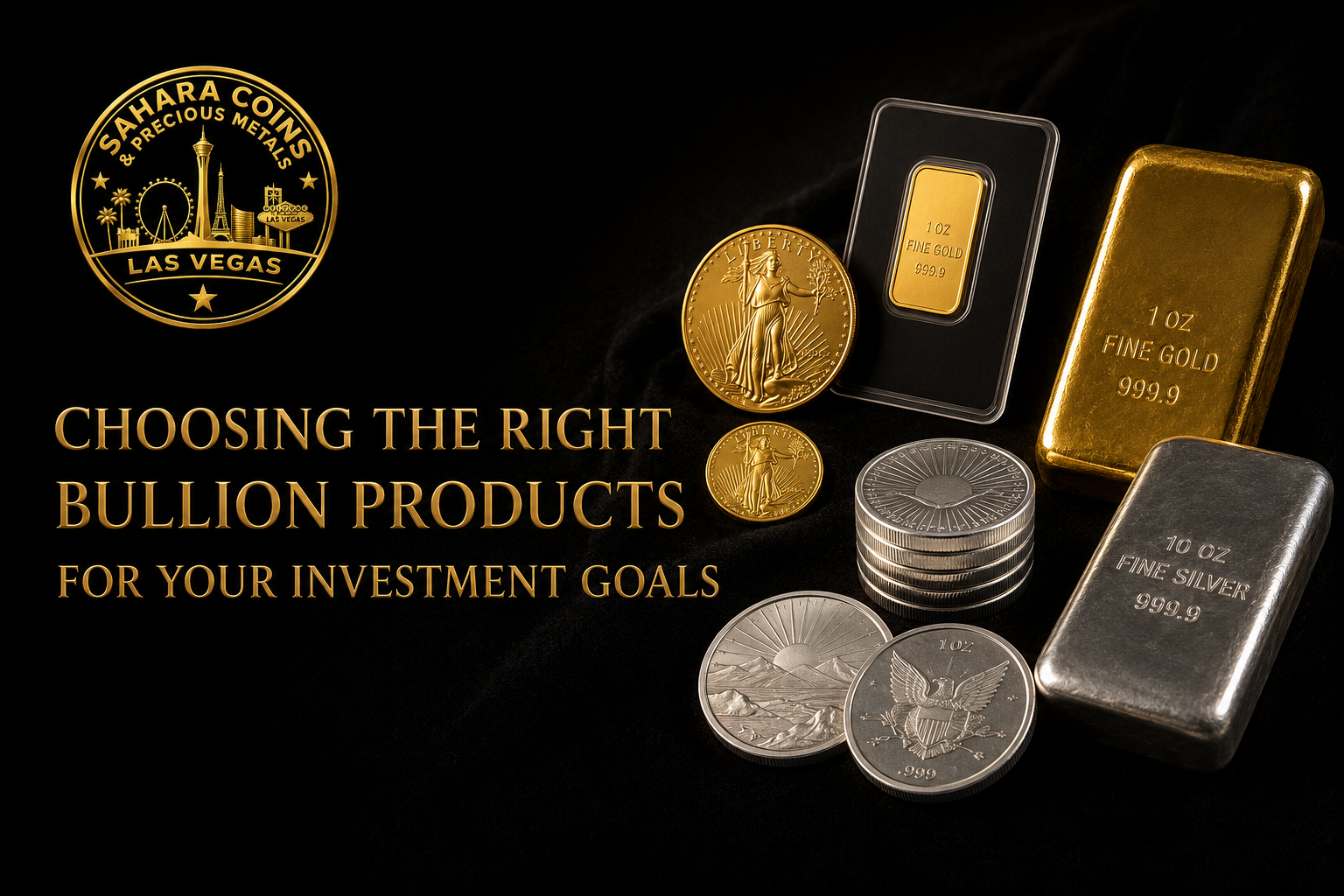
Investing in physical precious metals involves more than simply deciding to buy gold or silver. Coins, rounds, and bars are available in different metals, weights, designs, and price ranges—and each product serves a slightly different purpose.
An investor focused on long-term wealth preservation may prefer widely recognized gold coins. Someone building a position gradually may find fractional gold or one-ounce silver products more practical. Another investor may prioritize acquiring the greatest possible amount of metal for the lowest premium.
Understanding these differences can help you select bullion products that match your budget, liquidity needs, storage preferences, and long-term financial objectives.
Begin With Your Investment Goal
Before comparing individual products, ask what you want precious metals to accomplish within your broader financial strategy.
Common goals include:
Preserving wealth over the long term
Diversifying beyond stocks and bonds
Owning tangible assets
Building a position through regular purchases
Preparing for retirement
Increasing financial flexibility
Giving precious metals as gifts
Combining investment value with collectibility
There is no single bullion product that is ideal for every investor. The right choice depends on what matters most to you.
What Is Bullion?
Bullion is a precious-metal product valued primarily according to its metal content rather than its age, rarity, or historical significance.
Bullion products generally display:
Metal type
Weight
Purity
Mint or manufacturer
Denomination, when issued as legal-tender coins
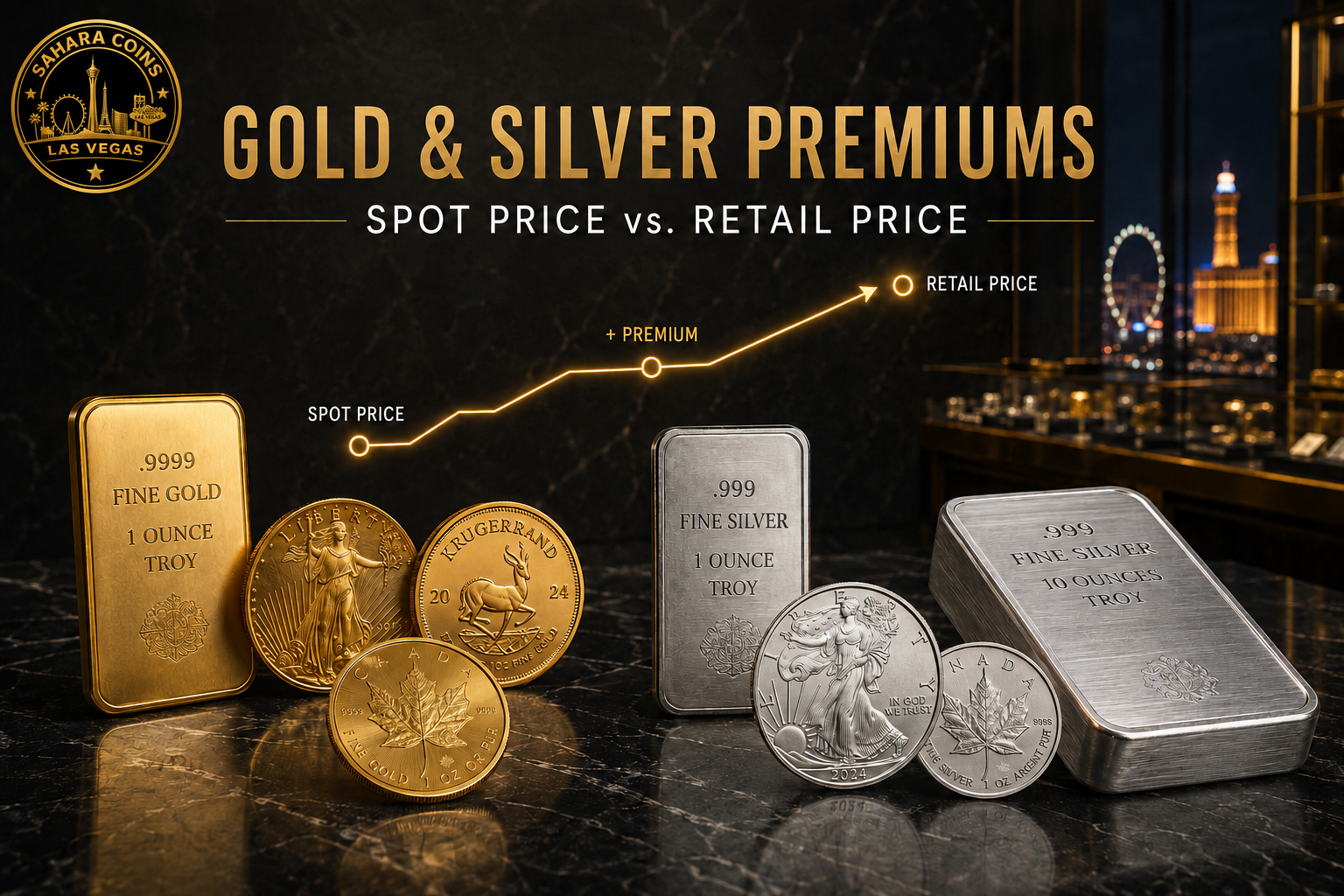
The value of bullion is closely connected to the current market price—or spot price—of the metal it contains. Its retail price normally includes an additional amount known as the premium.
The United States Mint describes bullion coins as a convenient way to add physical gold, silver, platinum, or palladium to an investment portfolio. Bullion coin pricing generally reflects the underlying metal value plus costs associated with minting, fabrication, distribution, and marketing. United States Mint
Understanding Spot Price and Premiums
The spot price is the current wholesale market price for a precious metal. It is usually quoted per troy ounce.
Physical bullion normally sells above spot because producing and delivering a finished product involves additional expenses. The difference between the metal value and the retail price is called the premium.
Premiums can be influenced by:
Product type
Product size
Mint or manufacturer
Supply and demand
Fabrication costs
Dealer inventory
Market volatility
Order quantity
Premiums are not fixed. A product that carries a relatively low premium under ordinary conditions may become more expensive when investor demand increases or supplies become limited.
When comparing bullion, consider the total acquisition cost—not just the spot price.
Gold, Silver, Platinum, or Palladium?
Each precious metal has different characteristics.
Gold Bullion
Gold is often selected for wealth preservation because it stores substantial value in a relatively small physical space.
Gold may appeal to investors who prioritize:
Compact storage
International recognition
Long-term wealth preservation
Higher value per ounce
Portability
Strong resale demand
The primary limitation is its higher cost per ounce. Investors with smaller budgets may need to purchase fractional gold products or accumulate funds between purchases.
Silver Bullion
Silver provides a lower entry price and allows investors to acquire more individual ounces.
Silver may be appropriate for investors who want:
A more accessible starting point
The ability to make regular purchases
Smaller units for future flexibility
Exposure to investment and industrial demand
A larger physical metal position
Silver requires considerably more storage space than gold for the same dollar value. Large silver holdings can also become heavy and less convenient to transport.
Platinum Bullion
Platinum is a relatively scarce precious metal with significant industrial applications, particularly in the automotive, chemical, petroleum, and manufacturing industries.
It may appeal to investors seeking:
Diversification beyond gold and silver
Exposure to industrial precious-metal demand
A smaller and more specialized bullion market
An additional physical metal within a diversified holding
Platinum prices can be volatile, and the retail market is generally smaller than the markets for gold and silver. Product availability and resale spreads may also vary.
Palladium Bullion
Palladium is another industrially important precious metal, but its physical bullion market is relatively specialized.
Investors considering palladium should carefully evaluate:
Price volatility
Product availability
Dealer buyback markets
Premiums
Storage requirements
Their tolerance for a smaller retail market
For many first-time bullion buyers, gold and silver provide the most straightforward starting point.
Bullion Coins, Rounds, and Bars
After selecting a metal, the next decision is the form in which you want to own it.
Government-Issued Bullion Coins
Sovereign bullion coins are produced by government mints and carry a legal-tender face value. Their market value, however, is based primarily on precious-metal content rather than the denomination stamped on the coin.
Popular examples include:
American Gold Eagles
American Gold Buffalos
American Silver Eagles
Canadian Maple Leafs
South African Krugerrands
Austrian Philharmonics
British Britannias
Australian Kangaroos
Government-issued coins typically offer:
Strong recognition
Standardized specifications
Government-guaranteed weight and purity
Broad collector and investor demand
Straightforward resale in many markets
These advantages often come with higher premiums than comparable privately produced rounds or bars.
Government bullion coins can be an excellent choice for investors who prioritize recognition and liquidity over obtaining the lowest possible cost per ounce.
Privately Minted Bullion Rounds
Rounds resemble coins but are manufactured by private mints and do not carry legal-tender status.
They are commonly available in one-ounce silver sizes, although gold and other metals may also be offered.
Rounds can provide:
Lower premiums than many government coins
Convenient one-ounce units
A wide variety of designs
Easy stacking and storage
Flexibility when selling part of a position
Recognition matters. Products made by established refiners and private mints may be easier to authenticate and resell than unfamiliar or unmarked pieces.
Bullion Bars
Bullion bars are available in sizes ranging from one gram to hundreds of ounces.
They generally offer an efficient way to purchase substantial quantities of precious metal. Larger bars often carry lower premiums per ounce because manufacturing and packaging costs are spread across more metal.
Bars may appeal to investors focused on:
Maximizing metal for their budget
Reducing premiums per ounce
Efficient storage
Building a larger long-term position
Consolidating many smaller products
The trade-off is flexibility. Selling one 100-ounce silver bar requires selling the entire bar, while an investor holding 100 individual one-ounce products could sell only the quantity needed.
Fractional Bullion vs. One-Ounce Products
Fractional bullion contains less than one full troy ounce of precious metal.
Common fractional gold sizes include:
1 gram
2.5 grams
5 grams
1/10 troy ounce
1/4 troy ounce
1/2 troy ounce
Fractional products make gold more accessible and provide greater flexibility when selling or giving individual pieces.
However, they normally carry higher premiums per ounce. Producing, packaging, and distributing a fractional coin costs nearly as much as producing a larger coin, even though it contains less metal.
Fractional Bullion May Be Appropriate When:
You have a smaller purchasing budget
You want to buy gold regularly
You value flexibility when selling
You plan to give bullion as gifts
You want multiple divisible units
One-Ounce or Larger Products May Be Appropriate When:
Your priority is lowering the premium per ounce
You are building a substantial long-term position
You do not expect to sell small portions
You have secure storage available
Neither format is automatically better. The right balance depends on whether affordability, flexibility, or premium efficiency is most important to you.
Choosing Bullion for Wealth Preservation
Investors focused on long-term wealth preservation commonly favor products that are widely recognized and easy to sell.
Potential choices include:
One-ounce American Gold Eagles
One-ounce American Gold Buffalos
Canadian Gold Maple Leafs
Gold Krugerrands
Recognized one-ounce gold bars
Gold concentrates significant value into a compact form, making it practical for investors who want to store substantial wealth without holding a large volume of metal.
A combination of one-ounce and fractional gold may provide both premium efficiency and selling flexibility.
Choosing Bullion With a Limited Starting Budget
New investors do not need to make a large purchase to begin owning physical precious metals.
Possible starting products include:
One-ounce silver rounds
American Silver Eagles
Pre-1965 U.S. 90% silver coins
Five-ounce or ten-ounce silver bars
Fractional gold coins
Small gold bars
Silver usually offers the lowest dollar-cost entry point. Fractional gold allows investors to begin acquiring gold without paying for a full ounce at once.
The key is to compare premiums. Very small gold products can have relatively high costs per ounce, so saving toward a slightly larger piece may sometimes provide better overall value.
Choosing Bullion for Regular Accumulation
Some investors use a consistent purchasing strategy instead of trying to predict short-term price movements.
This approach may involve buying:
A fixed dollar amount each month
One silver round per week
One gold coin per quarter
A combination of gold and silver throughout the year
Regular purchasing may help reduce the pressure of choosing a perfect entry price. However, it does not guarantee a profit or prevent losses if metal prices decline.
Products with consistent availability are usually best for an accumulation strategy. Choosing a limited number of recognizable formats can also make the collection easier to organize, inventory, and eventually sell.
Choosing Bullion for Liquidity
Liquidity refers to how easily an asset can be converted into cash without an excessive price concession.
Bullion products with strong retail liquidity generally have:
Recognizable designs
Standard weights
Clearly marked purity
Reputable manufacturers
Active dealer markets
Straightforward authentication
Popular government-issued coins and products from established refiners tend to be easier for buyers and dealers to identify.
Liquidity can also be improved by holding multiple sizes. For example, an investor might combine:
Fractional gold for smaller transactions
One-ounce gold for core holdings
One-ounce silver for divisibility
Ten-ounce silver bars for premium efficiency
Choosing Bullion for the Lowest Premium
Investors focused on maximizing metal weight may prefer:
Generic silver rounds
Secondary-market silver
Ten-ounce silver bars
Kilogram silver bars
Larger silver bars
Recognized gold bars
Secondary-market gold coins or bars
Secondary-market bullion refers to products that were previously owned and returned to the dealer market. When properly authenticated, these items contain the same precious metal as newly manufactured bullion and may be available at lower premiums.
Cosmetic marks, tarnish, or damaged packaging may not significantly affect intrinsic metal value, although condition can influence resale desirability for certain products.
Always buy from a reputable source that verifies authenticity, weight, and purity.
Bullion vs. Collectible Coins
Bullion and numismatic coins can both contain precious metals, but they should not be evaluated in the same way.
Bullion Value Is Primarily Influenced By:
Metal content
Spot price
Product premium
Market demand
Collectible Coin Value May Also Depend On:
Date
Mintmark
Mintage
Condition
Grade
Rarity
Historical importance
Collector demand
Proof coins, limited-edition products, commemorative coins, and certified rare coins may carry premiums far beyond their metal value.
There is nothing wrong with owning both bullion and collectible coins, but investors should understand what portion of the price represents precious metal and what portion reflects numismatic or collector value.
If your primary objective is metal exposure, focus on clearly priced bullion products rather than paying a large collectible premium you do not fully understand.
Should You Buy New or Secondary-Market Bullion?
Both can be appropriate.
Newly Manufactured Bullion Offers:
Original packaging
Consistent appearance
Current designs
Gift-ready presentation
Strong appeal to buyers who prefer untouched products
Secondary-Market Bullion May Offer:
Lower premiums
Greater value per ounce
Discontinued designs
A wider selection
The same intrinsic metal content
Investors who care primarily about metal weight often find secondary-market products attractive. Those who value presentation, uniformity, or giftability may prefer new bullion.
Why Brand Recognition Matters
Established government mints and private refiners have specifications and reputations that help buyers feel confident in their products.
Widely recognized bullion is generally:
Easier to identify
Easier to test
More familiar to dealers
More likely to have an established buyback market
Less likely to require extensive explanation during resale
An unfamiliar product is not necessarily inferior, but it may take longer to authenticate or receive a more conservative offer from a future buyer.
Before purchasing, consider whether local dealers actively trade the product.
Storage Should Influence Your Decision
Storage is an important part of selecting bullion.
Gold Storage
Gold is compact and stores substantial value in a small space. Capsules, tubes, assay cards, and small protective boxes may be sufficient for many holdings.
Silver Storage
Silver occupies more space and becomes heavy as a position grows. Investors accumulating larger quantities should plan for the weight and dimensions of tubes, monster boxes, or bars.
Common Storage Options
Storage options may include:
A quality home safe
A bank safe-deposit box
An insured private depository
A qualified retirement-account custodian, when applicable
Consider security, insurance, accessibility, privacy, environmental conditions, and cost.
Avoid storing bullion in damp locations or materials containing PVC. Maintain a private inventory with purchase dates, product descriptions, quantities, receipts, and photographs.
Bullion for a Precious Metals IRA
Certain bullion coins and bars may be eligible for inclusion in a self-directed individual retirement account, but not every precious-metal product qualifies.
The IRS explains that qualifying bullion must meet applicable requirements and be held by a bank or approved non-bank trustee. Certain coins are specifically permitted under federal law. Personal possession of metals represented as IRA assets can create serious compliance concerns. Internal Revenue Service
Before purchasing metals for a retirement account:
Confirm product eligibility
Work with a qualified custodian
Understand storage requirements
Review all account and transaction fees
Consult an independent tax or financial professional
Be cautious of high-pressure sales presentations
Do not assume a product is IRA-eligible simply because a seller describes it as investment grade.
Compare the Purchase Price and Future Selling Price
Many buyers focus only on the retail price. A better comparison also considers what the product might receive if sold back under current market conditions.
Ask the dealer:
What is the total price?
How much of the price is premium?
Does the dealer regularly repurchase this product?
How is the buyback price determined?
Is there an active local market?
Would damaged packaging affect the offer?
Are quantity discounts available?
Are there additional payment or delivery charges?
The gap between a dealer’s selling price and buying price is commonly called the spread. Because of this spread, bullion prices usually need to rise before an immediate resale would become profitable.
FINRA advises physical precious-metals buyers to consider price volatility, fees, storage, insurance, sales practices, and the difference between purchase and liquidation prices. Precious metals can decline in value and should not be treated as guaranteed investments. FINRA
Common Bullion-Buying Mistakes
Purchasing Without a Clear Objective
A product may be attractive but unsuitable for your actual investment plan. Identify your priorities before shopping.
Ignoring Premiums
Two products containing the same amount of metal may have significantly different retail prices.
Assuming the Highest-Premium Product Is the Best
A high premium does not guarantee better investment performance or a correspondingly higher resale price.
Buying Unfamiliar Products From Unverified Sellers
Counterfeit and misrepresented precious metals exist. Deal with established professionals who can test and authenticate bullion.
Overpaying for Collectible Features
Special labels, limited packaging, colorized designs, signatures, and presentation boxes may not retain their full premiums in the secondary market.
Putting Everything Into One Product
Holding a combination of sizes may provide more flexibility than placing the entire investment into one large bar.
Forgetting About Storage and Insurance
The cost and practicality of securing bullion should be considered before—not after—a large purchase.
Treating Precious Metals as Risk-Free
Gold, silver, platinum, and palladium prices can all decline. Physical bullion also involves premiums, spreads, storage, security, and liquidity considerations.
A Sample Bullion Strategy
An investor seeking a balance of recognition, flexibility, and premium efficiency might divide purchases among:
Recognized one-ounce gold coins or bars for compact wealth storage
Fractional gold for smaller future sales
One-ounce silver rounds or coins for divisibility
Ten-ounce silver bars for lower premiums
A modest platinum position for additional diversification
This is only an example—not a recommended allocation. The appropriate mixture depends on the investor’s finances, goals, timeline, and risk tolerance.
Questions to Ask Before Buying Bullion
Before making a purchase, consider the following questions:
What is my primary reason for owning precious metals?
How long do I expect to hold them?
Is gold, silver, platinum, or a combination most appropriate?
Do I prioritize recognition or the lowest premium?
Will I need to sell small portions?
Can I store the product securely?
Is the manufacturer widely recognized?
Does the dealer have an established buyback market?
Do I understand the premium and spread?
Does this purchase fit within a diversified financial strategy?
Choosing Bullion With Help From Sahara Coins
The best bullion product is not necessarily the most expensive, the most attractive, or the product receiving the most attention online. It is the one that aligns with your goals.
At Sahara Coins & Precious Metals, we help customers compare gold, silver, platinum, coins, rounds, and bars based on practical factors such as budget, premium, liquidity, recognition, storage, and long-term objectives.
Our Las Vegas showroom carries a changing selection of government-issued coins, privately minted rounds, bars, fractional gold, 90% U.S. silver, and other physical precious-metal products. We can explain the differences, show you how products are tested, and help you understand both the purchase price and the potential resale market.
Whether you are purchasing your first silver ounce or expanding an established precious-metals portfolio, our goal is to help you make an informed decision without pressure.
Visit Sahara Coins & Precious Metals in Las Vegas to explore available bullion products and speak with an experienced member of our team.
This article is provided for general educational purposes and should not be considered individualized investment, legal, or tax advice. Precious-metal prices fluctuate, and investors can lose money. Consider speaking with qualified financial and tax professionals about your circumstances.
Frequently Asked Questions
What Is the Best Bullion Product for a Beginner?
There is no universal best product. Many beginners start with recognizable one-ounce silver coins or rounds, fractional gold, or a widely traded one-ounce gold product. The right choice depends on budget, goals, premiums, and storage.
Are Coins Better Than Bars?
Coins generally offer greater recognition and divisibility, while bars may offer lower premiums per ounce. Investors often own a combination of both.
Is Gold or Silver Better for Investment?
Gold stores more value in less space and generally has a highly developed global market. Silver offers a lower entry price and greater divisibility but requires more storage. Many investors hold both.
Why Do Smaller Bullion Products Cost More per Ounce?
Smaller products generally have higher premiums because fabrication, handling, packaging, and distribution costs are spread over less metal.
Are Government Bullion Coins Worth the Additional Premium?
They can be for investors who value government-guaranteed specifications, worldwide recognition, and established resale demand. Investors focused primarily on obtaining maximum metal weight may prefer lower-premium rounds or bars.
Are Old U.S. Silver Coins Considered Bullion?
Pre-1965 U.S. dimes, quarters, and half dollars containing 90% silver are often traded as fractional silver bullion, although some dates and conditions can also carry collectible value.
Should Bullion Remain in Its Original Packaging?
Original packaging can help protect a product and may increase buyer confidence, especially for bars in assay cards. However, bullion’s primary value still comes from its verified metal content.
Can I Take Physical Possession of Bullion Purchased Through an IRA?
IRA-held bullion is subject to specific custody requirements. Consult a qualified custodian and tax professional before making decisions involving retirement accounts.