How Paper Money Is Valued: A Complete Guide for Collectors and Sellers
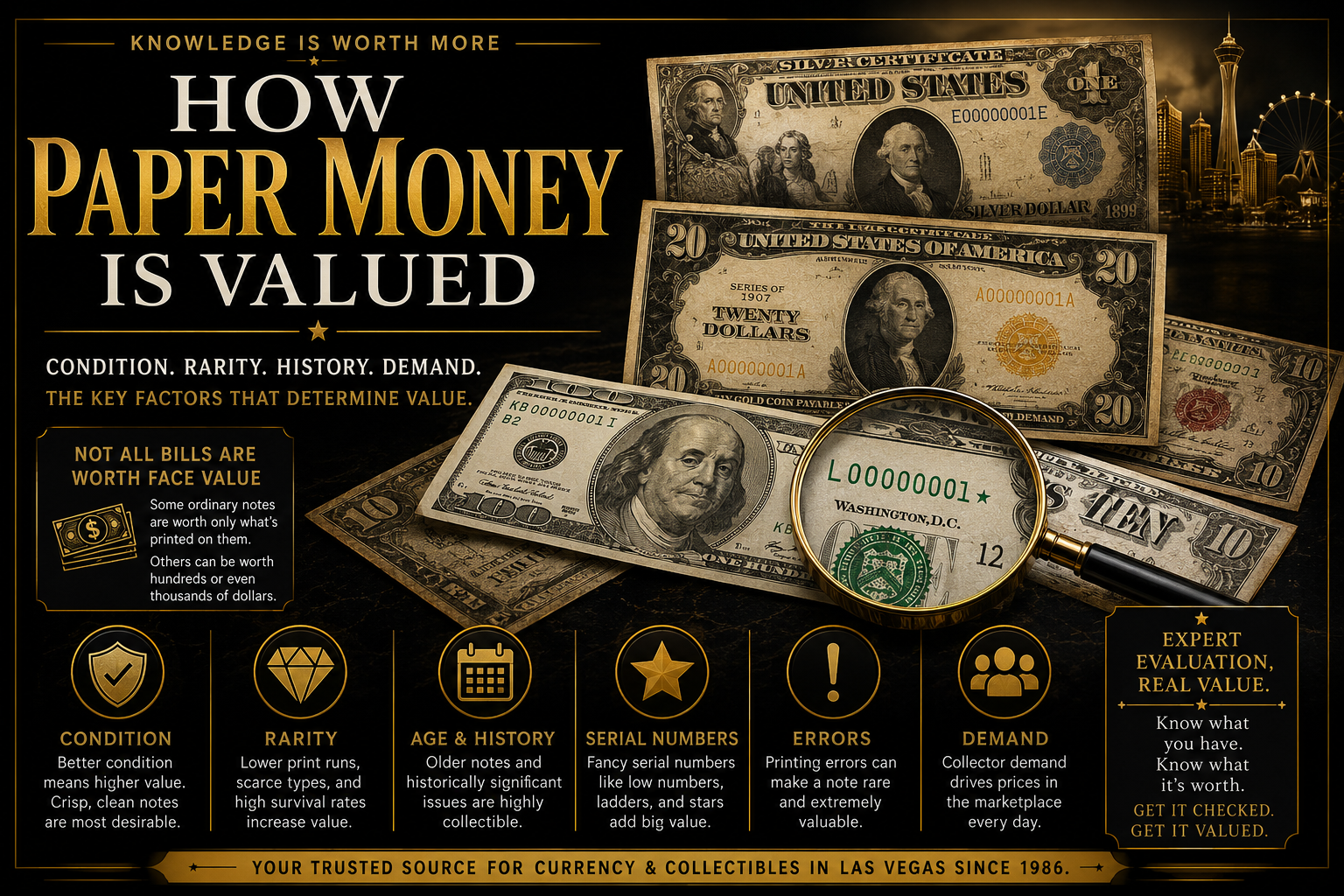
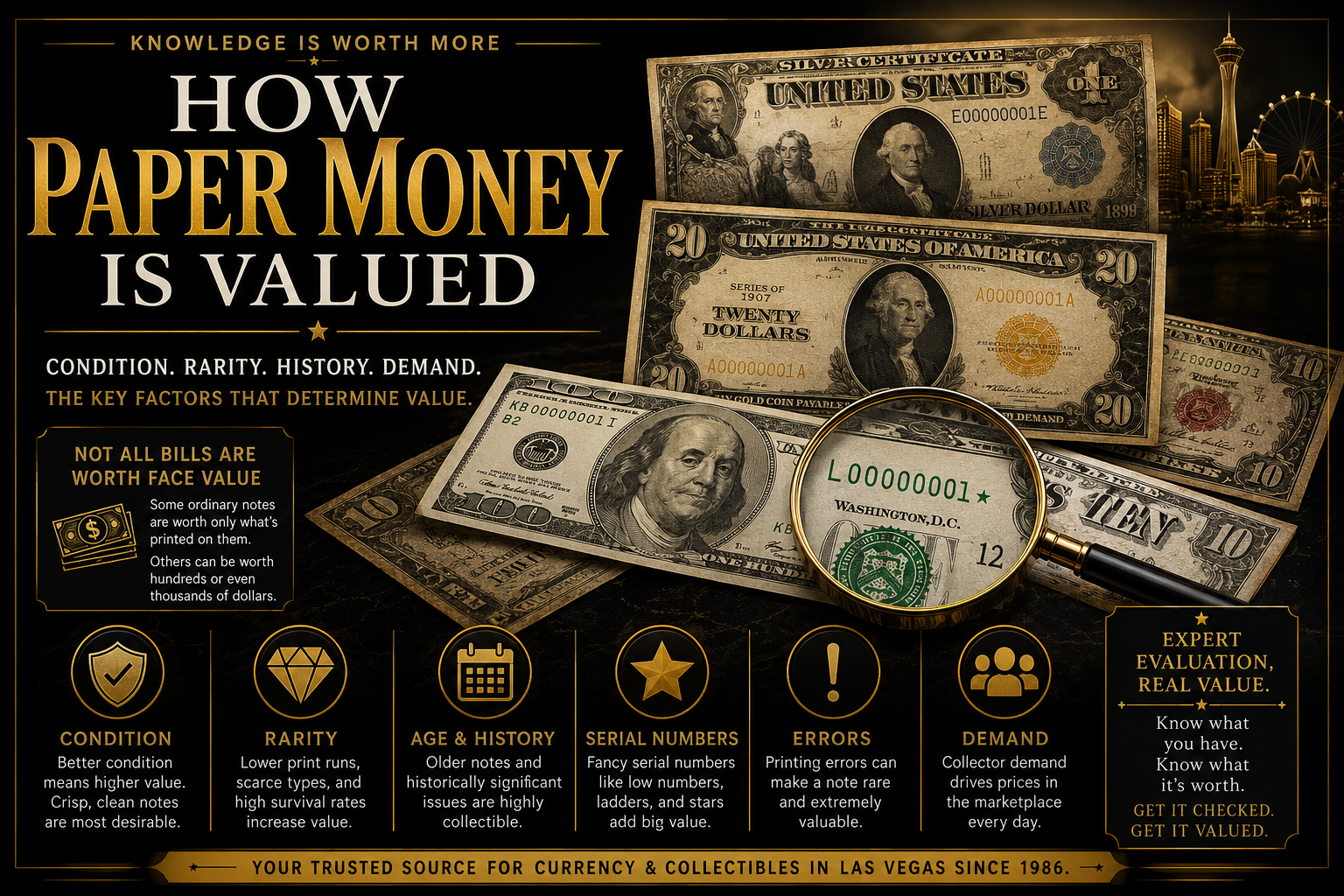
Paper money is far more than a means of payment—it can be a fascinating piece of history and, in many cases, a valuable collectible. While most bills in circulation are worth only their face value, certain banknotes can sell for hundreds, thousands, or even hundreds of thousands of dollars depending on their rarity, condition, and demand.
Whether you've discovered old currency tucked away in a safe, inherited a collection, or are curious about the bills in your wallet, understanding how paper money is valued is the first step in determining what it may be worth.
Not All Paper Money Is Worth More Than Face Value
Many people assume that any old bill is valuable simply because of its age. In reality, age alone rarely determines value.
A crisp 1976 $2 bill may still only be worth $2, while a rare 1934 $10 Silver Certificate in exceptional condition could be worth hundreds of dollars. Likewise, certain modern bills with unusual serial numbers or printing errors can command impressive premiums despite being relatively new.
The value of collectible paper money is based on several important factors working together.
1. Condition Is Everything
Just like coins, condition is often the single biggest factor affecting a note's value.
Collectors prefer paper money that has been preserved without folds, stains, tears, or excessive handling.
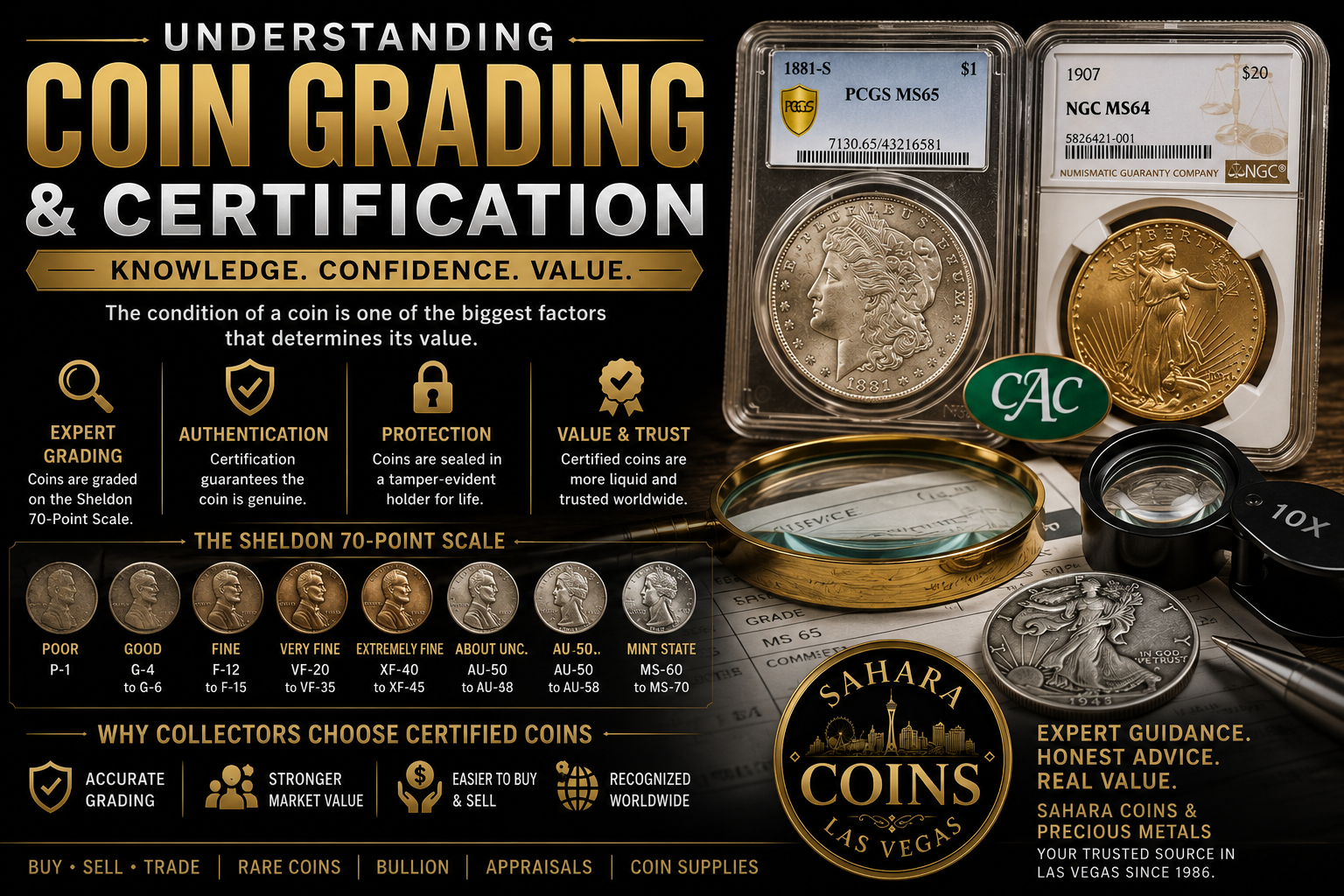
Common grading terms include:
Poor (P)
Heavy wear
Tears or missing pieces
Writing or damage
Usually worth little beyond face value unless extremely rare.
Fine (F)
Moderate circulation
Multiple folds
Slight discoloration
Often collected if the note is scarce.
Extremely Fine (EF/XF)
Light circulation
Minimal folds
Strong color and crisp paper
Highly desirable.
About Uncirculated (AU)
Nearly perfect
Very light handling
Excellent eye appeal
Commands significant premiums.
Gem Uncirculated (CU-65+)
Never circulated
Sharp corners
Bright colors
Original paper quality
These notes often sell for several times more than circulated examples.
2. Rarity
The fewer examples that exist, the more valuable a note generally becomes.
Rarity can be influenced by:
Limited print runs
Short production periods
Notes withdrawn from circulation
Low survival rates
Historical destruction of older notes
Some notes were printed in the millions, while others had production runs of only a few thousand.
3. Age and Historical Significance
Although age alone doesn't create value, historically important currency often attracts collectors.
Examples include:
Large Size Notes (issued before 1929)
Confederate Currency
National Bank Notes
Silver Certificates
Gold Certificates
Hawaii Emergency Notes
North Africa WWII Emergency Notes
Fractional Currency
Obsolete Bank Notes
These notes represent important periods in American history and are actively collected.
4. Serial Numbers Can Add Significant Value
Sometimes the serial number itself is worth more than the bill.
Collectors pay premiums for:
Low serial numbers (00000001–00000100)
Solid numbers (77777777)
Ladders (12345678)
Repeaters (12121212)
Radars (12344321)
Binary notes (only two digits)
Star Notes (★ replacement notes)
Some exceptional serial numbers have sold for thousands of dollars.
5. Printing Errors
Mistakes made during the printing process can dramatically increase value.
Popular error notes include:
Misaligned prints
Missing seals
Missing serial numbers
Ink smears
Fold-over errors
Cutting errors
Double denominations
Offset printing errors
Because genuine errors are uncommon, they are highly sought after by collectors.
6. Signatures and Series
Every Federal Reserve Note includes signatures from the Treasury officials serving when the note was printed.
Certain signature combinations are scarcer than others.
Likewise, some series years had much smaller production numbers, making those notes more desirable today.
7. Star Notes
Star Notes are replacement notes printed when an original note is damaged during production.
Instead of reusing the same serial number, the Bureau of Engraving and Printing prints a replacement note marked with a ★ symbol.
While many Star Notes are common, those with:
Low print runs
High grades
Older series
Rare denominations
can be worth substantial premiums.
8. Collector Demand
Supply is only half of the equation.
Demand plays a major role in determining market value.
Collectors often focus on:
Type sets
Federal Reserve districts
Small-size notes
Large-size notes
Error notes
Fancy serial numbers
Historical issues
When demand rises, prices often follow.
Professional Currency Grading
Many valuable notes are professionally graded by third-party grading companies.
Professional grading:
Authenticates the note
Assigns an official condition grade
Protects it in a tamper-evident holder
Increases buyer confidence
Makes selling easier
Professionally graded notes often sell for higher prices because buyers know exactly what they are purchasing.
How Paper Money Is Appraised
When a professional evaluates paper money, they typically examine:
Overall condition
Paper quality
Originality
Centering
Margins
Color
Rarity
Historical importance
Serial number
Printing errors
Collector demand
Current market trends
Every one of these factors contributes to the final value.
Should You Clean or Press Old Paper Money?
Absolutely not.
Unlike coins, paper money is especially vulnerable to improper handling.
Avoid:
Ironing
Pressing
Washing
Laminating
Using tape
Repairing tears
These actions almost always reduce collectible value.
Instead, store notes flat in archival-quality currency holders and handle them carefully by the edges.
Wondering What Your Paper Money Is Worth?
If you've inherited old currency, found unusual bills, or discovered paper money with interesting serial numbers, it's worth having it professionally evaluated.
At Sahara Coins & Precious Metals, our experienced team helps customers identify collectible currency, evaluate condition, and determine fair market value. Whether you have a single note or an entire collection, we provide honest, knowledgeable guidance with no pressure to sell.
From rare Gold Certificates and Silver Certificates to Star Notes, fancy serial numbers, and historic U.S. currency, we're proud to help collectors and families throughout Las Vegas better understand the value of their paper money.
Stop by Sahara Coins & Precious Metals today and let our experts help uncover the story—and potential value—behind your paper currency.